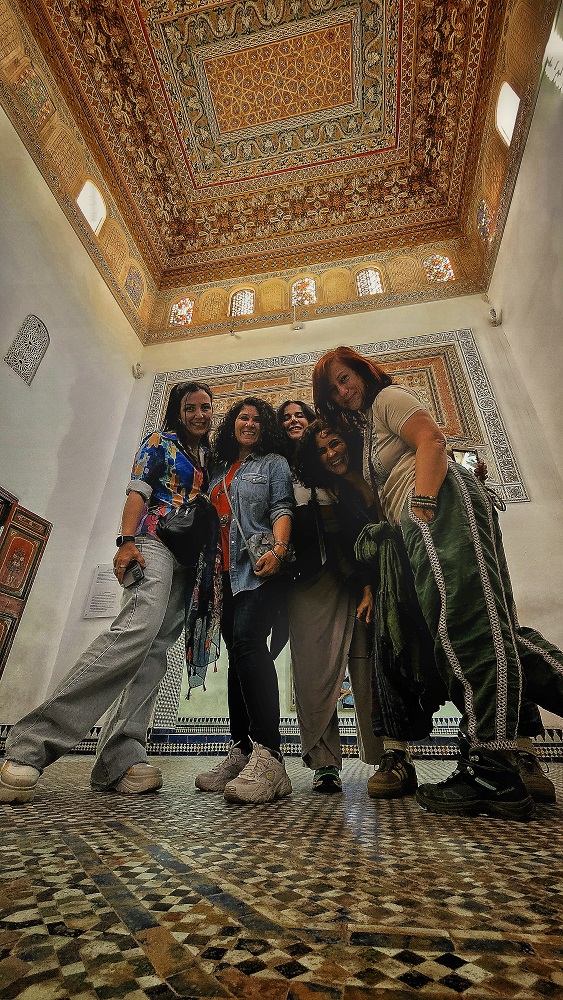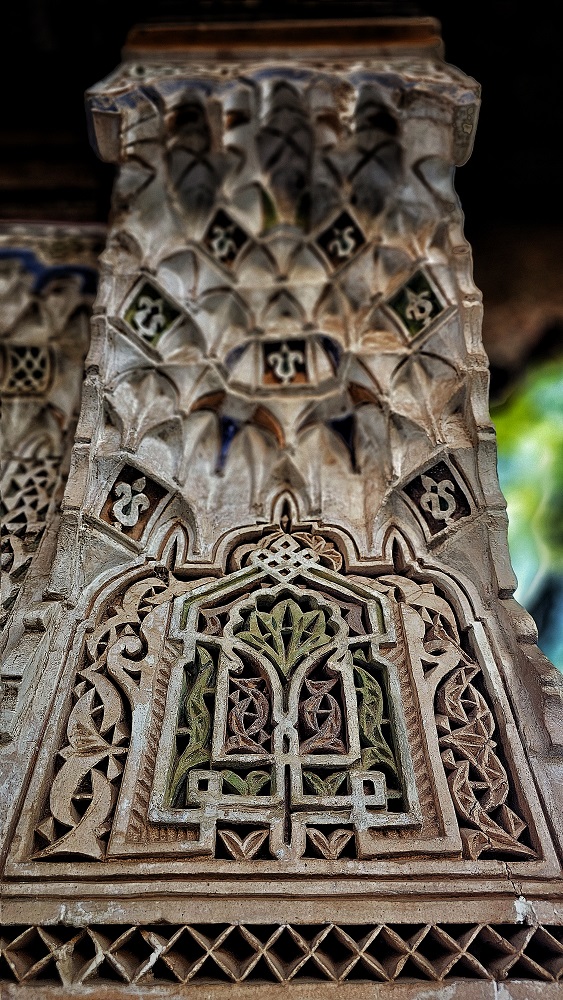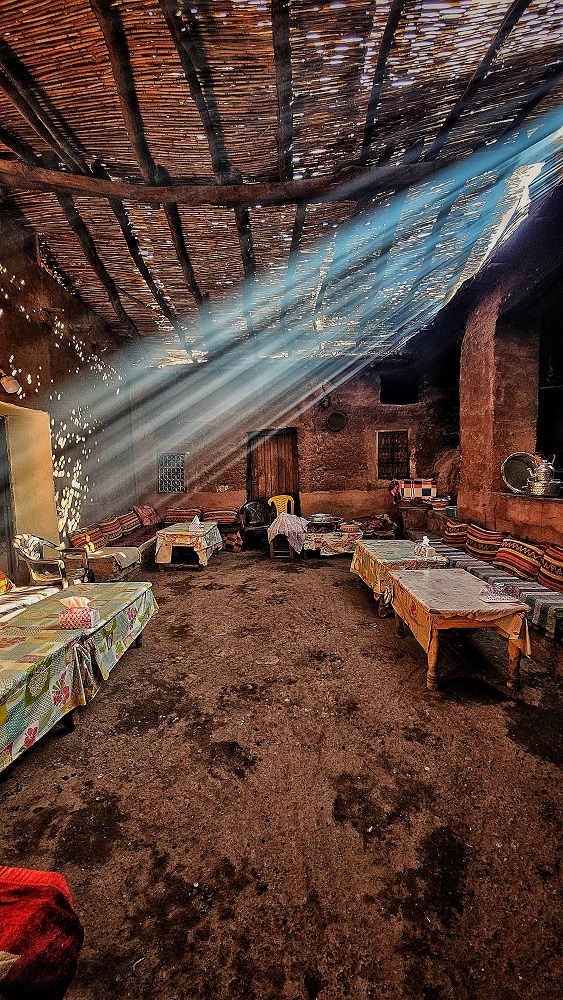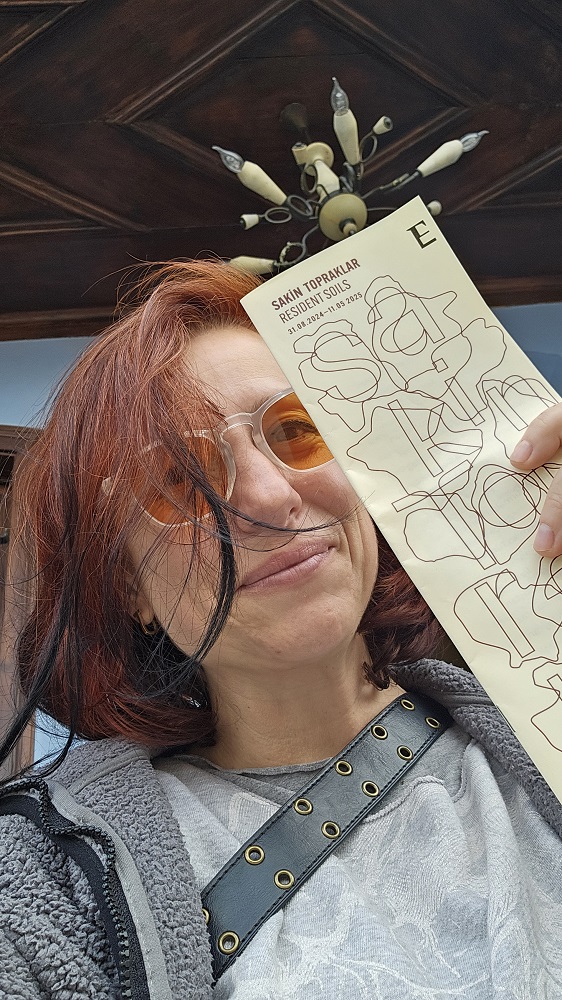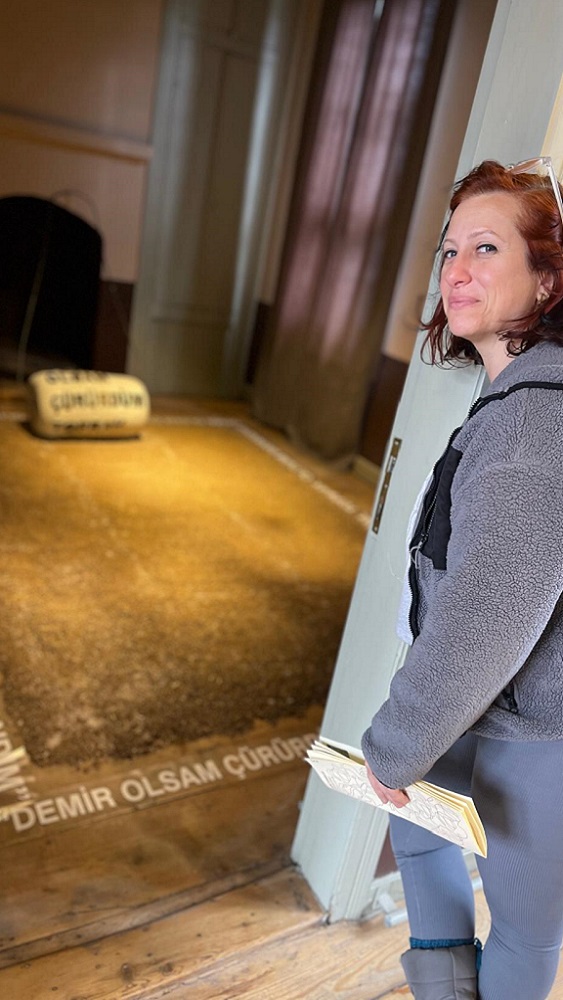
Konya & Şeb-i Arus or Where is Semra?

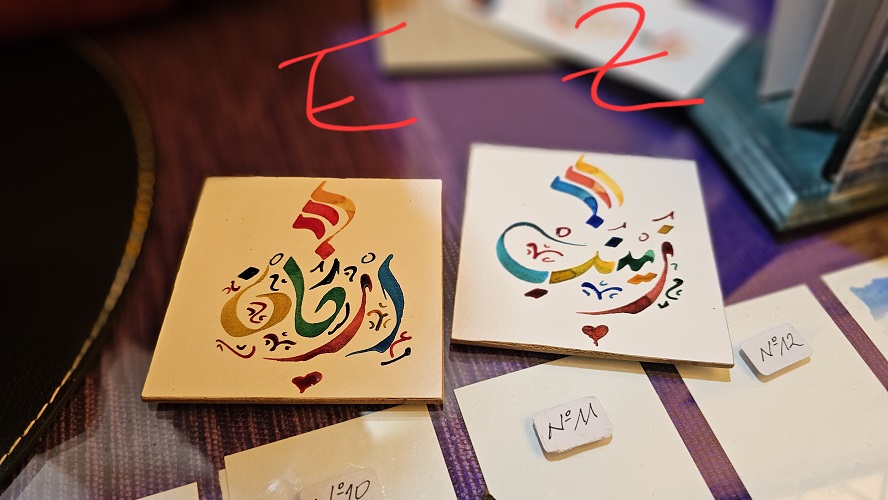
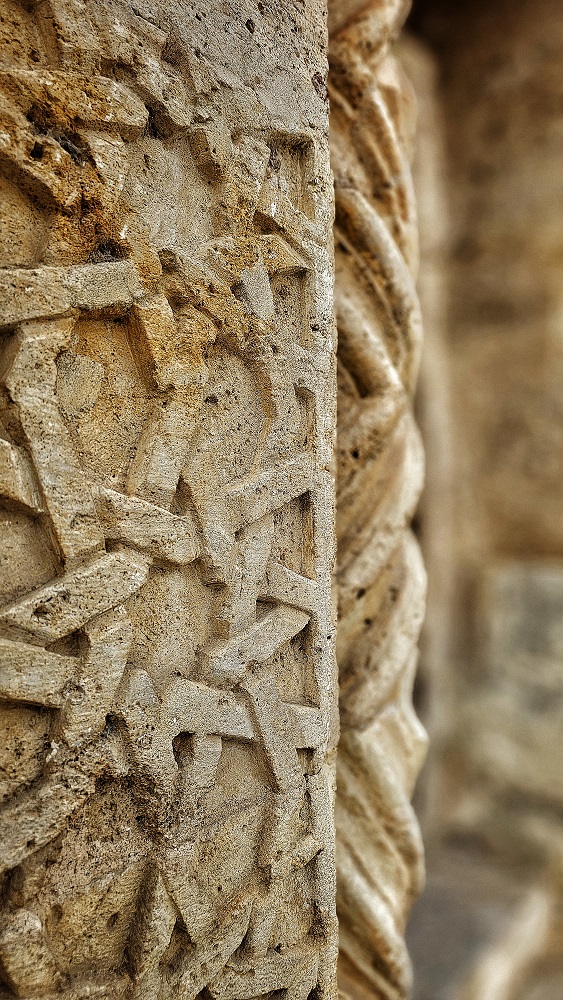
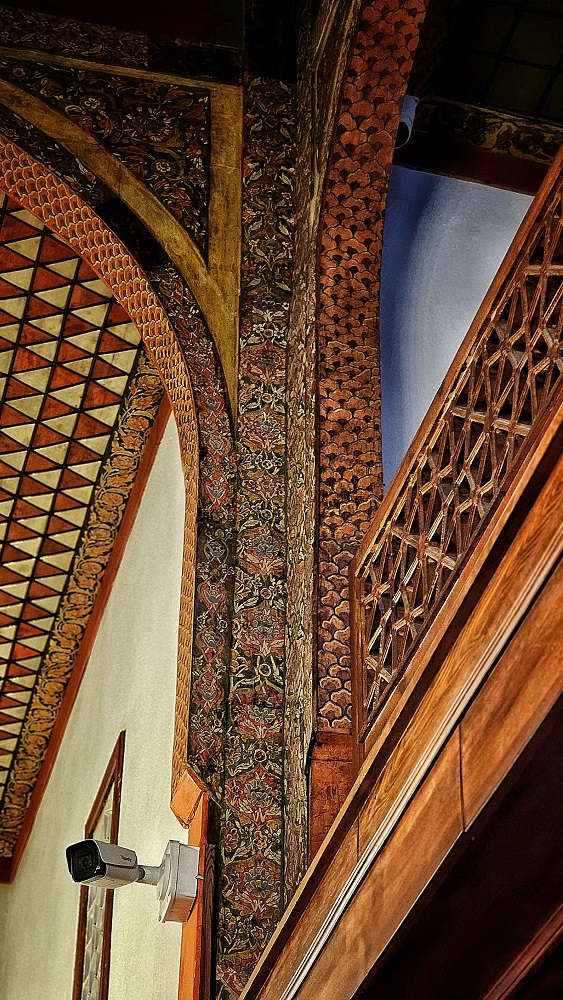
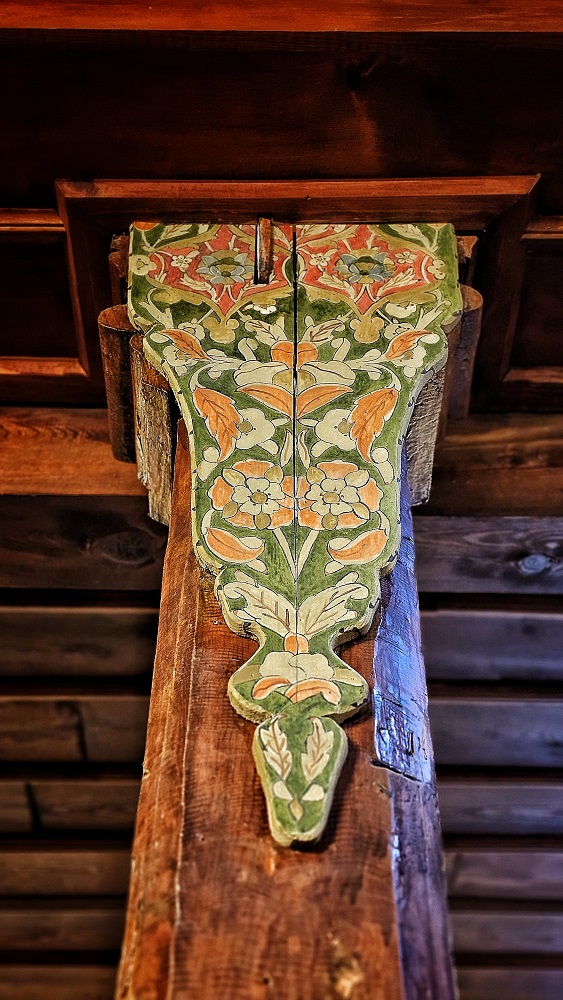
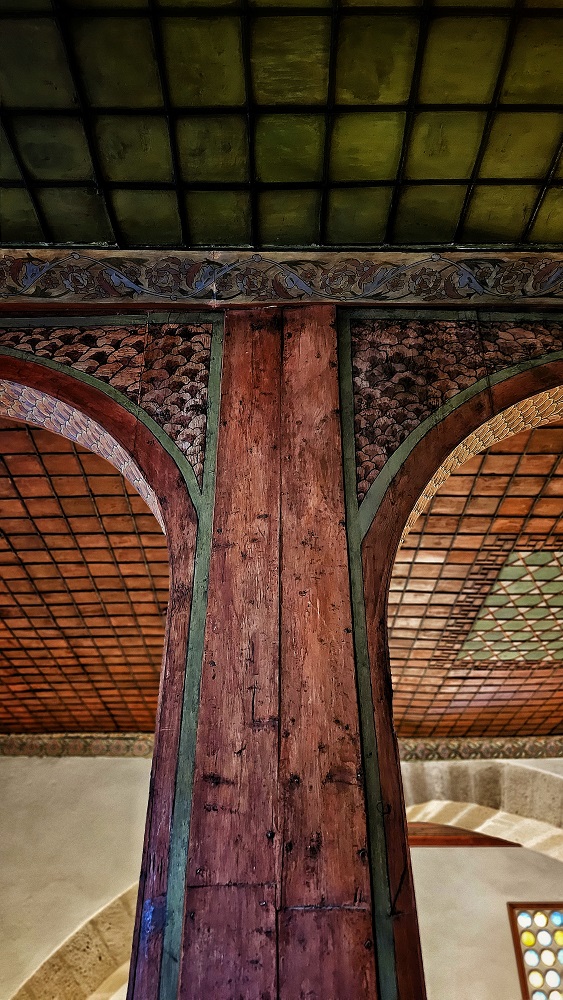
My fascination with Mevlevi elements is primarily spatial in origin. It stems from my discovery of the Galata Mevlevi Lodge during my high school years. This peaceful garden amidst the chaos of Beyoğlu was our resting place with my best friend before embarking on our adventures on Friday evenings. We had explored the interior of the building, but what truly captivated us was the garden itself. We literally recharged here, escaping the monotonous rhythm of classes before experiencing the fluctuating frequency of fun.

Although I later came to know Rumi and Shams, I was never a dedicated reader or a genuine follower. In fact, my relationship with spirituality remained quite distant until recently; I defined myself more as a woman of reason and science. But my interest in art and being an architect allowed me to take a look at this vast body of work.

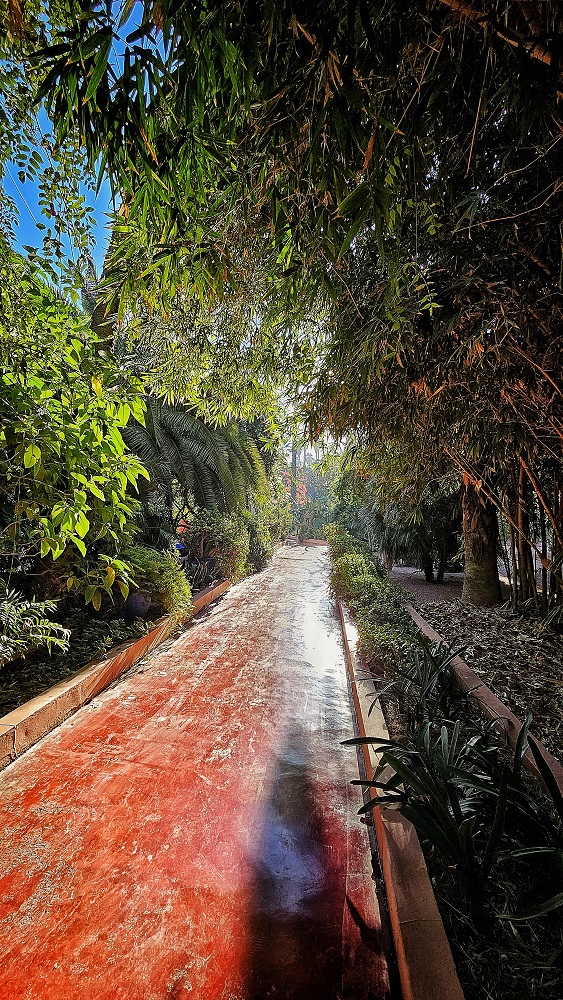
Years later, my trip to the Galata Mevlevi Lodge brought back memories of my early youth. We enjoyed exploring the space, which had been transformed into a small museum. But it was primarily the hours I spent in the garden that brought back the feeling of that tranquility and peace. In the evening, we stayed for the Sema ceremony, crowning this journey through time with a feast that touched the heart not only visually but also through sound and breath.

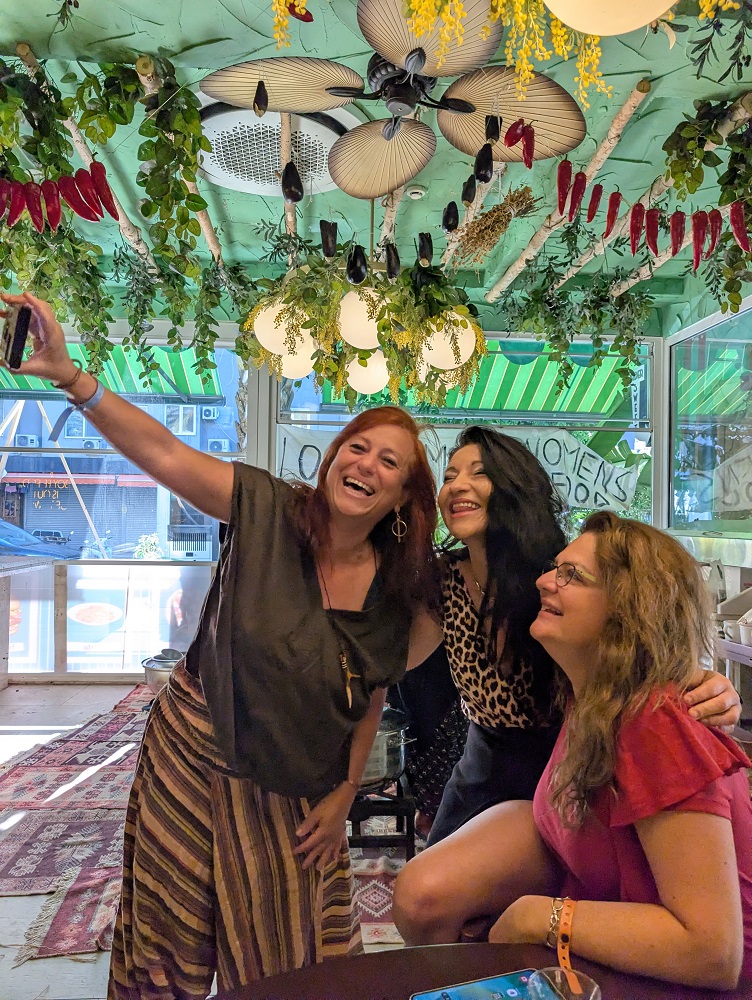
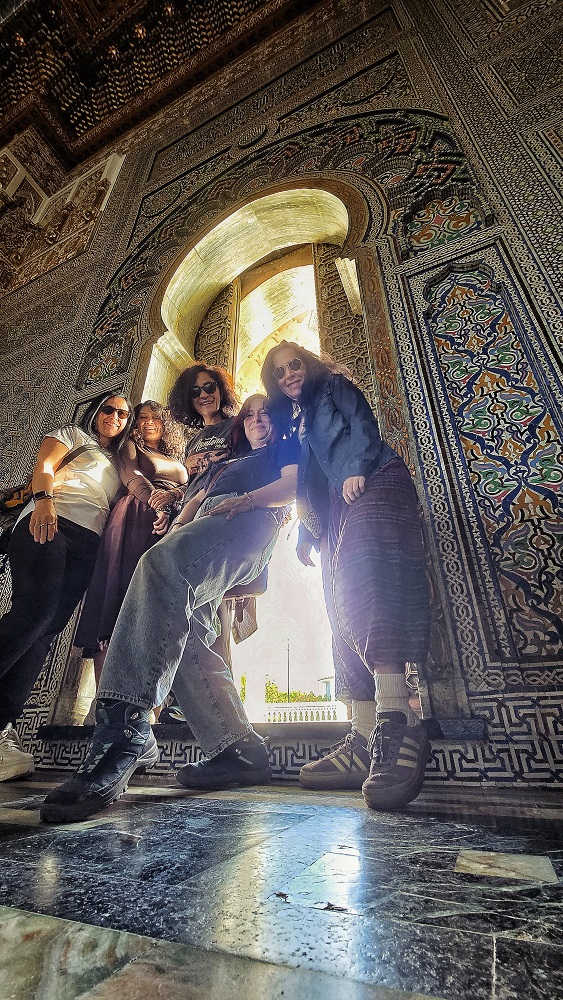
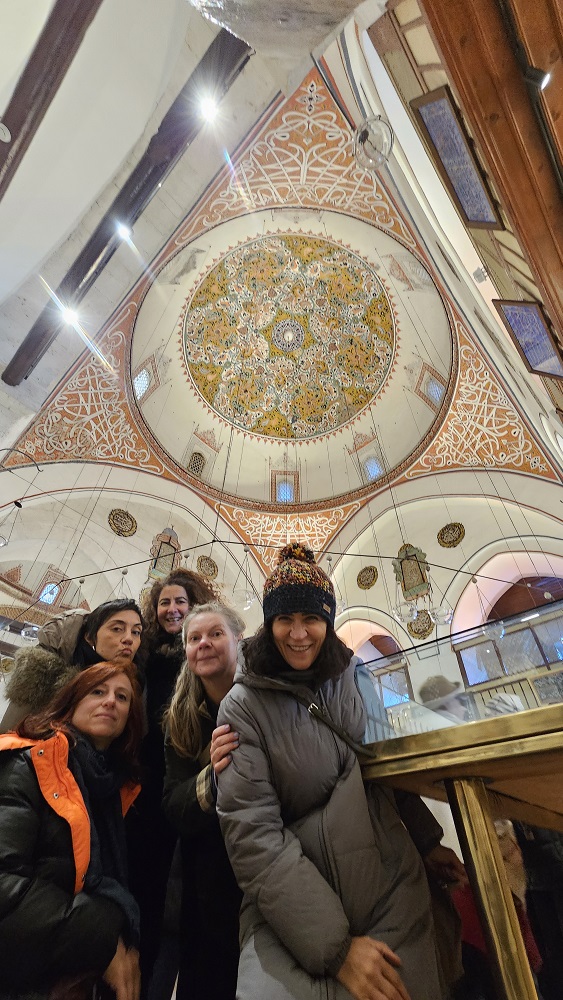
Ever since that day, I’ve wanted to go to Konya, and especially to the Şeb-i Arus ceremony. In fact, I had to cancel my plane tickets the previous year because I couldn’t find tickets to the ceremony. This year, however, I didn’t miss the opportunity of the tatilbudur.com tour. I organized the girls and planned a trip to Konya with a group of five.

Program

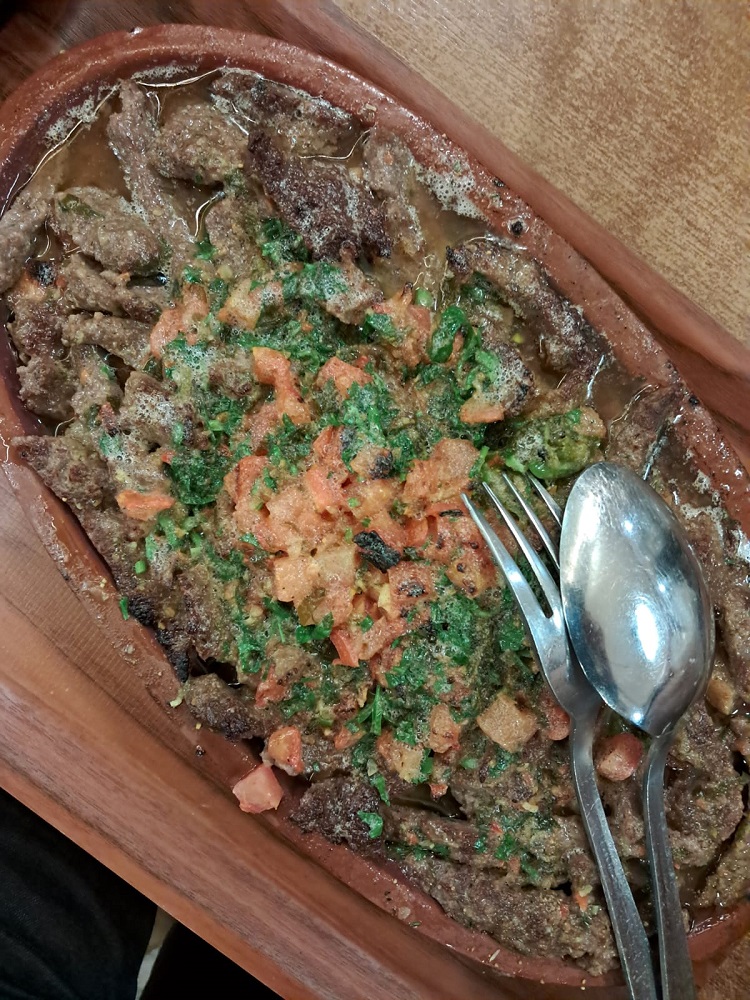
We took the train to Konya very early in the morning, and had the opportunity to see many places during the rest of the day. After the Şeb-i Arus ceremony in the evening, we stayed at our comfortable hotel. The next day we traveled around again by bus until the train hour in the afternoon. It was a packed and a very satisfactory program. Only on the second day, around noon, as a group we separated from the group. Having had a full buffet breakfast, we skipped lunch and went to the market to shop instead. We also went to Mithat’s Tirit Restaurant by ourselves during the free time allocated to the group after the last stop. We tasted the authentic flavor of the famous Konya Tirit dish. It was so amazing! 🙂

First day:

  • Check-in & rest
  • Shab-i Arus Ceremony

Second day:

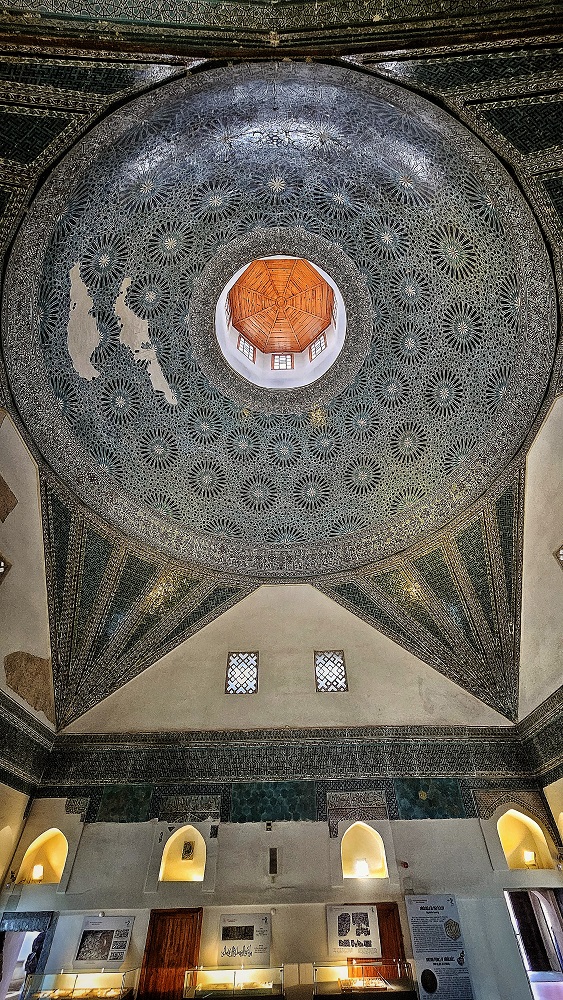
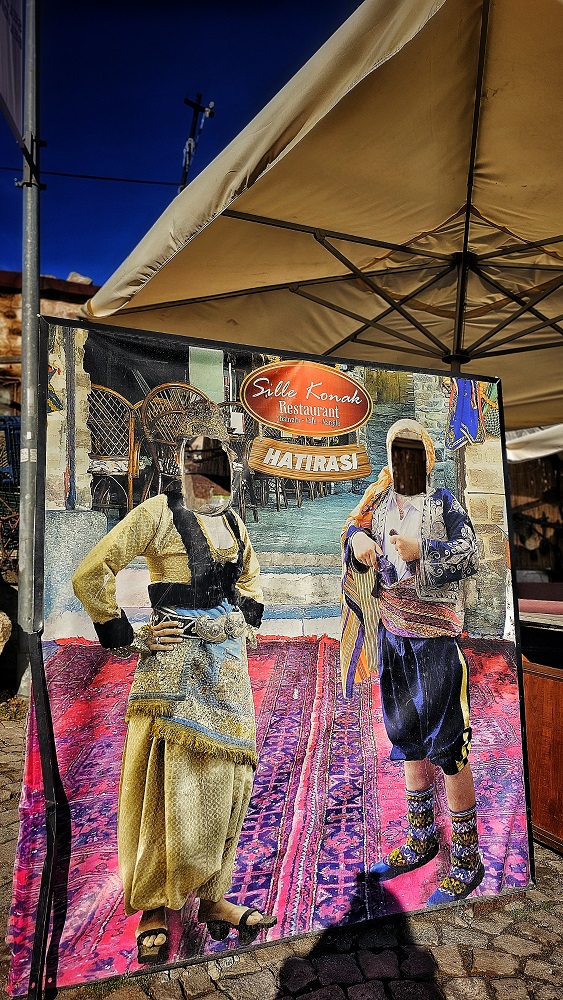
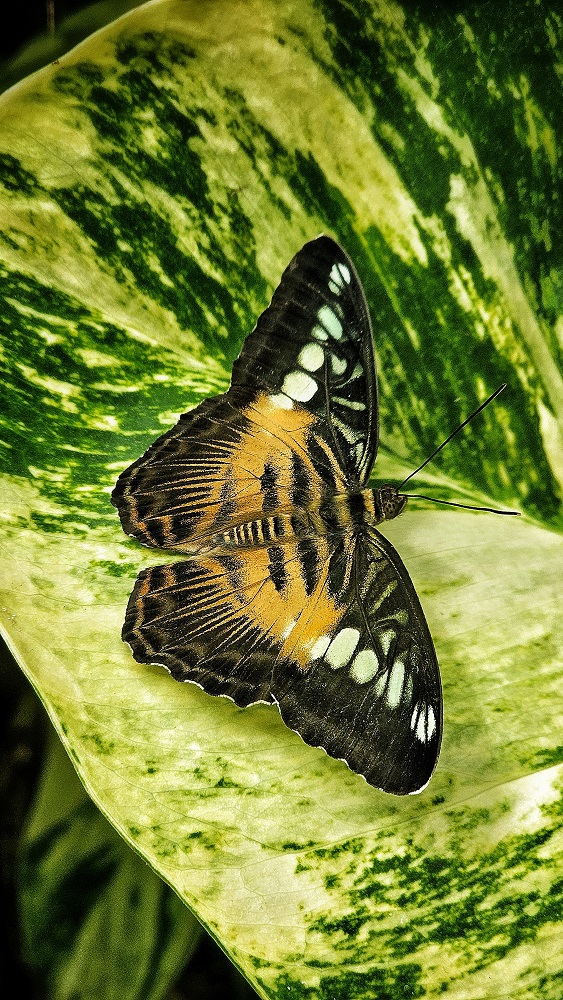
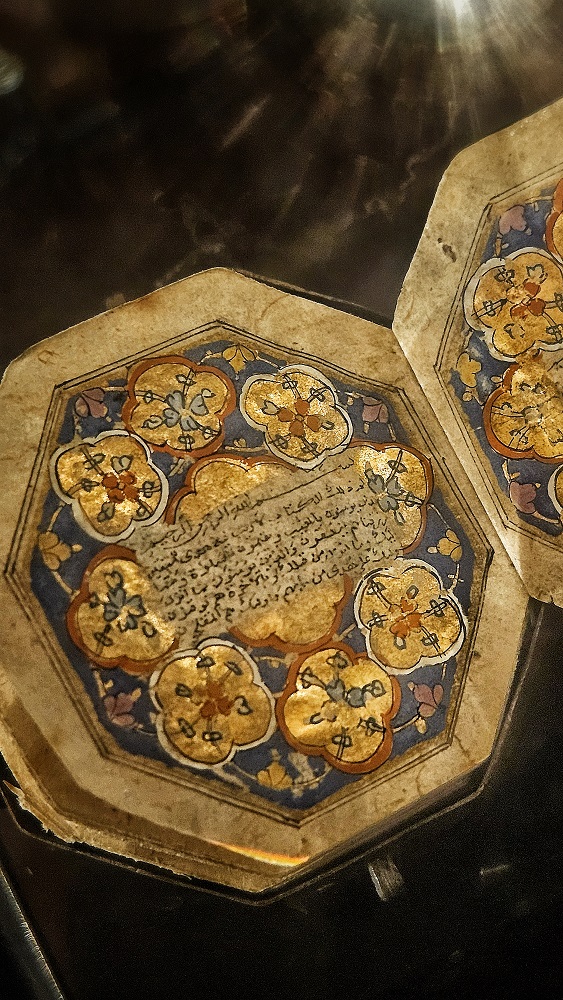
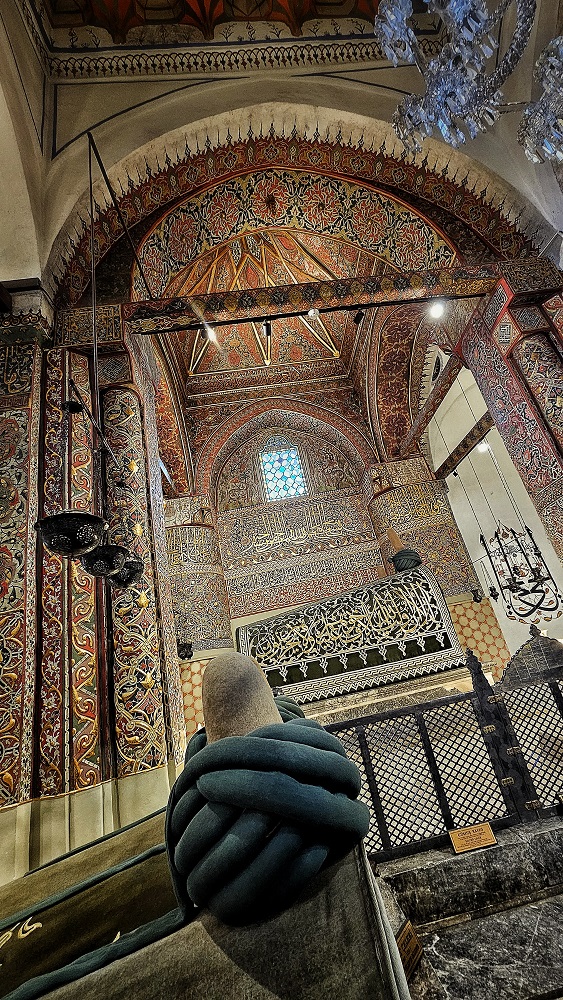
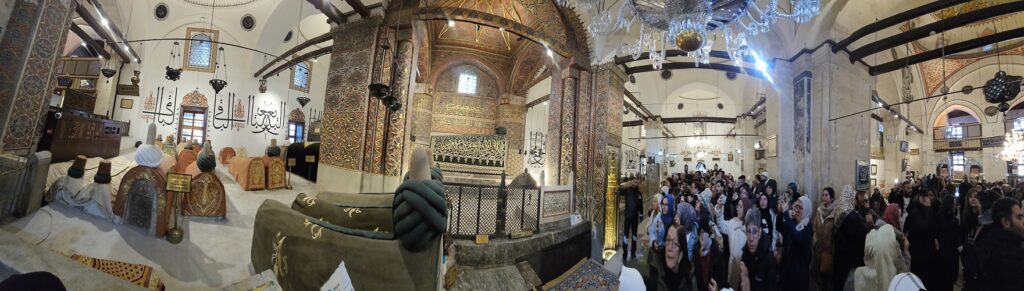
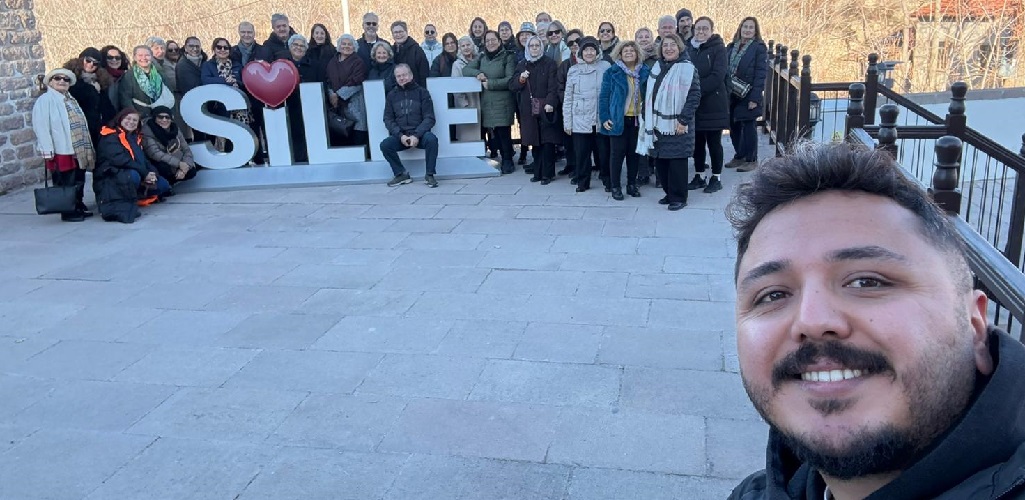
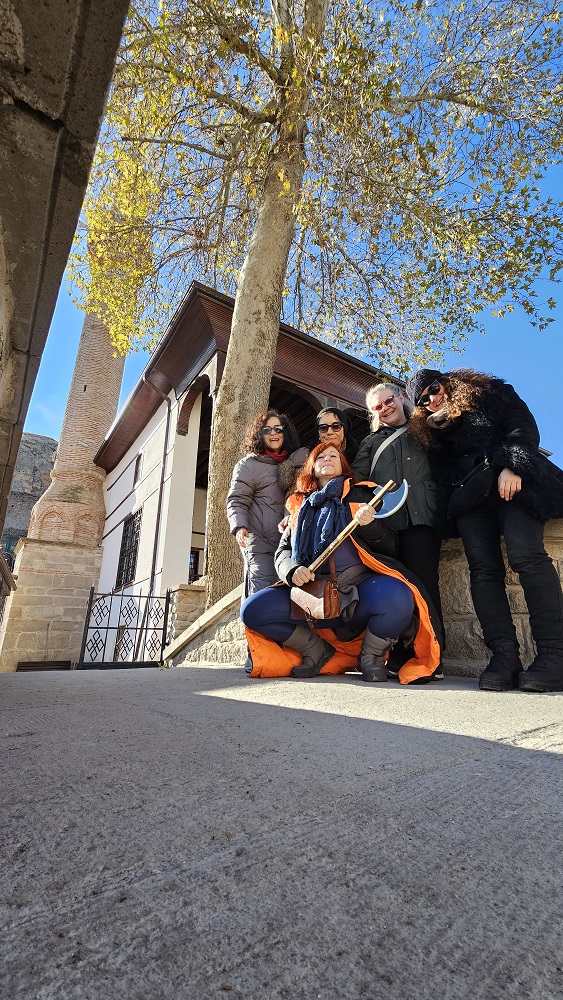
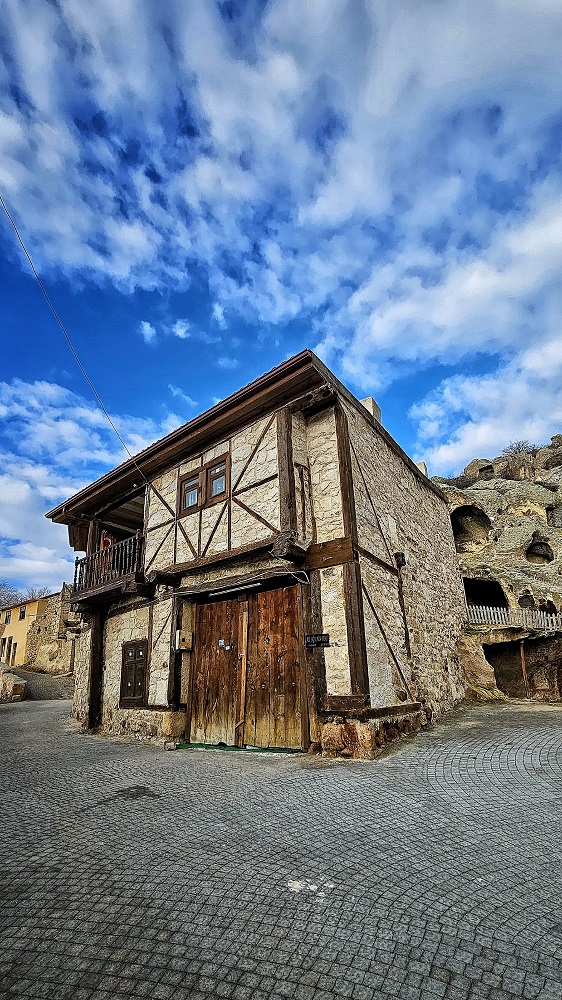
Apart from the Şeb-i Arus ceremony, what impressed me most in the program were the Karatay Madrasa as a venue, the Tomb and Mosque of Şemsi Tebrizi with its energy and the Mevlana Mausoleum, which was captivating on both aspects. The town of Sille, with its very well-designed museum, was a sweet touch and breathed life into the program. The Butterfly Garden was the surprising beauty of the tour; we loved it.

Shab-i Arus

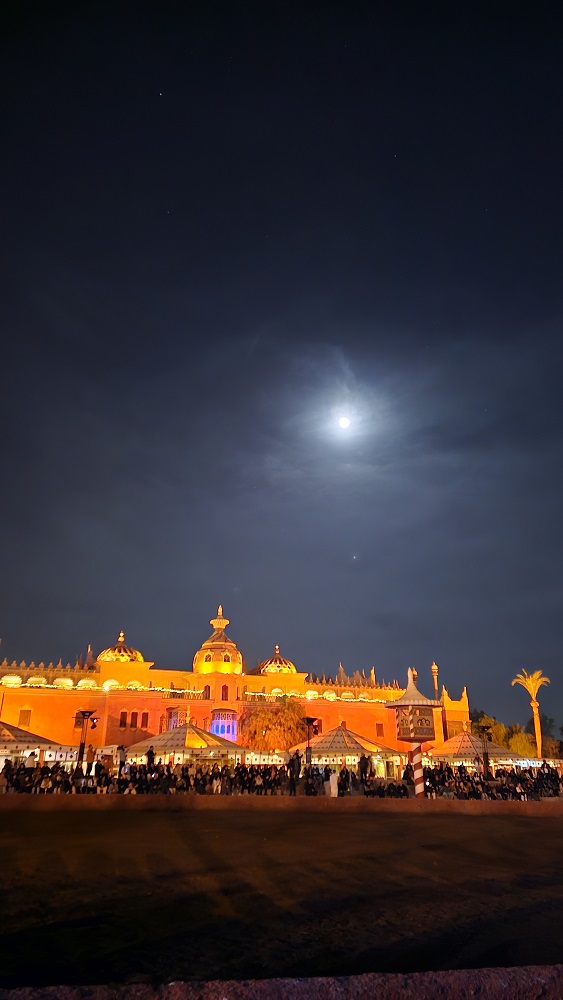
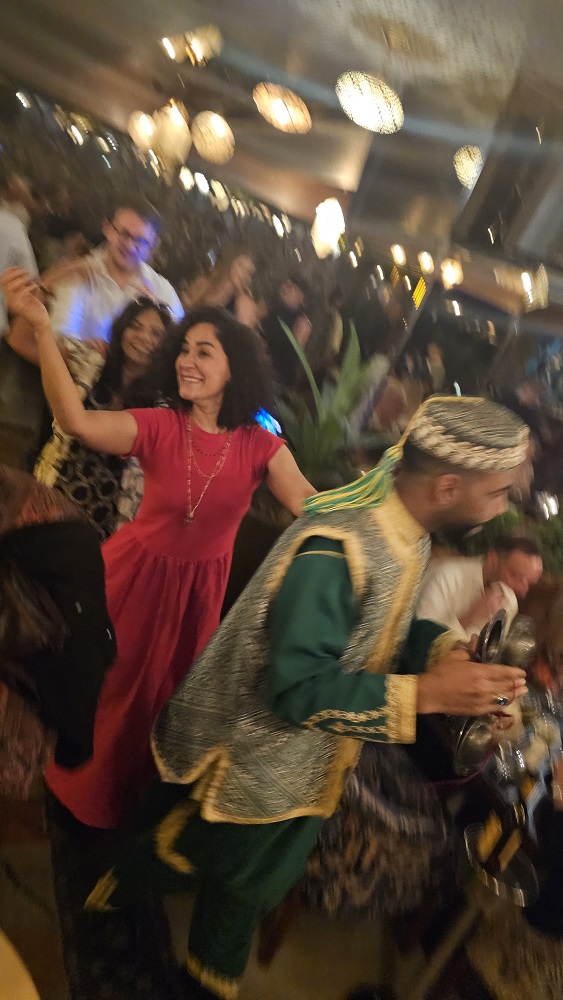
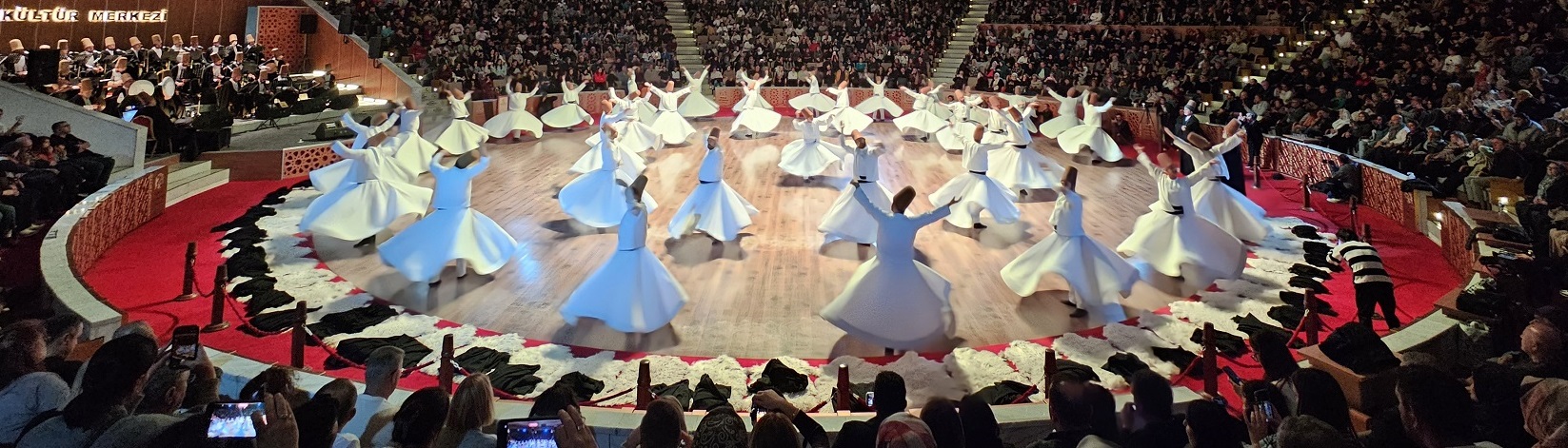
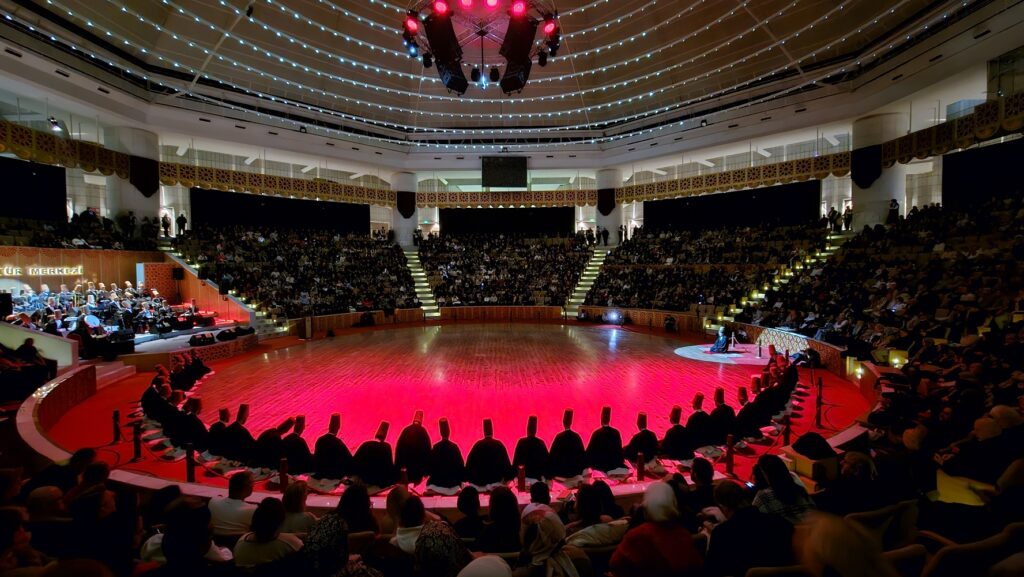
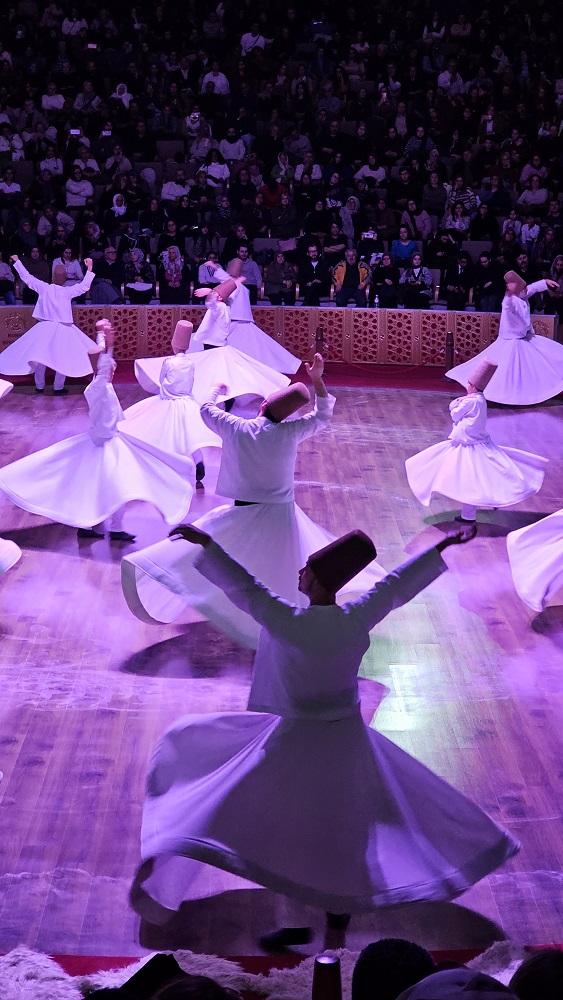
The Şeb-i Arus ceremony held at the Cultural Center was a little different than I expected. The size and crowd of the venue initially made me worry that it might be a very touristy event, but that feeling completely disappeared afterwards. The ceremony started with a Sufi music concert by Ahmet Özhan, whose voice we remember from our childhood. The subsequent Sema ceremony was truly magnificent. Both the traditional Sema and the movements of the dervishes, as well as the successful lighting and arrangement of the modern venue, were enough to transport the audience to another world. The only annoying issue was the ill-mannered behavior of some inconsiderate audience members; we tried to ignore them. In the end, we all left the approximately two-hour ceremony with a feeling of “I’m so glad I attended.”

Tatilbudur Review

Actually, I don’t usually prefer traveling with tours. I prefer to do my own research and plan my own route and schedule. This way, I can travel according to my preferences and time, and it also gives space to spontaneity. The actual reason I chose this tour was because it was so difficult to find a ticket to the Şeb-i Arus ceremony.

But our tatilbudur.com experience was so satisfying and enjoyable that it made me reconsider… First of all, the pre-trip information and organization received A+ from all of us. But more than the program of the tour, our guide Mert Oymak’sHis elegant and respectful demeanor, as well as his professionalism, won the hearts of our team and the entire group. At every stop, he shared information in just the right amount—neither too much nor too little—with the confidence of someone who knew all the necessary details, satisfying every participant in this cosmopolitan tour. He answered questions and comments patiently and calmly, always with a smile on his face. We are grateful to him for reminding us the kind of person we long for with his noble stance that strikes a delicate balance between professionalism and sincerity.

Where are you, Semra?

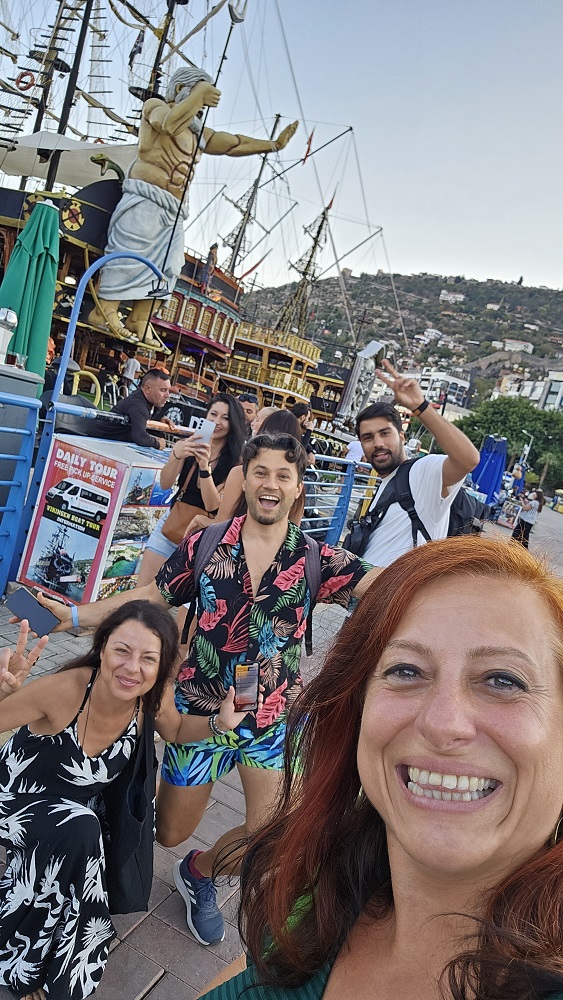
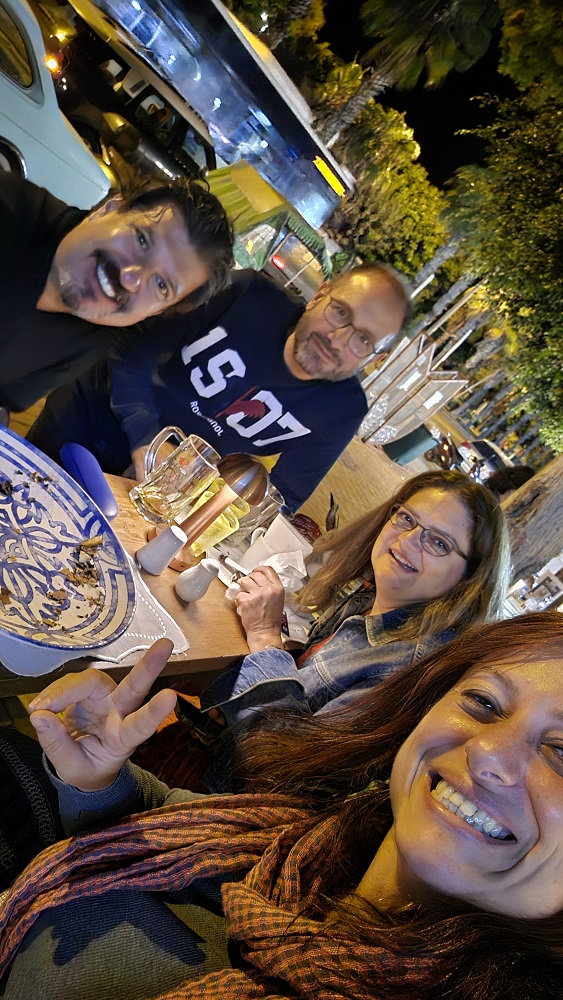
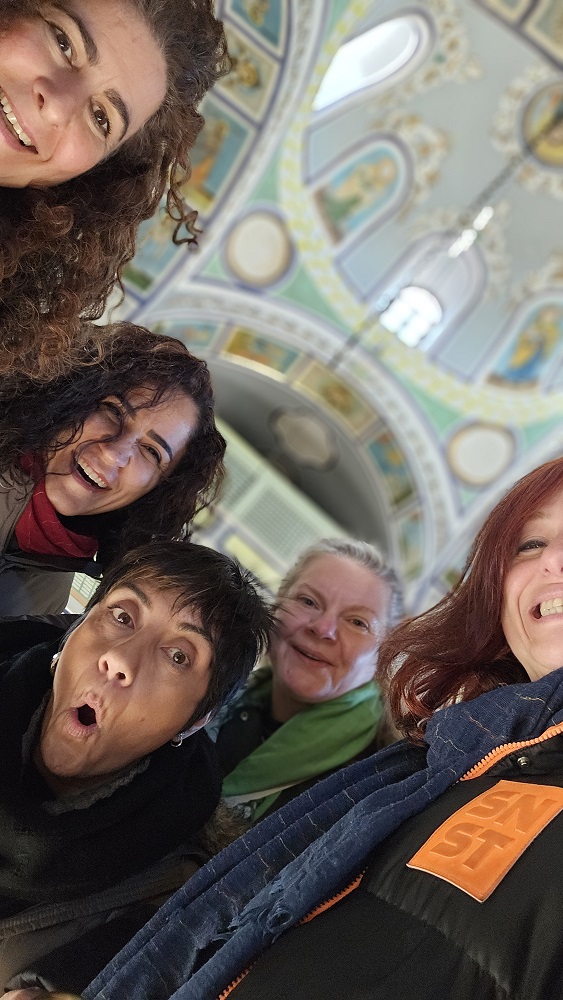
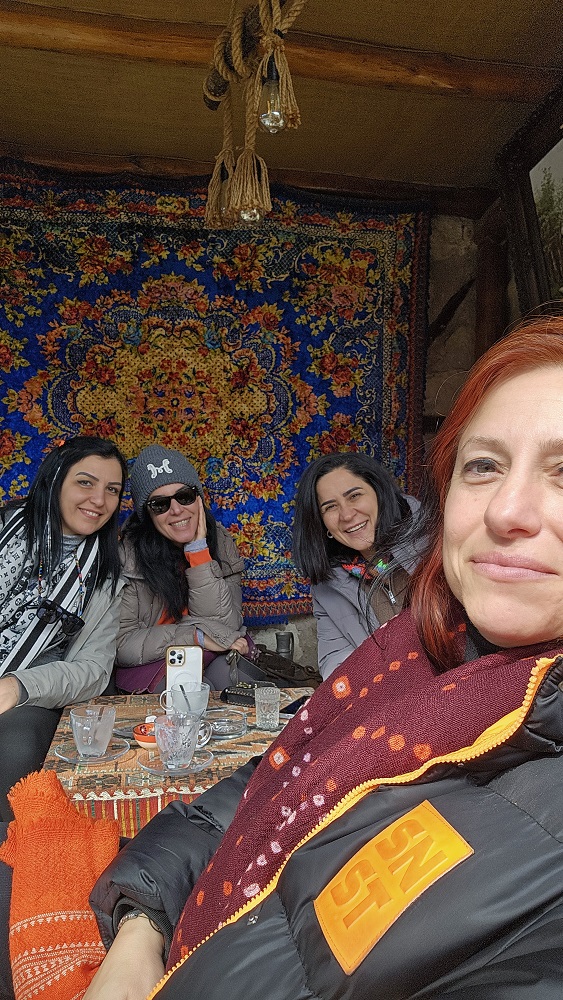
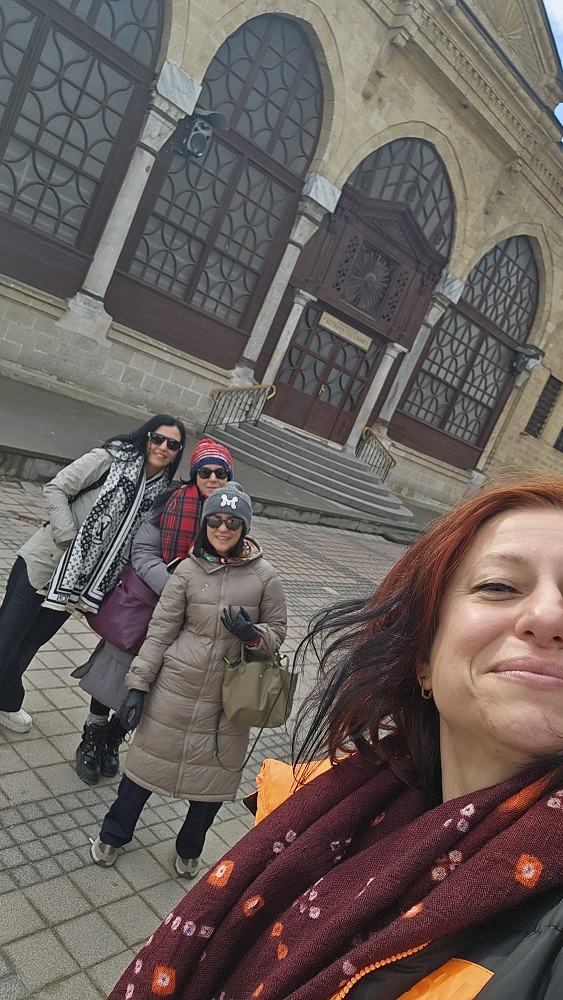
While I was looking for a companion at first, we first became two, then four people. Semra, however, missed my messages; so she joined as the fifth later. But because she made her reservation after our group of four, she was separated from us both on the train and the bus. Moreover, since she was seated at the very back of our large tourbus, she was always the last to get off. To avoid being separated, at every new stop one of us would ask, “Where is Semra?” Of course, being a cheerful group, this turned into a joke after a few times. The random, inappropriate “Where is Semra?” exclamations made our journey more joyous.

Arrogant Kibyra

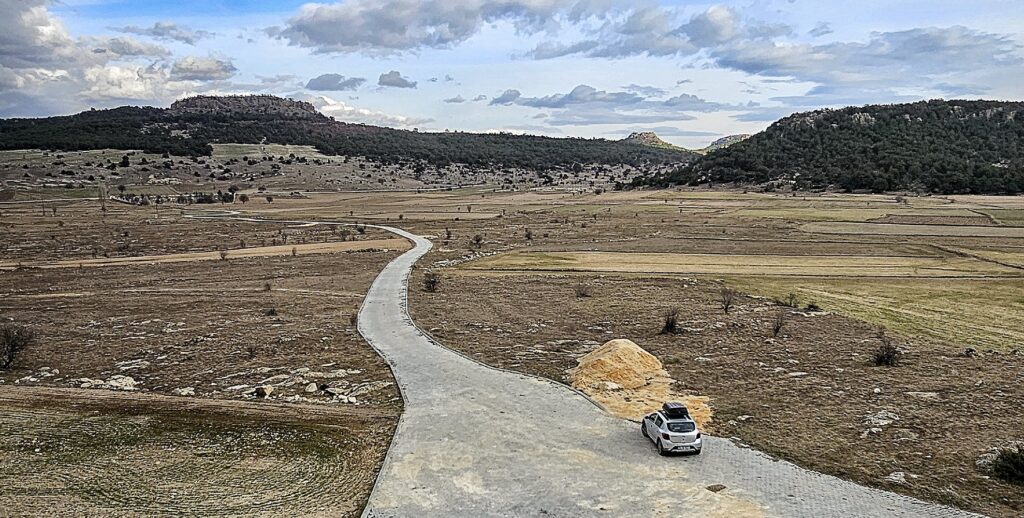
Kibyra stands alone a little out of the wayThe city sits proudly on a hilltop, a bit far from the coast and touristy sites. It’s two hours from Antalya, and about an hour each from Burdur and Denizli; nestled among the mountains in a town called Gölhisar.

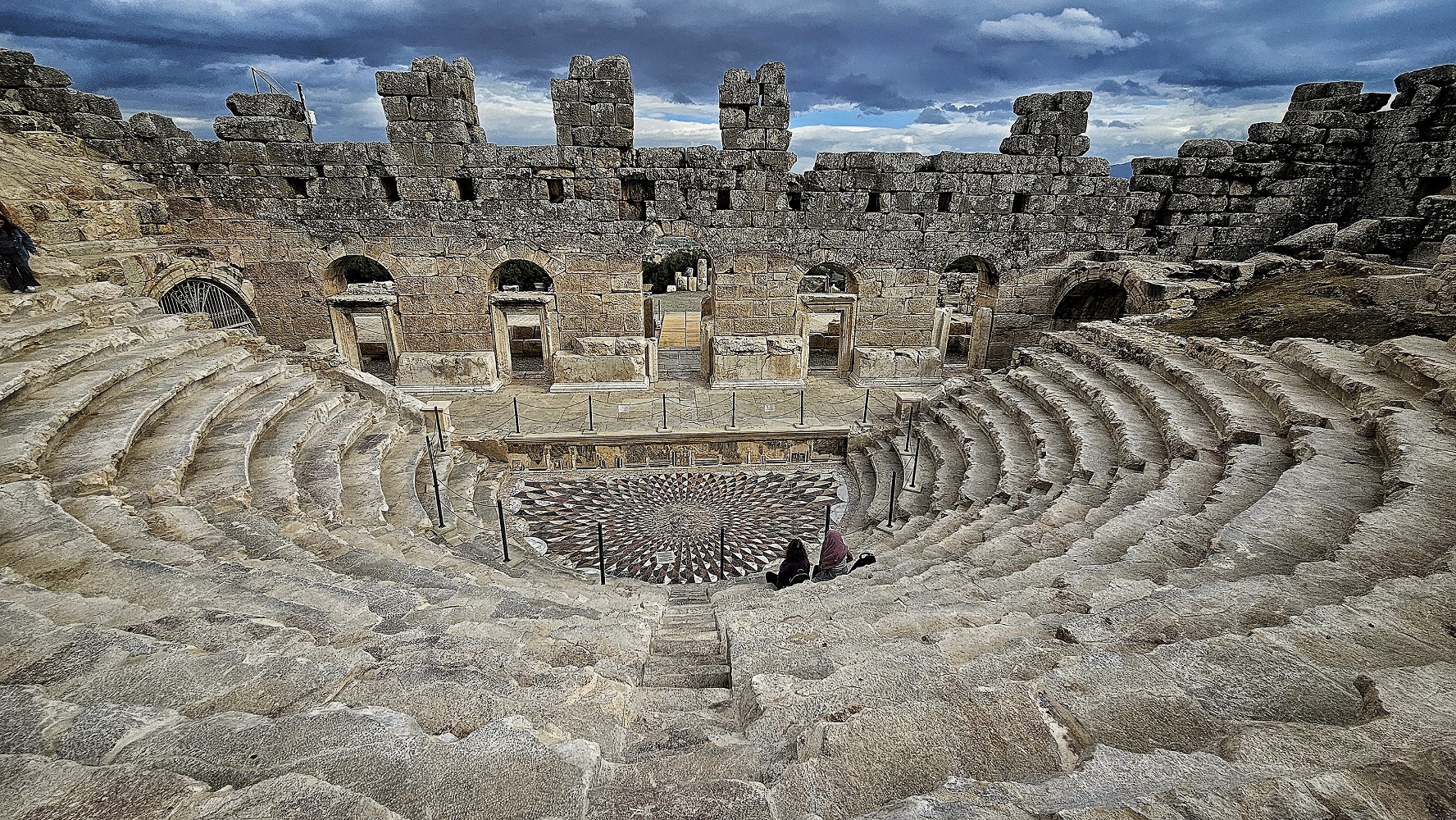
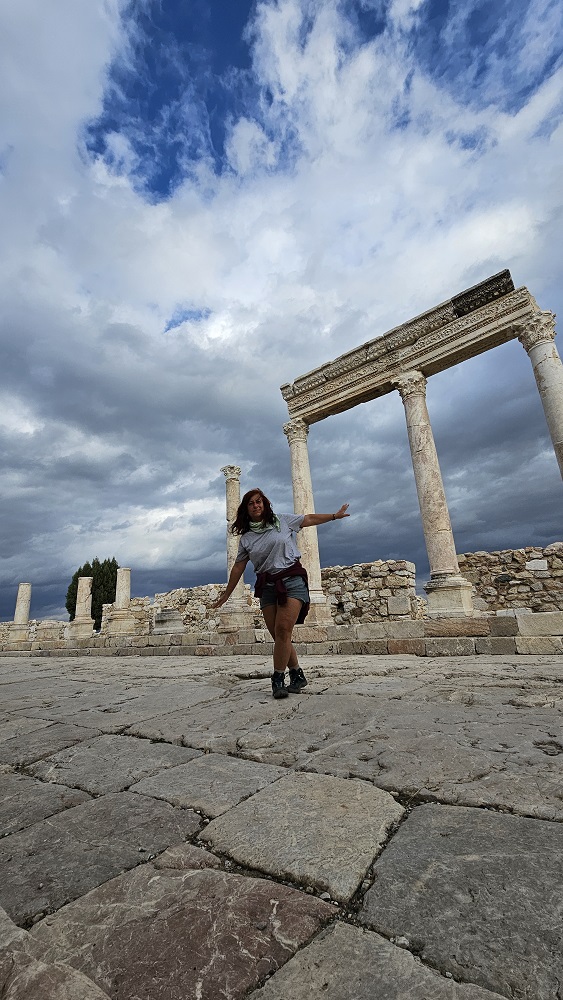
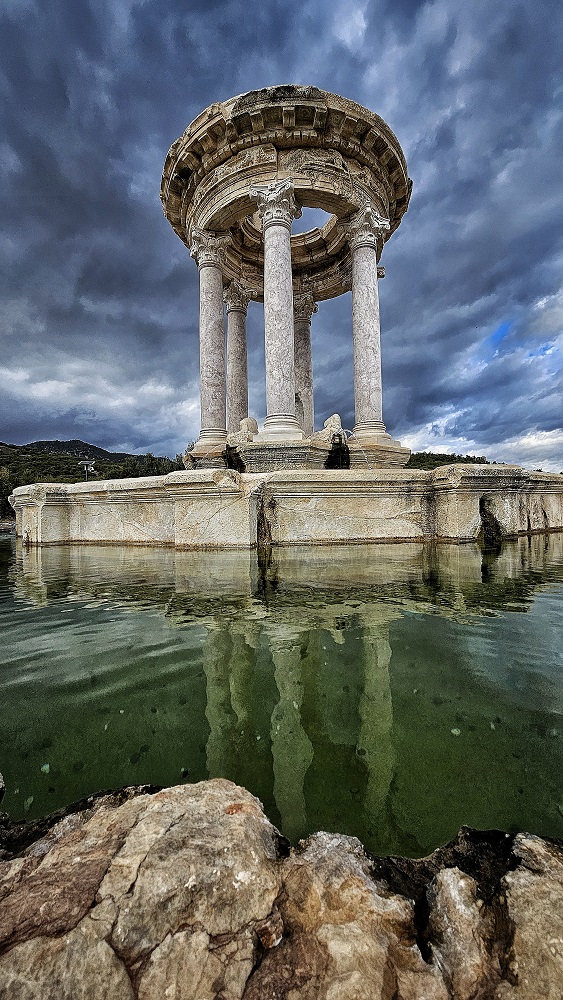
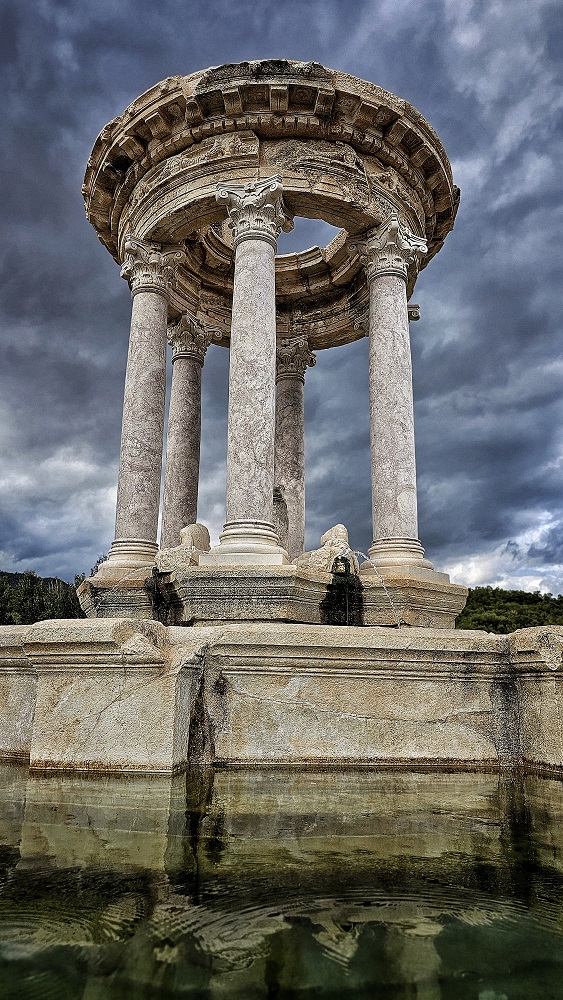
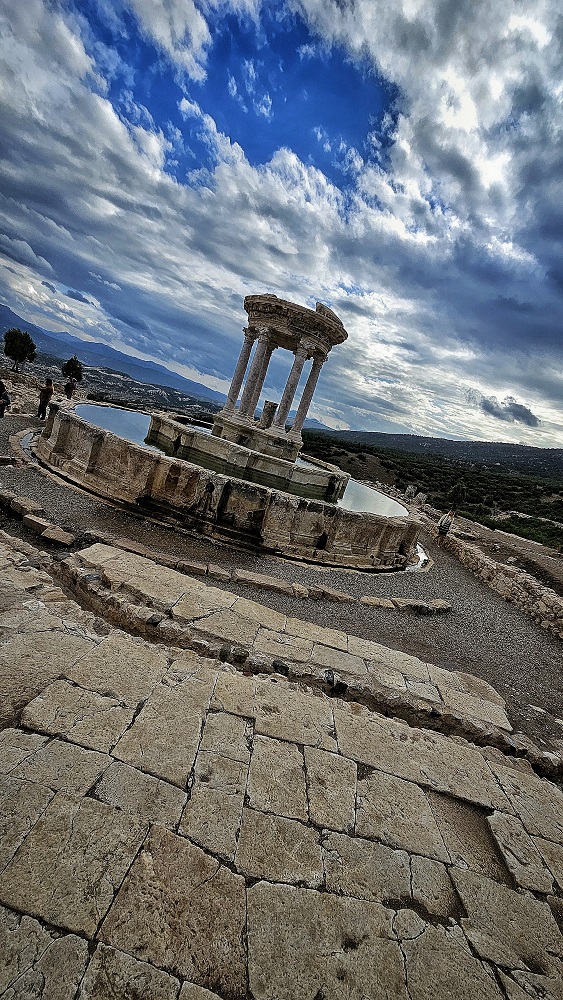
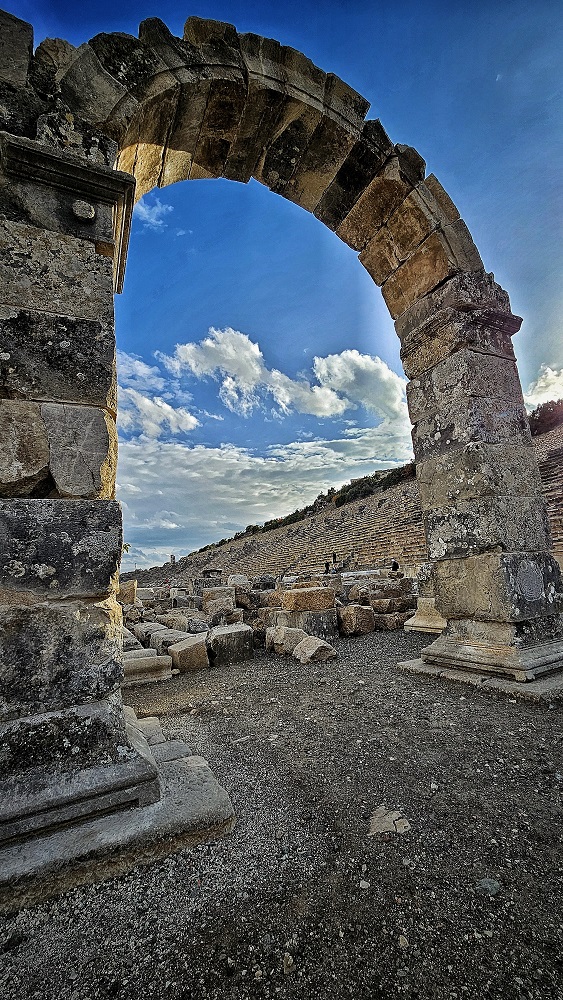
But it deserves its arrogance to be honest… It should be proud of its magnificent mosaics that have been recently unearthed (especially the Medusa in the theatre), its magnificent settlement spread over the slopes of the hills and the hypnotic fountain that still runs today.

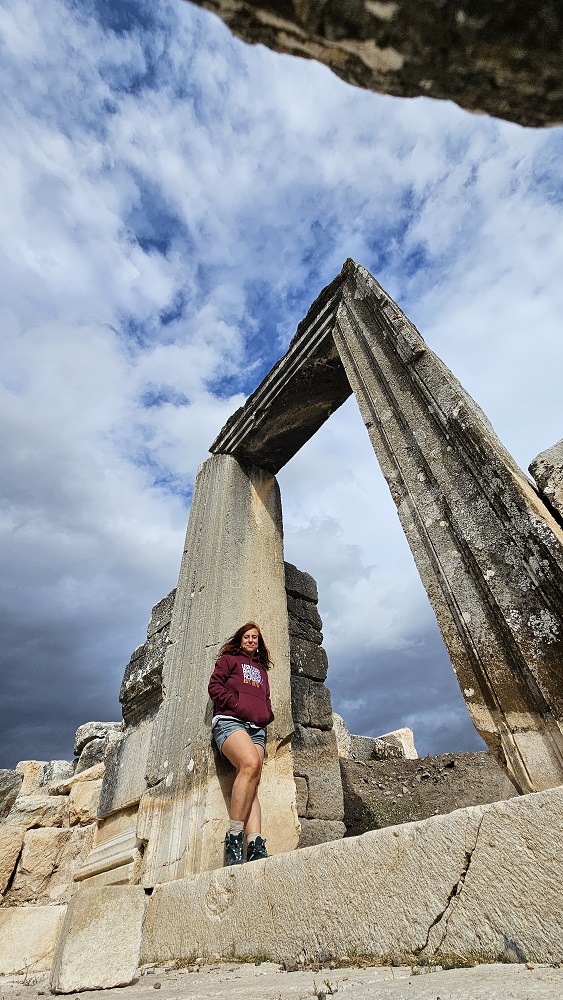
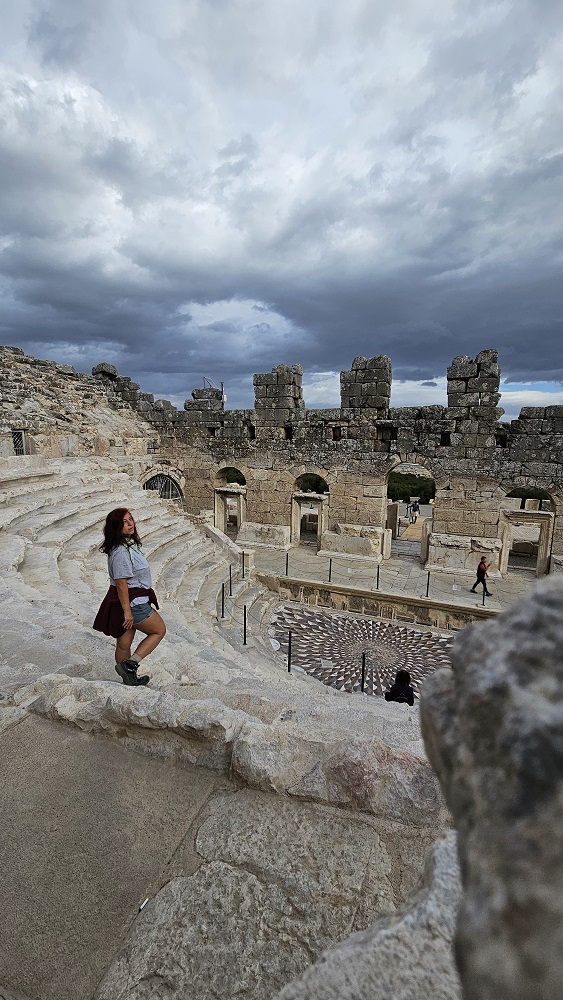
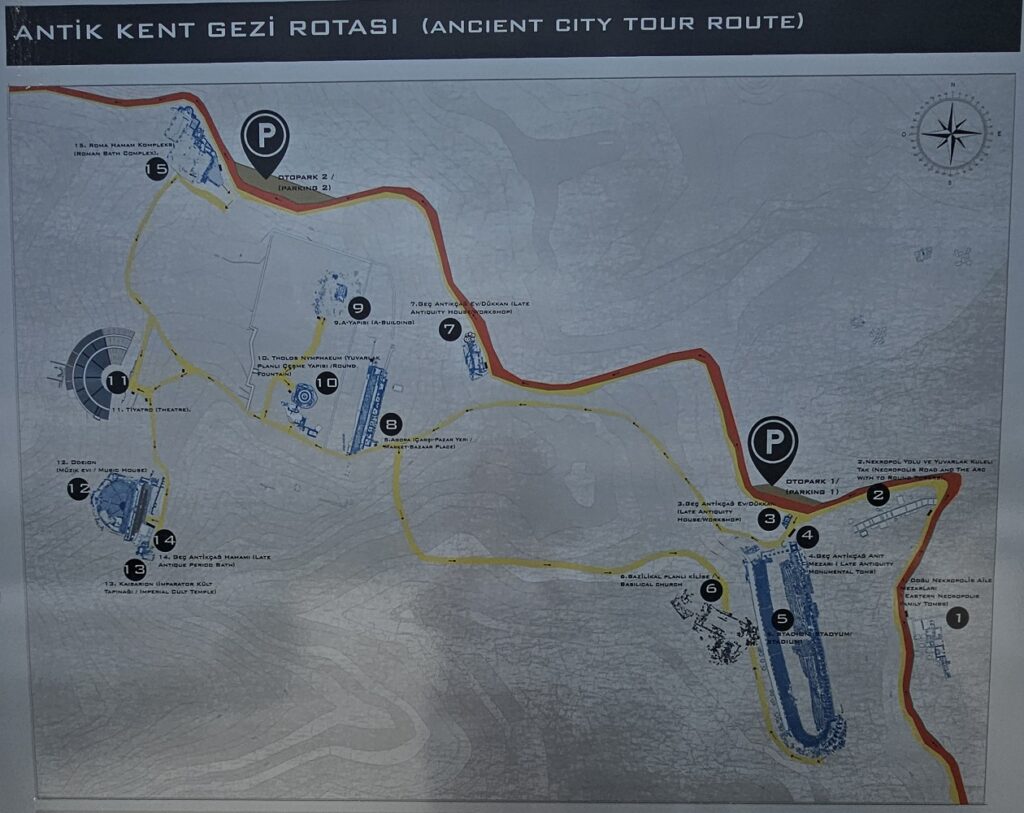
Because I was so impressed by the magnificent ruins of Kibyra at the Burdur Archaeology Museum earlier during my spring visit; I thought I absolutely had to visit it. So, after leaving Antalya and visiting Termessos, I arrived at the site in the latter half of the day. There are parking spaces on two levels; I parked at the higher one and followed the route down. It took me about two or three hours to explore the entire city. Finally, I hitchhiked up from the lower parking lot. At the end, I’d conquered two ancient cities on two mountains in one day; but they were the actual victors. Kibyra’s arrogant beauty was worth it!

Historical Information

The ancient city of Kibyra is located on three dominant hills separated from each other by deep cliffs in the Horzum neighborhood of the Gölhisar district of Burdur.

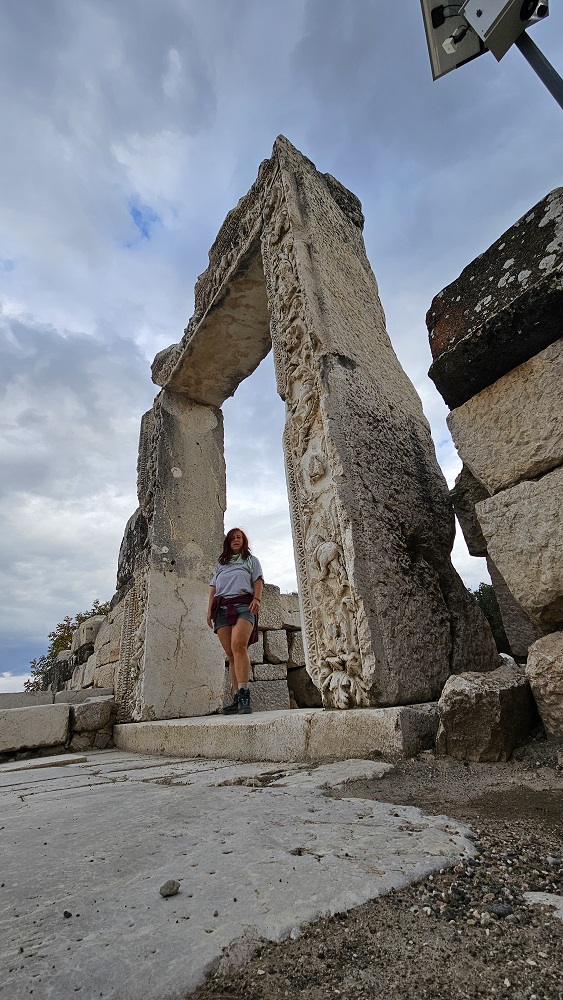
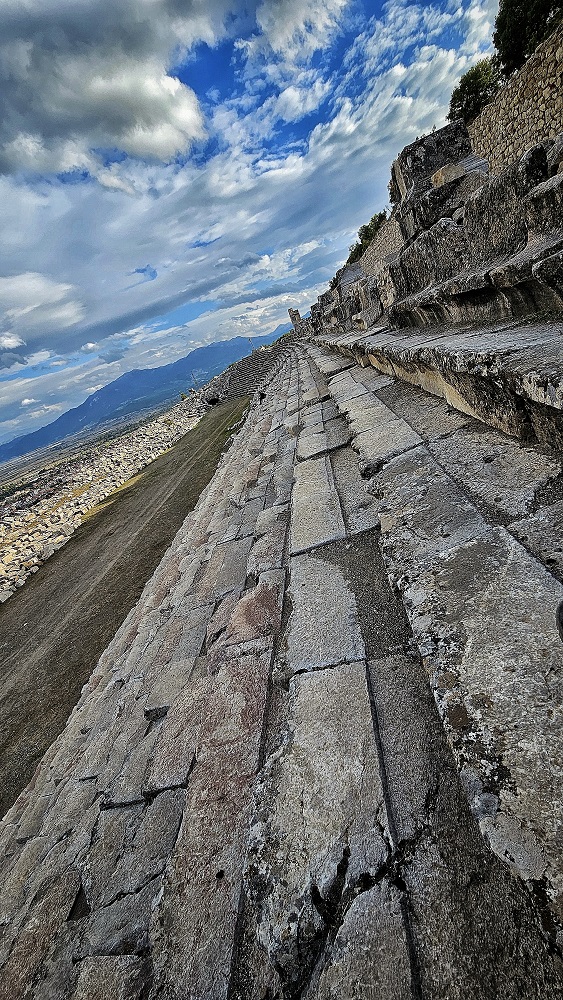
The city’s settlement area is quite extensive. The buildings are arranged symmetrically, with hilly terraces dominating the lake and plain views, ensuring that no structure obstructs the view of another. As you enter the city, on the left is a magnificent monumental gate and the most magnificent stadium in ancient Anatolia, with a capacity of 12,000-13,000 people.

As we proceed, we see the basilica, the upper and lower agora, the bathhouse, the gymnasium, the theater, the council building, a planned mausoleum, a bathhouse, a round-towered arch, and aqueducts. The council building/music house, with its capacity of 3,600 people, is one of the most magnificent works of ancient Anatolia. Located in the heart of the council building/orchestra, the Medusa Mosaic, made of red, green, and white marble, with its hair composed of snakes and its gaze that turns people to stone, is unique in Anatolia.

In 2011, a mosaic, covering 540 square meters and considered the largest and most intact mosaic site in Anatolia, was unearthed in front of the parliament building. Also in front of the parliament building was a Roman bathhouse and a ceramics workshop dating back to the Late Roman Period (6th-7th centuries AD). All the architectural remains visible in the city today date from the Roman Imperial Period.

Cibyra appears to have been under the rule of the Kingdom of Pergamum during the reign of Eumenes II (197-159 BC). Immediately thereafter, a four-party council (2nd-1st centuries BC) was formed, consisting of the ancient cities of Cibyra and its surroundings: Boubon, Balboura, and Oinoanda.

This league was dissolved and abolished by the Roman General Murena in 82 BC, and the province of Asia and other cities were incorporated into the Lycian League. The city, destroyed by a massive earthquake in 23 AD, was rebuilt by the Roman Emperor Tiberius. Cibyra experienced its most glorious period, particularly between the 1st and 3rd centuries AD.

Cibyra is renowned for its blacksmithing, leatherworking, pottery, and horse breeding. The city’s inhabitants were fiercely warlike. The parliament building, with its Medusa head and the largest and most intact mosaic area in Turkey in front of it, are noteworthy. Artifacts unearthed from Cibyra are on display at the Burdur Museum.

Source: Cultural Inventory, Ankara 2007

Kibyra Wiki Page HERE

Peaky Termessos

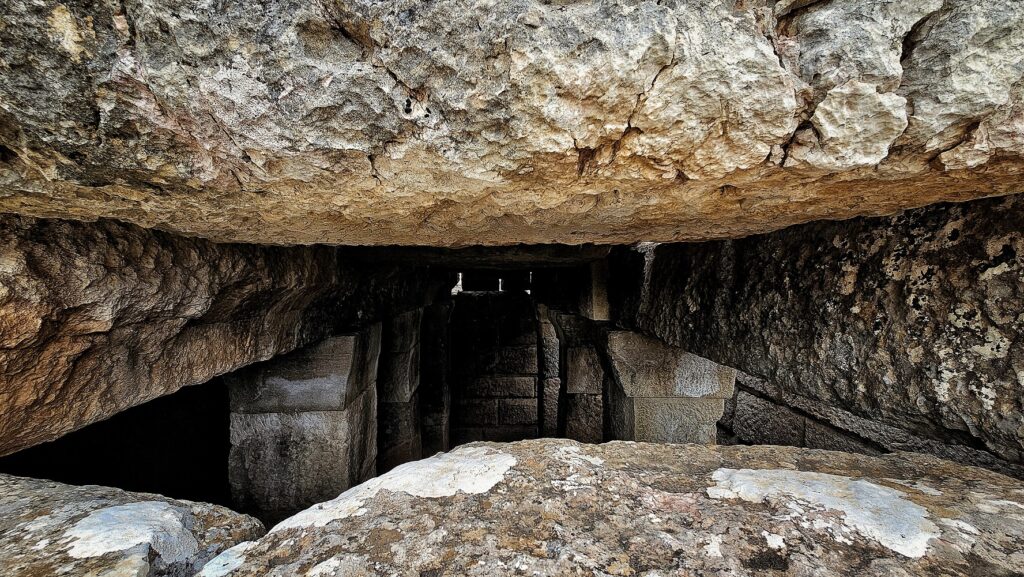
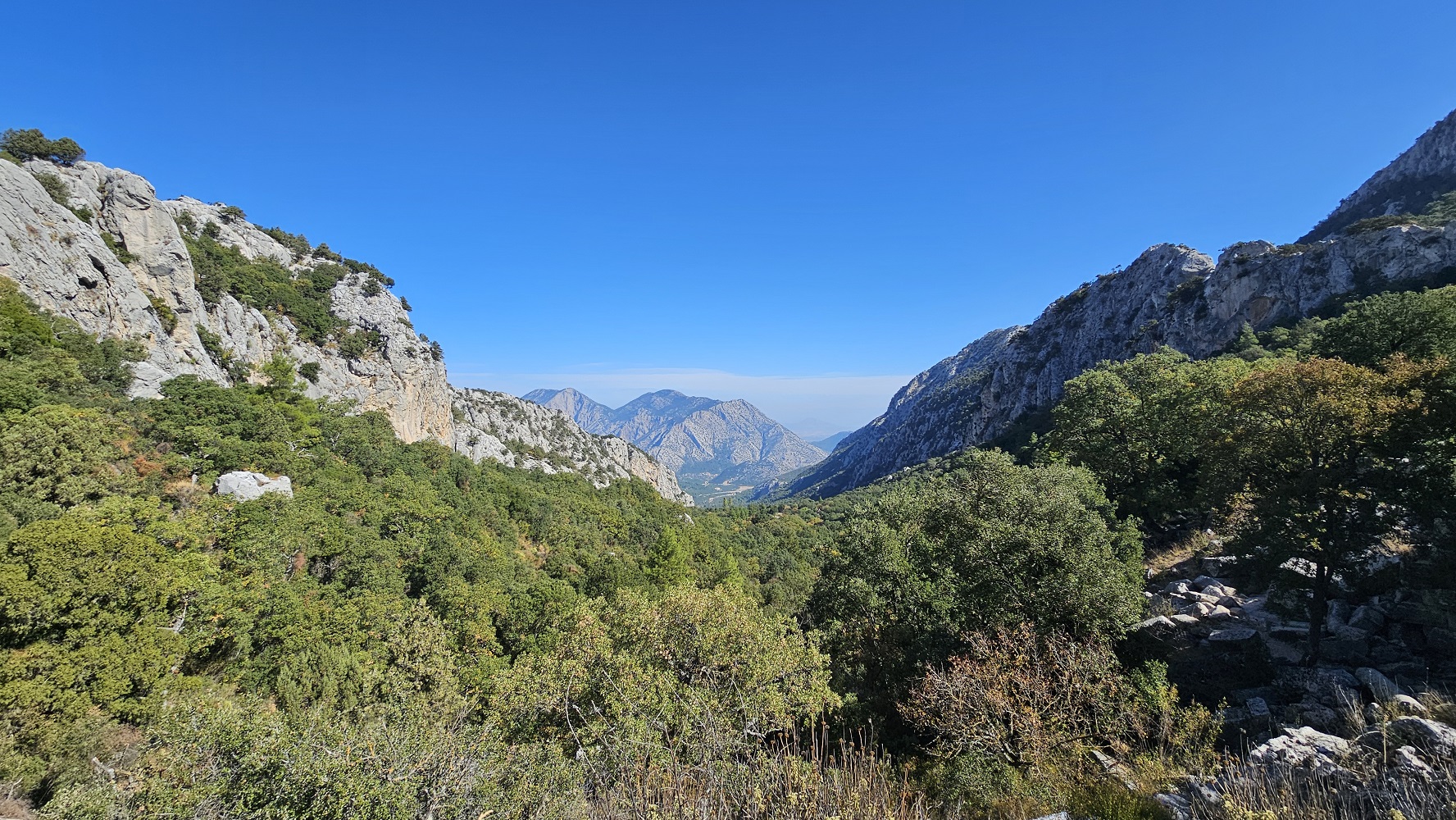
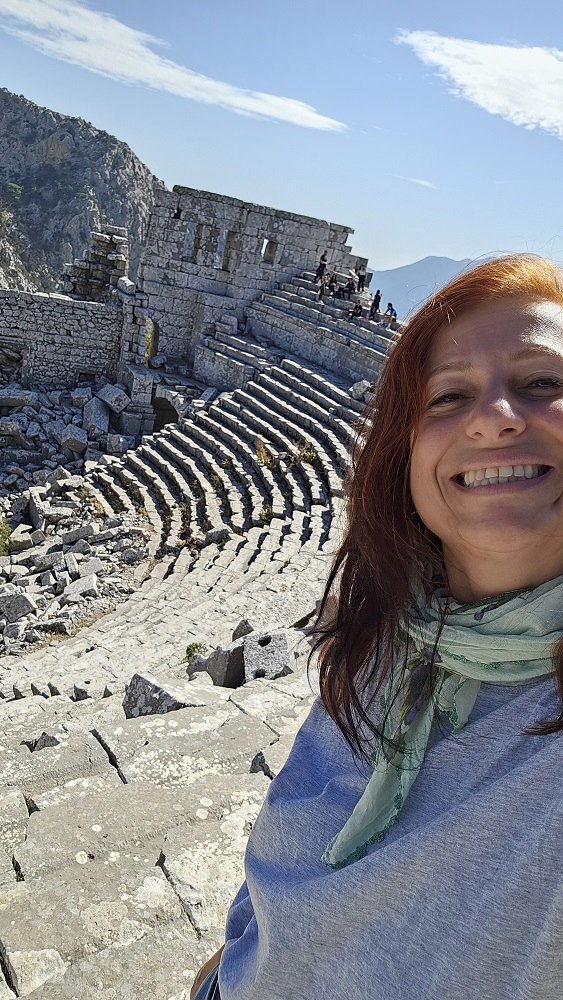
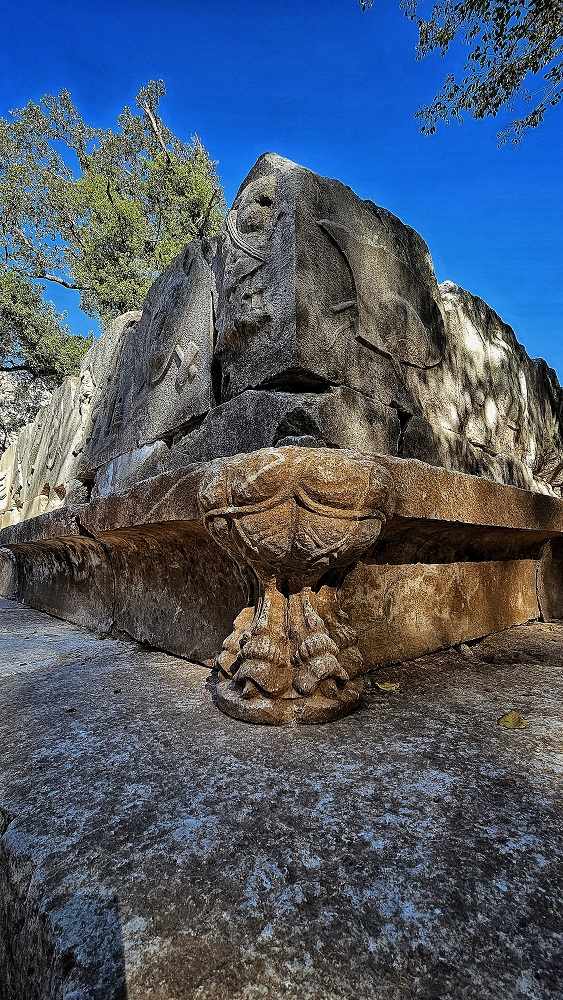
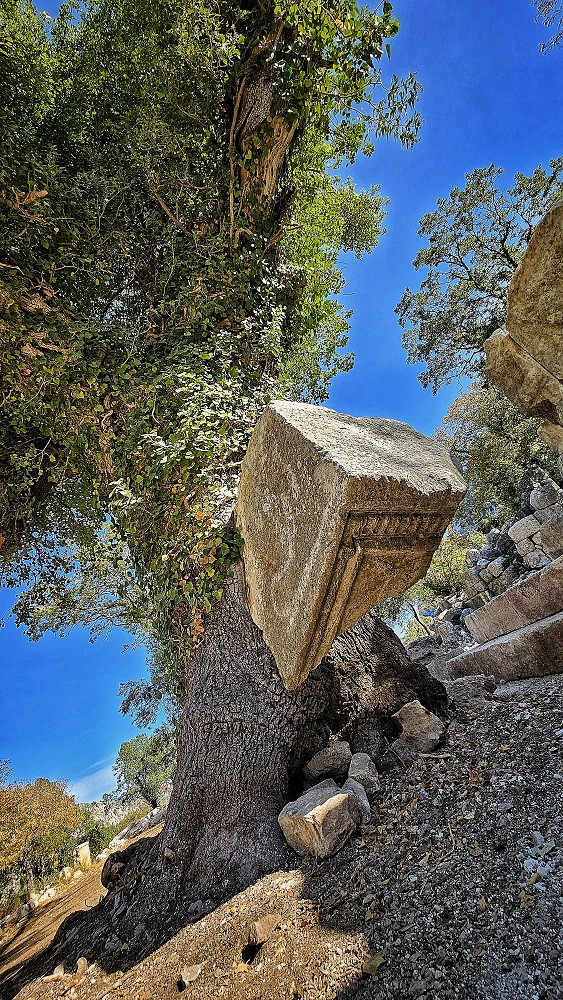
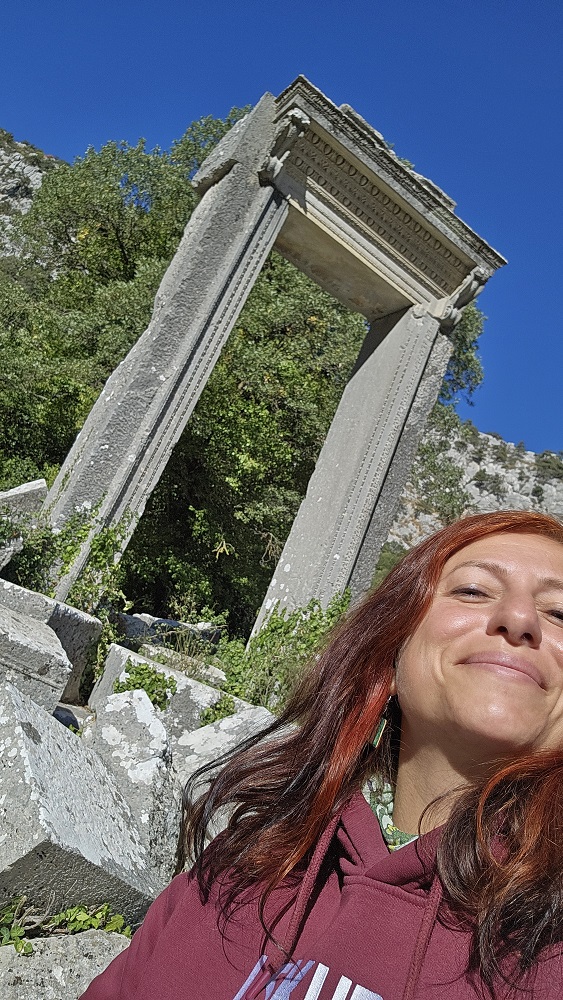
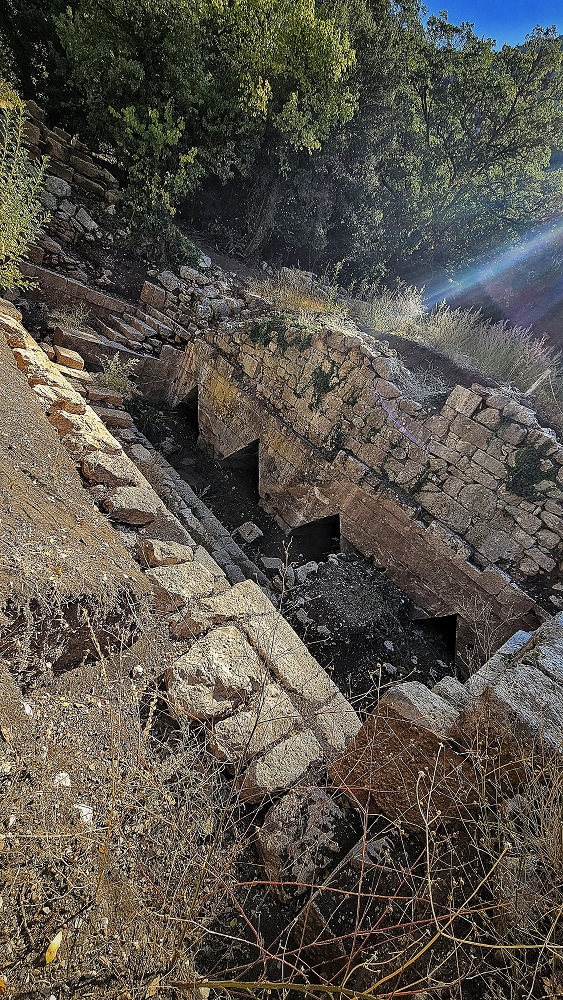
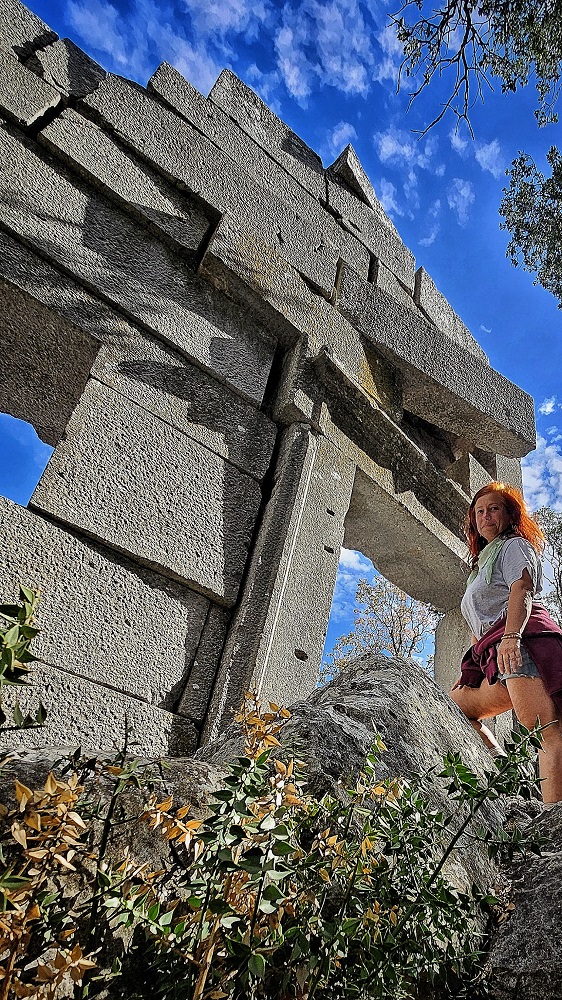
I visited Termessoss in October… It was the perfect time; the sun was warm enough, the shade was refreshing enough. I decided not to overdo my research not to have great expectations. But as I climbed the peaks, I was captivated; the site embraced me first with the beautiful nature, then with the amazing topographical layout & the glory of the ruins. The city stands high leaning against one peak and overlooking the other. At the top, I felt like a ruler and especially, while perched on the crest of that theater, the wind carried me away in historic dreams.

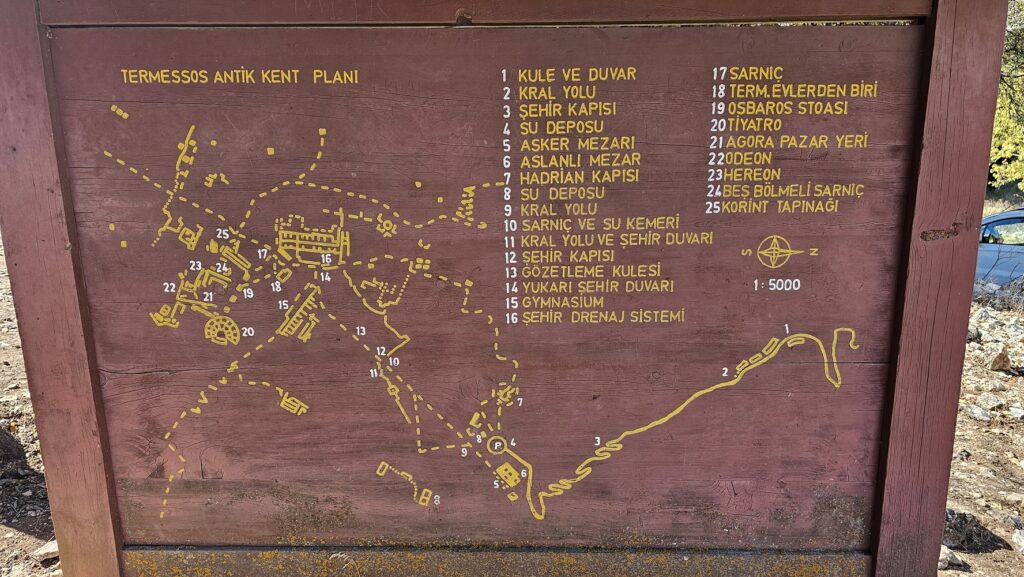
To reach Termessos, which is about an hour from Antalya city center, you travel northwest. Since my next destination was the ancient city of Kibyra, I left early in the morning and spent half a day there. I entered the national park by car, followed the winding road up, enjoying the stunning views, and parked at the parking lot where the official site begins. There are some ruins here, but to explore the main city, you’ll need to climb a path. I advise you to be physically prepared for some hiking (like shoes) and to be mentally prepared for the slopes. I did the entire route; at the end, I’d have walked approximately 8-10 km. Shorter routes are possible, but it’s worth the effort!

Termessos Historical Information

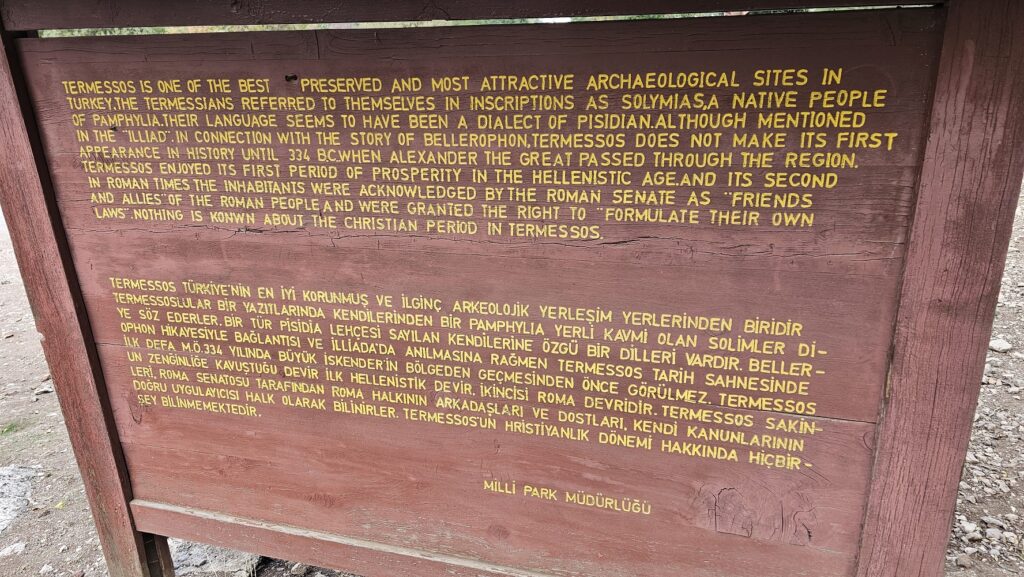
Termessos is an important ancient city, founded by the Solyms, descendants of the Luwians, one of the oldest peoples in Anatolia, in the valley between the peaks of Mount Solymos, today known as Güllük. It is one of the most striking archaeological sites protected within the forest and located within the National Park of the same name. Güllük Mountain (Termessos) National Park is a special region, home to both rich flora and endangered animals.

The city entered the historical scene when Alexander the Great laid siege to the city in 333 BC, and the Termessians put up a strong defense, refusing to surrender. After Alexander’s death, the city was taken by the Ptolemies. In 189 BC, the Termessians, who captured the neighboring city of Isinda, were punished by Manlius Vulso, Commander of the Roman Forces in Anatolia, following a complaint from the people of Isinda. It is likely that a war was also taking place between Termessos and the Lycian League around the same time. In 71 BC, the Roman Senate recognized and confirmed the independence of Termessos, which had established a “friendship and alliance” with Rome, and the right to make its own laws.

It is known that Amyntas of Galatia ruled Termessos, along with other cities in Pisidia, from 36 to 25 BC. The city maintained its independence during the Roman Imperial period, as evidenced by the coins it minted. No information is available about the city’s status during the Byzantine and subsequent periods. Termessos witnessed no new settlement after its abandonment, and, apart from earthquakes and natural damage, it remains a remarkably intact and well-preserved site.

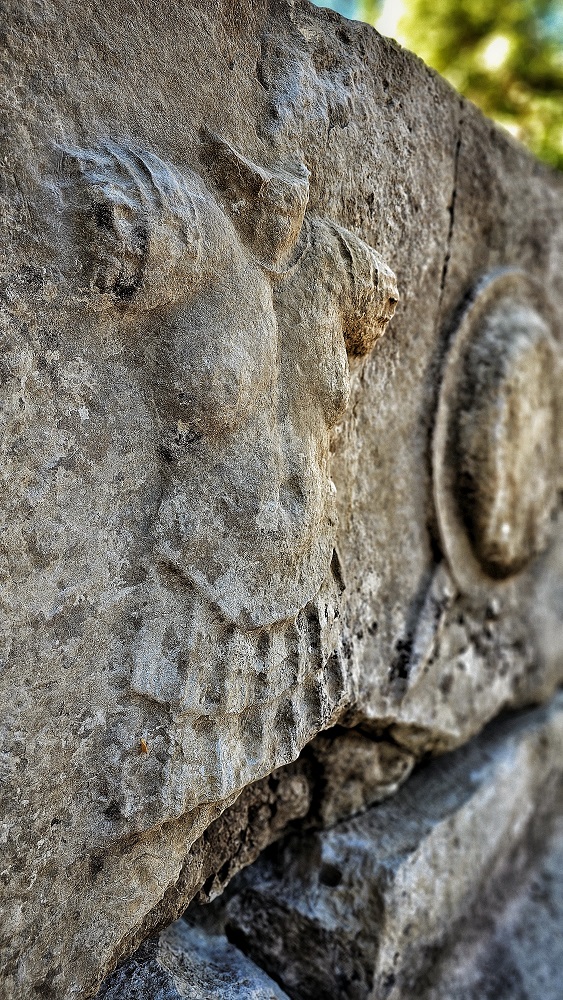
Termessos boasts numerous temples and extensive cemeteries. The variety and richness of its tombs are remarkable. Among these, the tomb of Alketas (319 BC), a prominent commander during the reign of Alexander the Great, and others are also important for shedding light on the city’s history. In addition to the monumental tombs, numerous sarcophagi with shield motifs depicting warriors occupy a significant area of ​​the cemetery. The most interesting artifact from Termessos in the Antalya Museum is the Dog Sarcophagus, displayed in the Hall of Sarcophagi. The poetic inscription, written by the owner of a dog named Stephanos, is particularly significant for its uniqueness.

Termessos, with its settlement and defensive systems, has been one of the cities that best utilized the resources offered by nature. Güllük Mountain-Termessos National Park, designated a World Heritage Site for its natural and cultural values, has been on the UNESCO World Heritage Tentative List since 2000.

Source: “Termessos” Antalya from Past to Present [Volume II], Antalya Provincial Directorate of Culture and Tourism (2012)

Termessos Wiki Page is also HERE.

SKOPJE 2+1

I went to Skopje for three days but I finished going around the city in two… So I spent a day in the surrounding area. I visited a magnificent canyon, had the opportunity to look down on the city from the mountain and gained a deeper understanding of North Macedonia’s topography. In short, you can visit Skopje for two days, but three is also worth it. If you spend five days, you’ll also get to visit Ohrid.

Chapter #1 – Museums

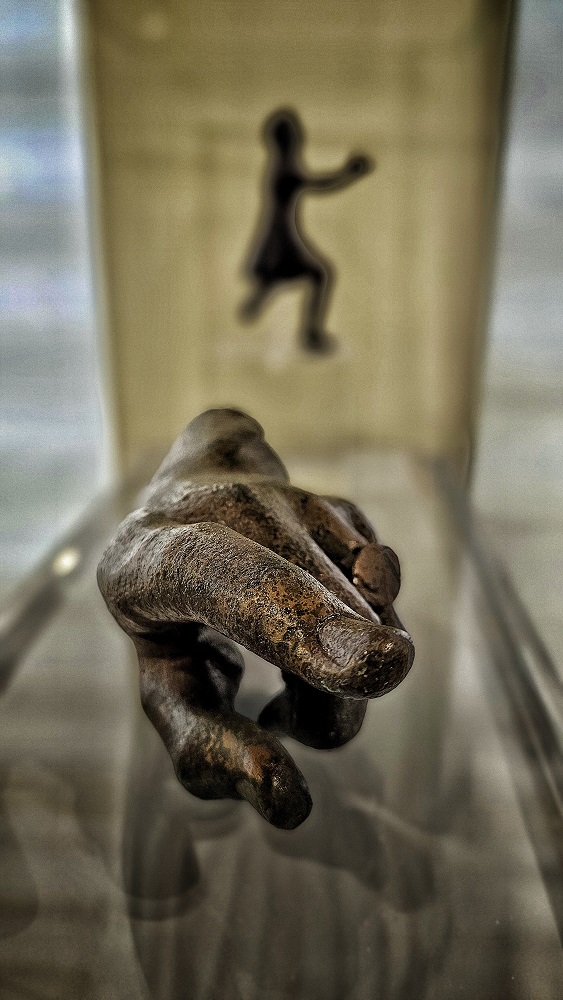
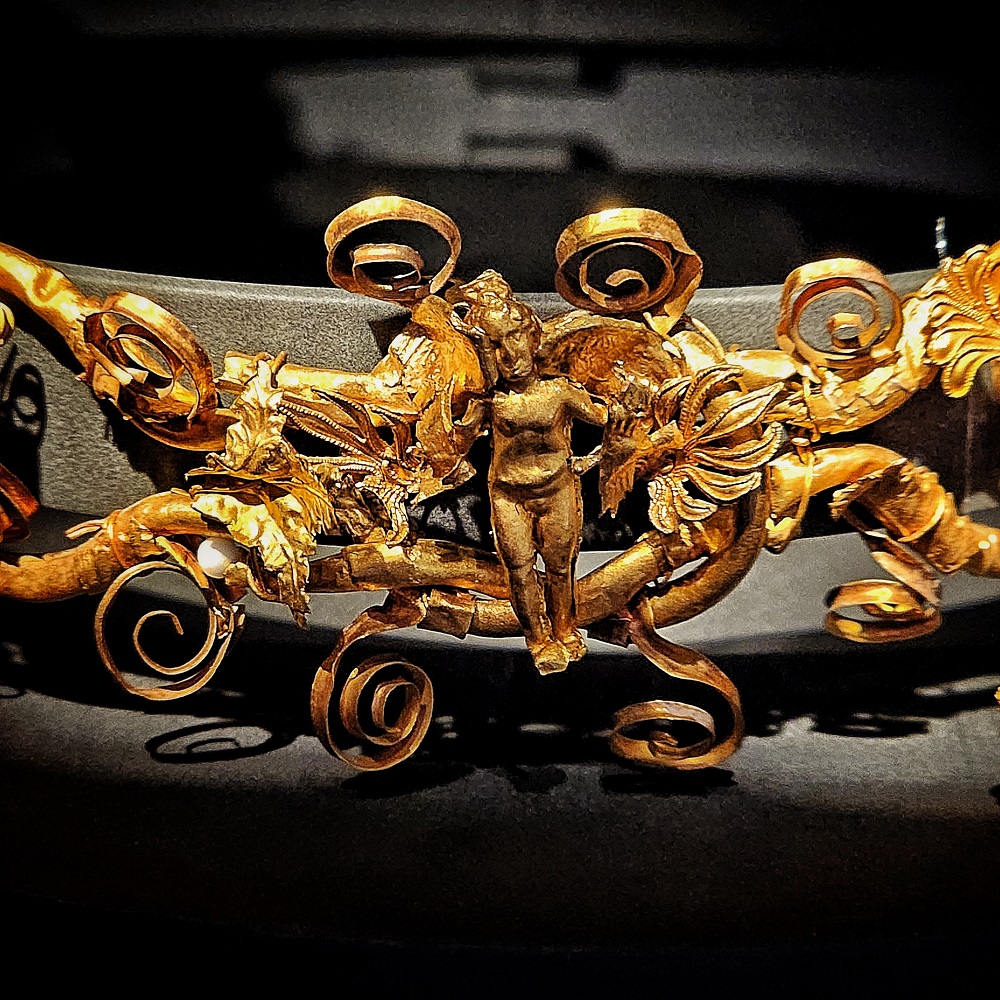
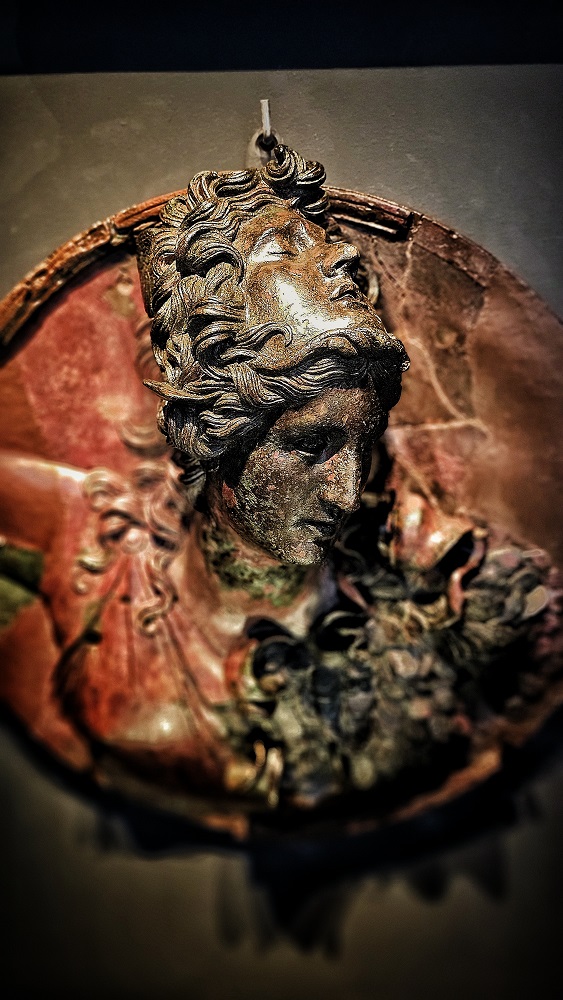
I arrived in Skopje on a rainy day, so I decided to visit the museums first. My main goal was Archaeological Museum of North Macedonia It’s not the greatest museum; besides most of the Macedonian treasures are in Greece. But it does have some unique goddess idols. I’ve witnessed the bulding-based female goddess only here. 

Another museum nearby was Museum of Independence of North Macedonia I went here partly to shelter from the rain and to understand the modern history of the country. Most of it consists of giant oil paintings and recreations, but there are some beautiful pieces. 

I wasn’t too keen on the other museums. I tried another one, but it was closed anyway because the leaking roof.

Chapter #2 – Old Skopje

Skopje Bazaar is the most visited place… The inns, bathhouses, and old buildings, many of which have been renovated and some remain in their original state. Some of these inns and bathhouses have become galleries, art workshops, shops. The most beautiful ones are:

Flea Market & Green BazaarI are at the northern end of the market, but frankly, there’s nothing particularly noteworthy. It’s like a smaller version of Tahtakale, with fewer and more eclectic options. I think it’s better to eat, drink, and enjoy a coffee in the market instead.

In the Skopje Fortress there’s not much to see other than the beautiful city view. However, day tours generally depart from the castle parking lot. If you’ve booked an extra day tour like me, you can arrive an hour or 45 minutes early to visit the castle too. That would be enough.

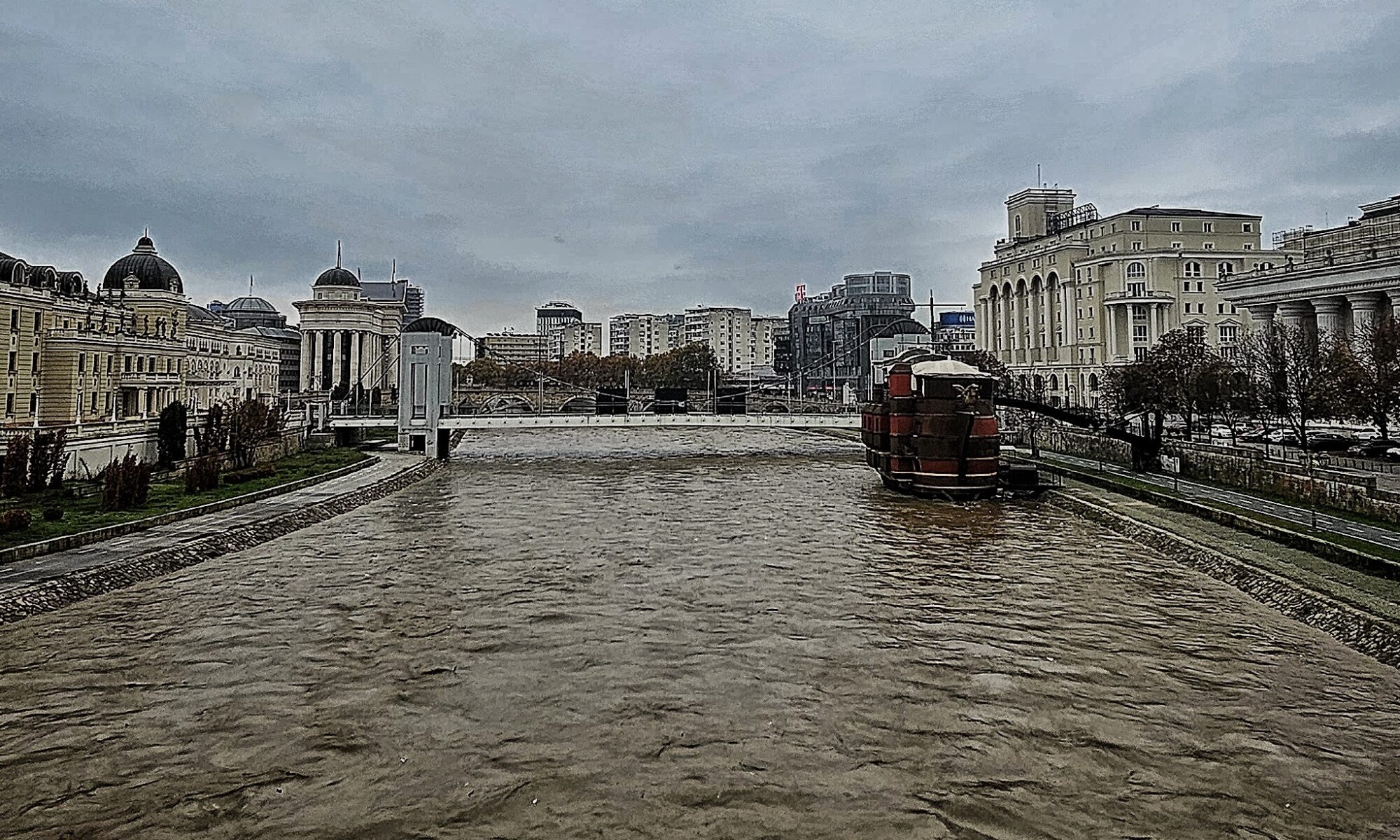
The other side of the river is a bit more modern. On the main street the house of Mother Teresa stands. I haven’t been inside, but it’s beautiful from the outside. The modern church next to it is perfect for a walk in. Besides, this street is perfect for walking & shopping. You can take the Stone Bridge (Route south of the Archaeological Museum) to the Alexander Monument and from here you can visit the street.

Part #2 – Matka Canyon and Vodno Mountain

Ohrid is actually one of the most popular destinations in North Macedonia. However, because I wanted to visit Ohrid separately and explore Skopje in detail, I didn’t include it in my three-day plan. However, since I finished the city in two days, I chose a plan from GetYourGuide, a comparative travel app I’ve used in other cities before.

One of the most popular natural wonders of the region is the Matka Canyon This tour, which included a cable car ride to the summit of Mount Vodno overlooking Skopje, took about 5-5.5 hours. The canyon is truly worth seeing. Even the dam, dating back to the turn of the century, has a unique retro aesthetic. Once inside, you can take a boat tour, which I highly recommend. The hiking route isn’t a roundtrip one; it’s a bit of a walk. It’s a 20-minute boat ride to the cave at the end of the route with a breathtaking view of the water, a visit to the cave, and a return by boat. Be warned: in the summer, locals come here for a cool-down swim, and we are told it gets very crowded.

Our way to the Vodno climb we saw St. Panteleimon -a small old Byzantine church and the Macedonian Village This is a newly built settlement called “City of Macedonian Architecture,” where they attempted to exemplify traditional Macedonian buildings. Clearly built for tourism, it is not very impressive. However, the antique, handicraft, and design shops inside are beautiful and have unique collections.

In the middle of the way to Mount Vodno, from the Cable Car Station we went up. At the top of the mountain stands the Millennium Cross It was amazing to see the geography of North Macedonia from the summit, where I learned that 80% of the country is mountainous, 

Chapter #2 – Food and Drink

Pelister is a famous restaurant right in front of the Alexander Monument. Both the place and the food are delicious; it’s not overly expensive. I had a breakfast plate called “Palenta” made with corn flakes. Even though I was very hungry, I couldn’t finish the whole plate, mind you, but it was delicious.

Kuka is a delightful little restaurant where you can sample local specialties, and it’s also affordable. Tucked away in the middle of construction, the place itself is nothing special, just the flavor and price are optimal.

I couldn’t pronounce the name of the restaurant but it is here This has a much better space with local flavors.

I’ve only eaten at the three places above. But there were two other recommended places:

These are both bars and live music venues, I couldn’t go 🥴

I went in for coffee:

MyWay caffe

I also had breakfast at a small restaurant:

Brotherhood

There are famous meatball restaurants in the market, but I did not try them.

Chapter #2 – Shopping

There are a few nice shops on the street which runs south from the Alexander Monument. I bought shoes/slippers from one of them—ergonomic slippers, somewhere between Birkenstock and Sabo slippers. It was a Serbian brand: :https://maps.app.goo.gl/2NTn34qxv9uzeZYL8 

On the daily tour, in Ecovillage, which masquerades as a Macedonian village, there was a shop called Esnaf… They had wonderful handmade and designer items, the most unique items. I bought a pair of earrings.

There are antique shops in the market, but I didn’t go to these. There are plenty of silver and gold shops too. The city is famous for the silverwork, like filigree, and silver plated stones.

Northern Greece Route by Land

9-day Northern Greece route by car from Ipsala, Turkey. 

Chapter #1 – Thrace

Setting out in August was a mistake. It was a busy holiday, so it was crowded everywhere and the borders were especially busy. We arrived at İpsala from Keşan at 5 a.m., but it still took us three hours to cross. We heard those arriving behind us at 6 a.m. had to wait seven hours! In any case, we made the best of it by setting off on Friday evening, staying overnight in Erikli so we split the distance and rested and we still managed to cross the border in the best possible period.

Food recommendations in Keşan:ÖZ-EN ET RESTAURANT

Episode #2 – Kavala & Philippi

After breakfast and some fresh air in Kavala, we continued to Philippi, one of the most important ancient cities of the region.

The scene of a very important battle, Philippi Archaeological Site spreads over a wide area and there is a small but valuable museum; Archaeological Museum Of Philippi definitely worth the visit.

Chapter #3 – Thessaloniki

Thessaloniki Ataturk House was closed for renovations when we were there, but it will be reopened on November 10th this year.

The ruins within the city are worth a wander around the streets; the most beautiful ones are:Arch of Galerius and the Alexander pilgrimage statue overlooking the sea:Alexander Monument.Sunset on the dock is a must…

Food recommendations:Balconaki or Kazaviti Thessaloniki

Part #4 – Archaeological Museum of Thessaloniki

A must-see with its excellent collection: Archaeological Museum of Thessaloniki We devoted long hours to this; especially to the treasures of the Macedonian tombs!

Chapter #5 – My Grandfather’s Hometown, Serres

We started with the Old Bedesten / Archaeological Museum:Archaeological Museum of Serres (Bezesteni)

Serres, the happy city… Although we arrived at noon on Monday, everywhere was bustling with life and people. Everyone looked cheerful and elegant. When I asked the lady at the exhibition if today was a special day, she said it was always like that here! At that moment, we all decided it was a city worth living in.
Even though I could not find any trace from my ancestors, I wrote a letter to my grandfather in the visitor’s book at Zincirli Mosque:Cultural Exhibition Space “Zintzirli Mosque”

Before returning, we bought Serres ouzo from a local producer, and the shop was as beautiful as the ouzo.

Chapter #6 – Thassos Island

There’s a ferry that departs regularly, not from Kavala city but from the town beyond; we decided to cross here with our car. But it was complete chaos! A team unprepared for the August crowds, long lines, and improper ticketing meant a long wait. But on the way back, we managed to cross early in the morning and avoid the crowds.
There are ruins everywhere on the island; for example Gate of Zeus & Hera or Ancient Agora of Thasos or Sanctuary of Heracles But I don’t recommend going up to the Acropolis because there is no road to follow.

Thassos is ideal for a day of sea, sun, and cocktails. But beware of the August crowds; there are also many Turkish visitors!

For dinner, this place has a beach in front of it and the food is delicious:Ftapodi Thassos

Here is a recommendation for a perfect bar for a break on the rocks at the very tip of the island: Karnagio Beach Bar

Episode #6 – Archaeological Museum of Thassos

One of the best Greek Island Museums, I definitely recommend visiting:Archaeological Museum of Thassos

A restaurant with a delicious atmosphere and food, located in a unique village square on the west side of the island, high up in the hills:Kazaviti

Episode #7 – Thasos Panagia Village

I think you should not leave without seeing the Fountain of Love and the village with canals: Panagia

Chapter #8 – Alexandroupoli 

Zona Archaeological Site An ancient city near the town of Makri, west of Alexandroupoli. It’s relatively unknown because it’s newly excavated, but its seaside location and compact route make it worth a visit.

Alexandroupoli Archaeological Museum has a small but very impressive collection, I recommend you not to miss it.

Chapter #9 – Samothrace Island

Because the ferry was so small, we couldn’t find tickets for the car, so we rented one there.

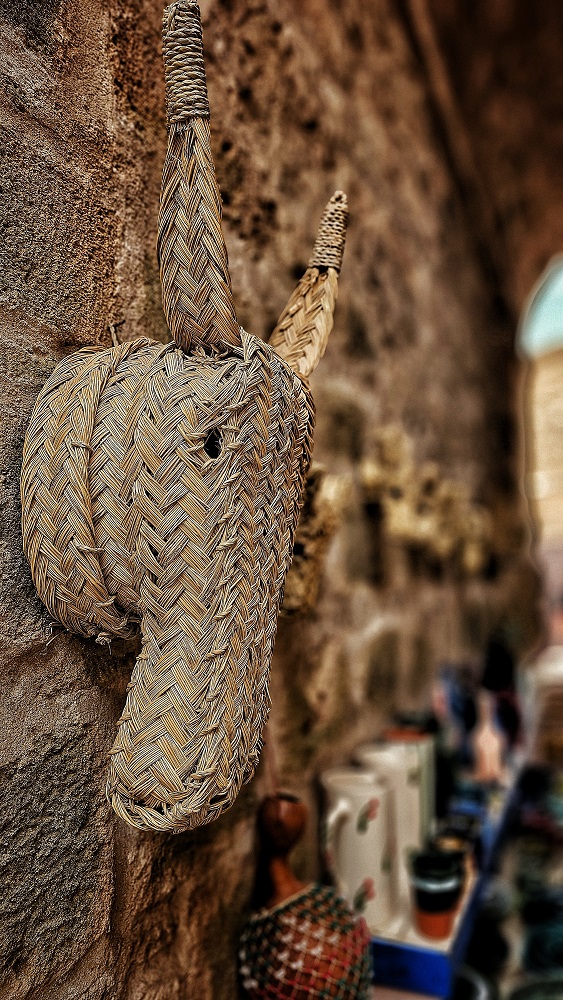
Street strolling in Chora:Old Samothraki It is a must to wander the streets and buy souvenirs from small designer boutiques or donkeys.

Delicious restaurant recommendations with traditional flavors:Tavern 1900 or Aretsa

Chapter #10 – Samothrace Waterfalls & the Sea

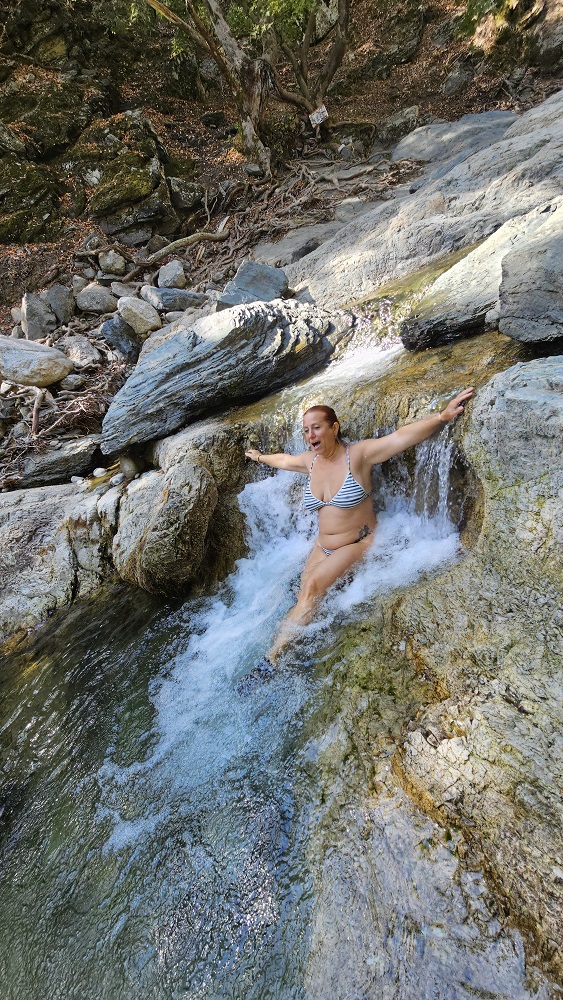
Waterfall walk & diving into the cool waters:First Fonia’s Waterfall It’s an easy route, about 1-1.5 hours’ walk away; and it flows beautifully even in August.

Don’t leave without buying some Samothraki cheese:TYPOCOMEO

Chapter #11 – Samothrace Sanctuary & Museum

The Ancient Samothraki Settlement & Sanctuary is an ancient initiation center. Its museum is small but exquisite:

Archaeological Museum of Samothrace ve Sanctuary of the Great Gods

Result: I Will Come Again

We combined weekends to complete a nine-day Northern Greece route, trying to balance the benefits of relaxation with maximum efficiency. For our culture-enthusiast team, we balanced our visits to archaeological sites and museums with stops at the seaside and waterfalls. We weren’t able to visit the Macedonian tombs we planned because they were undergoing restoration. Therefore, we intend to go on another Greek Macedonia route, where we can both visit them and explore the blue waters on other shores. 

But Thessaloniki is a beautiful city; it’s always worth visiting. Serres was a big surprise, and I’d love to go back and explore the other smaller towns nearby. Alexandroupoli is just around the corner, a stopover on any itinerary. I’d prefer to visit Thassos again in spring, rather than during peak season. Samothrace, on the other hand, is a very different island; it’s not for everyone, but it always draws me in.

Mini Lycia

Myra mezarlar

While traveling from Dalaman to Antalya, I was smitten by the frustration of not being able to walk the Lycian Way, a long-held dream of mine. So I tried to visit as much as I could with the time I had. Various sources mention between 19 and 48 ancient Lycian cities. I only managed to see five of them. Here, I’m sharing videos summarizing the few hours I spent in each city. The videos offer no narration, information, or descriptions. They’re just snapshots and contain sounds of only the exciting moments I couldn’t contain myself, exclamations, or the voices of other tourists I encountered. It’s easy to find historical, geographical, or other information about any place you want. I thought this style better conveyed the feeling of one wandering among the ruins. Of course, the real joy is touching those stones, smelling the air and imagining what life once was like in these places.

Listing the cities of Lycia The wiki page is here.

Or this pageI think it provides more enlightening and compact information.

I am listing the cities in the chronology I visited and therefore logistically from west to east:

Xanthos Ancient City

Location Here…It’s a large, scattered, and somewhat wild ancient city, easily accessible but not yet extensively excavated. Still, its necropolis, with its geometric tomb structures, impressed me.

Letoon Ancient City / Sacred Site

In fact, it is very close to Xanthos, a point that functions as the sacred site of the region rather than a settlement. In Letoon the ruins of the temples of the mother goddess Leto, Apollo, and Artemis are impressive. Like every Apollo temple I’ve visited, this one was fed by fresh water, a sacred area where tortoises now bask on the ruins. It’s a compact and easily accessible site.

Myra Antique City

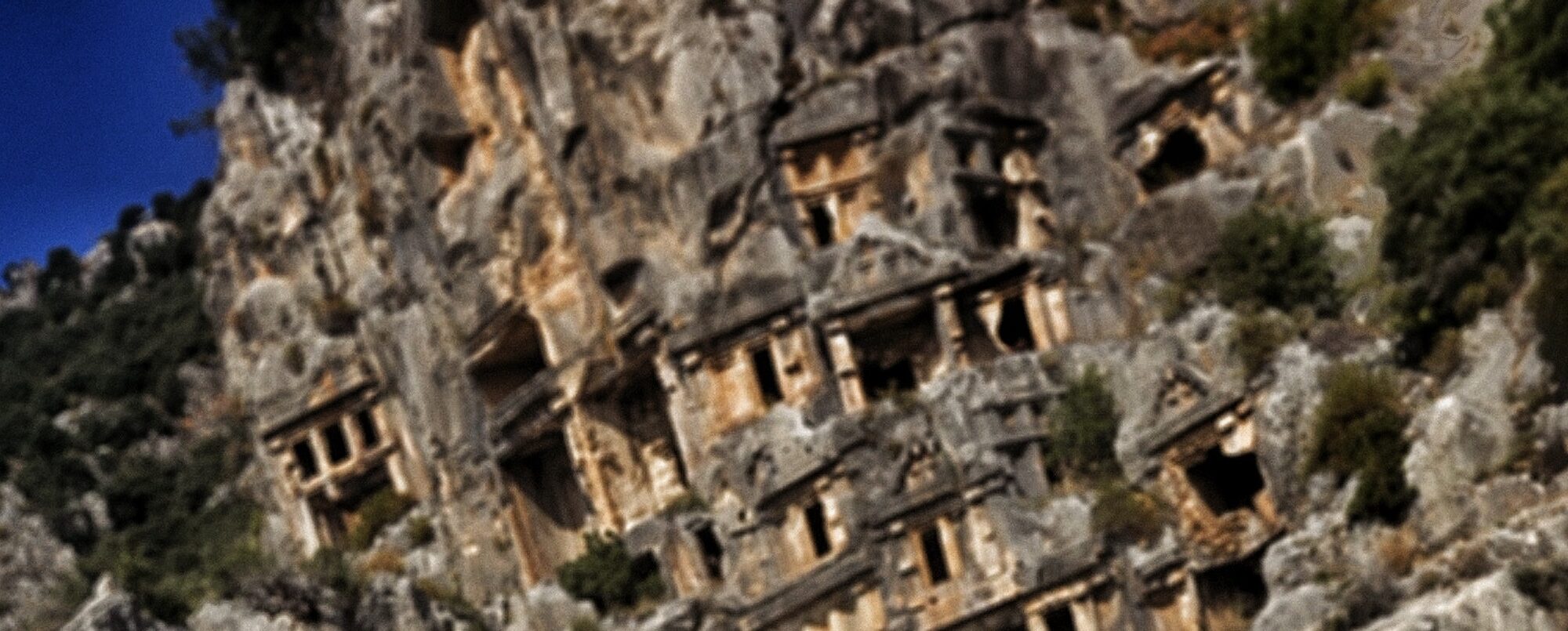
An ancient city hidden among the white-covered greenhouses of Demre is the ancient site of Myra.The rock tombs on the hillsides where it sits seem to overlook a theater, many of which still stand. The site is in a small area that suggests many unexcavated treasures lie beneath the surrounding greenhouses; it offers a quick tour.

Ancient City of Limyra

Ancient City of Limyra  was a complete surprise to me… What fascinated me was not the wild feeling of the incomplete excavation and restoration, not the vast land the city spreads across, nor the impressive buildings still standing. I left my heart in the waters gushing through the city and enveloping it on all sides. The ancient road is now under water, where the stream winding around the monumental structure gently covers its huge stones. But the windings of the stream, sometimes flowing with excitement, sometimes calmly, and the ancient trees that grow around them, are equally beautiful.

Phaselis Ancient CityI’ve wanted to go to Phaselis since the first time I saw it in a documentary; I finally had the opportunity. It’s truly a unique settlement, with incredible beauty in its location, layout, and natural beauty. Its natural geography allows for three harbors overlooking three different directions, while the harsh winds blowing from one side are barely noticeable on the other. In addition to the many surviving buildings, the findings of the accelerated excavations in recent years have also been added. The adjacent public beach adds another dimension and visitors to the site during holidays; I’m not sure if it’s a good thing or a bad thing. But any kind of preservation is better than the constructing another five-star hotel in this magnificent spot. I swam in its waters and emerged in its essence; I was completely enchanted. If I had more time, I would have spent a full day there; I will go again.

I Could Swim Here: Meis Island for a Day Trip

By swimming or by boat?…

If you have been to Kaş, you know that Meis Island is one of the closest Greek islands to our coast. For those who enjoy open-water swimming, the Kaş-Meis route may also be familiar. Therefore, swimming from Kaş to Meis is technically possible. But I don’t recommend it as a transportation method… 🙂

Instead, I recommend choosing one of the ferry companies in Kaş center, buying your ticket, paying the port taxes (both ports charge separately – currently Kaş 130 TL, Meis 5 Euros) and your international departure fee (for Turkish citizens only). The ticket price (25-30 Euros) and the travel time (25-30 minutes) are directly proportional to the island’s proximity.

I’ve heard that some people prefer to take a boat tour instead of the ferry. While it might be tempting to skip the hassle of transfers, I opted for individual travel. The small town where the ferry docks in Meis, the two other destinations are accessible only by sea: the Blue Cave and St. George Beach. I’ll go into more detail later, but small boat taxis can easily and frequently take you to and from both. Furthermore, you can determine the timing and how long you’ll stay on the island where the beach is located.

Things to see…

Meis Island is quite small, so don’t expect a long list. However, the town center where you disembark is so charming that how much time you spend wandering the streets is entirely up to you. Here are a few attractions:

  • Meis town… Be sure to take a tour among the buildings painted in candy like colors. I recommend diving inland into the narrow streets.
  • There is a Lycian Tomb… It’s not exactly spectacular, but since we’re wandering around the island, why not? The road is beautiful, and there’s a stunning view behind the island. It’s not a very long climb, either.
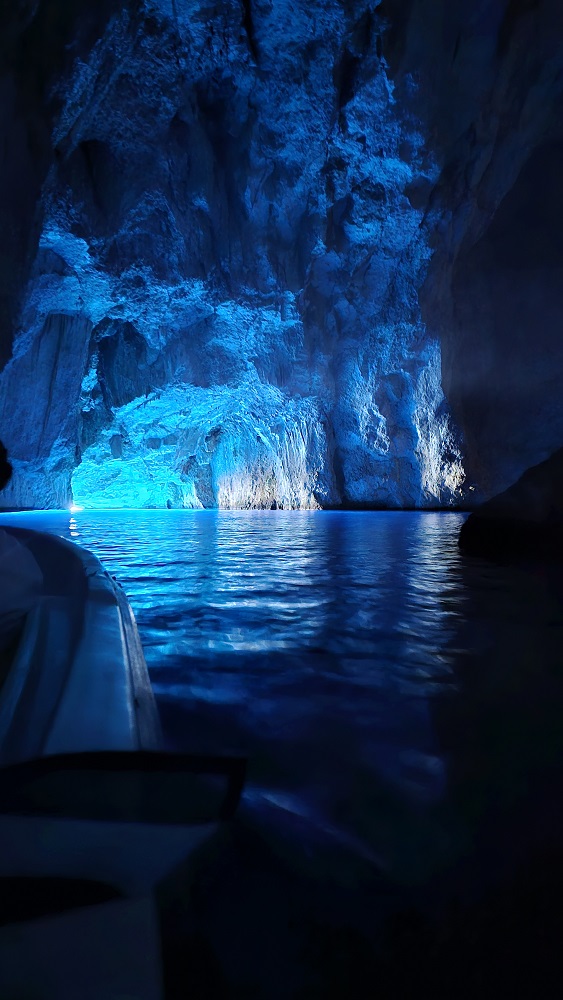
  • A must-see place in Meis is the Blue Cave a sea cave at the back of the island. It’s accessible only by boat from the harbor and can be entered before high tide and during calm seas. But the interior is vast and magnificent; I think it’s a must-see.
blue cave
  • At a point closer to the port, on two interconnected islets stands Saint George Beach. Access is again only from the water. However, small boats depart from the harbor and take you to the Blue Cave, take a short tour and then drop you off there. They’ll pick you up whenever you want. So you can sunbathe on cushioned wooden loungers and enjoy the aquarium-like water on this lovely beach by the sea. Even in October, the water was magnificent. I paid 10 euros for a lounge chair and 5 euros for a Fredo Cappuccino; I don’t think it’s too much for a place like this.
saint george beach

Daily or overnight stay?…

Of course, it depends on the person and the circumstances… But I stayed in Kaş and went back and forth for the day. I took the 9:30 a.m. ferry; there’s also an 11:00 a.m. For my evening return, I chose the earlier option of 4:00 p.m. or 11:00 p.m. Because:

  • It was off-season, so accommodation in Kaş was more affordable. Accommodation options in Meis were relatively limited, so it was a bit more expensive.
  • My schedule only allowed for one day and I actually saw the entire island. But if I had the time, I’d have loved spending a full day at that stunning beach and wandering the island’s streets for longer. It would have been perfect for a relaxing weekend, and perhaps a chance to get a little accustomed to the island’s rhythm.
  • I had a delicious meal on the dock at noon. Without any research, I just sat where I felt like. The seafood, like on every island, was fresh and well-prepared. But if I’d stayed overnight, I’d have had a long, ouzo night out.
meis lunch
meis flower

After all… If you have limited time, a Daily Meis tour is very satisfying. But if you live nearby or if you are rich in time; a long week end would be perfect.

meis cat

Intellectual Calories: Eskişehir & Afyon 

Target Phrygia…

I had stopped in Afyon for a thermal hotel break years ago; but I hadn’t seen much of anything other than the water. Of course, I had heard of the sausage and the cream, but I was not aware that the city was a gastronomic paradise. I didn’t know about its historical and natural treasures at all. 

That is until I visited Afyon last autumn. When we decided to stay there on route from south to north with my companion, my view of the city completely changed. First, the rich texture and delicious flavors of Afyon center seduced me. Then, as I headed north, I was blown away by its nature, rock formations and the ruins of Phrygia, one of the ancient civilizations of Anatolia. 

We continued our journey without exploring it in sufficient detail because we didn’t have time then. But I had already decided to go back with my girls. We looked forward to visiting the valleys in winter and immersing ourselves in the warm thermal waters. We were finally able to schedule a weekend in February. We made a 3-day plan, exploring the route to and from Afyon as well. But it is also possible to squeeze the trip into two days by traveling at night or skipping a stop.

History & Art in Eskişehir…

I had been to Eskişehir several times. In fact, once I was a guest of Yılmaz Büyükerşen, who was the last Mayor at the time. We were hosted in a wonderful tour of the city with his guidance. Later, I had the opportunity to visit for different purposes too. But there were a few pieces missing… The focus of my recent interest, history, the Archaeological Museum; newly built OM, Odunpazarı Museum of Modern Art and the Exhibition of “Calm Lands” 

So Eskişehir was the first stop of our route with an intense cultural and artistic agenda. We had a great time as we were all harmonious and focused on the börek, ravioli and halva!. We decided to start with the Archeology Museum before our stomachs started growling. Then, we left the car at the multi-storey car park in Odunpazarı and completed the remaining route on foot. 

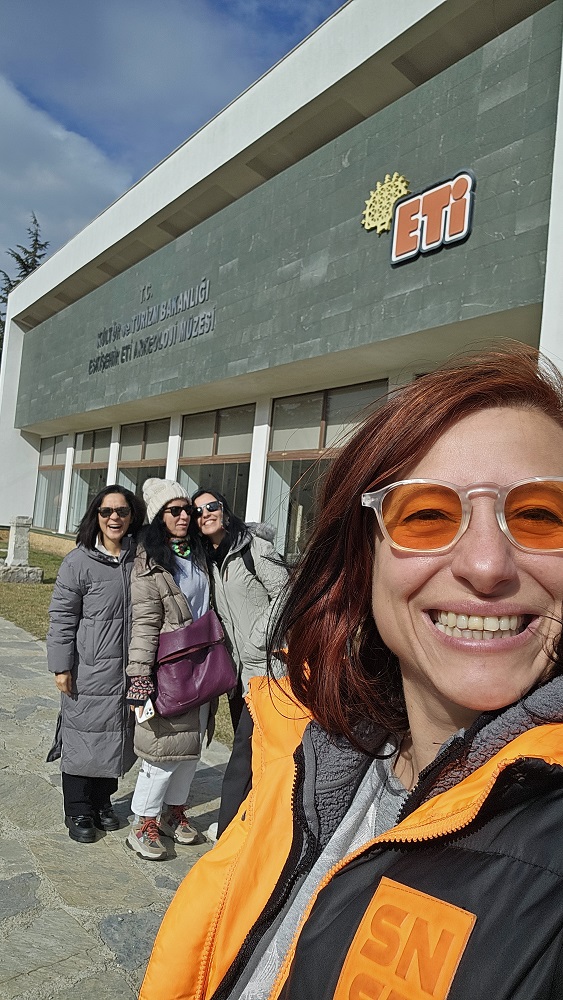
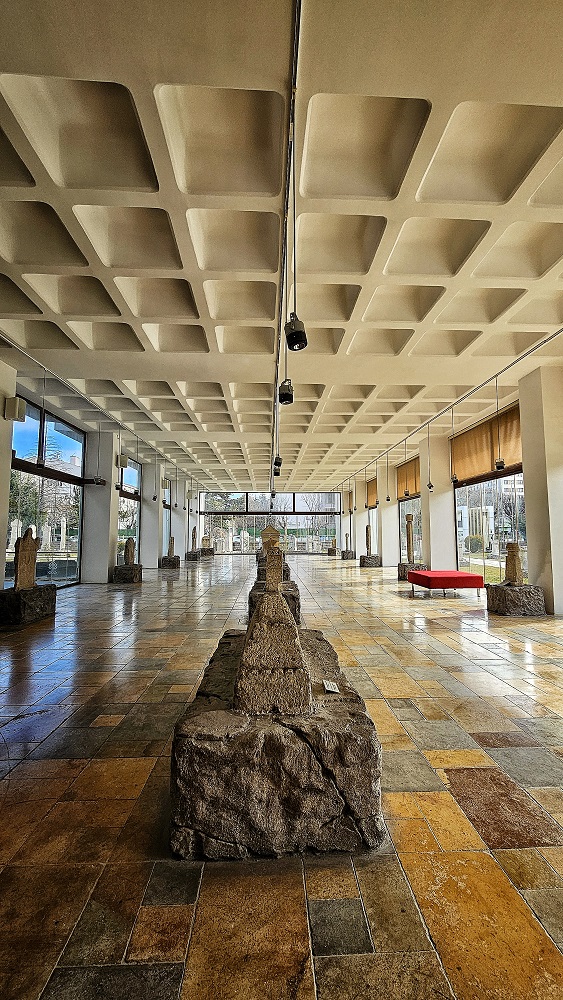
  • Eskişehir Archeology Museum: This is an small museum with important pieces in the center of the city. The entrance is free with a Museum Card. Or you can pick it up at the door or from the app. The modern building design is very beautiful; especially the sunny big hall where the sarcophagi are located. But the displays are a bit dated; lighting and signage could be much better. However, you can get a pretty good idea of ​​the heritage of the region with a short tour. 
  • Meal Break: We chose any of the Tatar Böreği shops with high scores near the square and sat down. We ordered pastry and ravioli. Although the pastries were not as crispy as we hoped they were delicious. The manti was good, but the one bite size spices had no taste. We left the halva shops with delicious fig and walnut summer halva in our bags. The real surprise came when we pursued the smells coming from the bakery next door… Yüce Işıklar Bakery Products The fresh hot bagels we bought were so delicious that we ate them all even after all that pastry!
  • Eldem Art Area – Calm Lands Exhibition: One of my friends from high school is a versatile artists Evrim Kavcar and one is a plant painter Deniz Bozok. I had also met Kıymet Daştan thanks to Evrim. I ahd wanted to visit this gallery featuring works in the theme Calm Lands. So I dragged the team with me; and I’m glad I did… Located in a historical mansion complex, in Eldem Art Space we were moved by the wonderful artwork. Moreover, the place itself is beautifully restored & designed. It was an enjoyable visit that appealed to all the senses. 
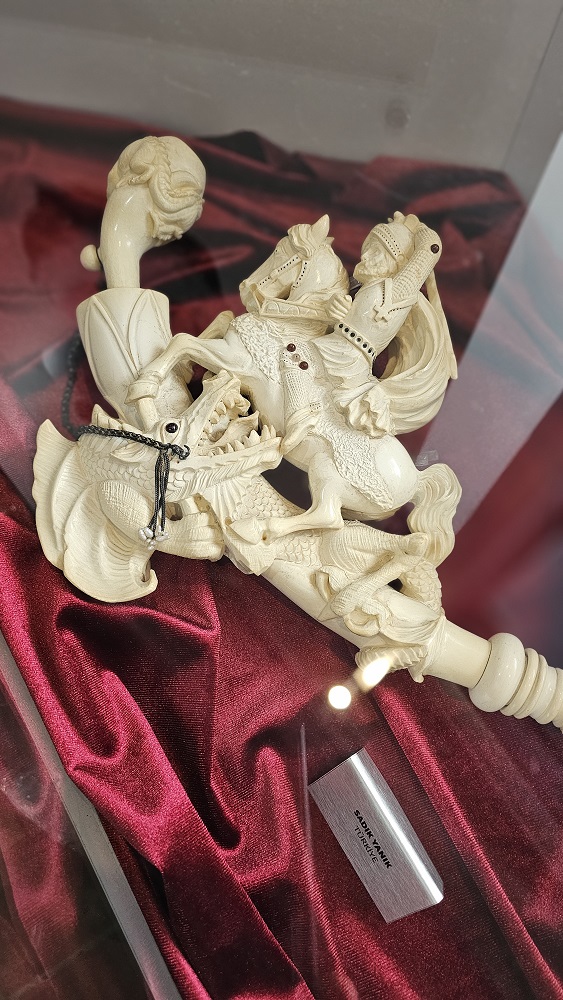
  • Kurşunlu Social Complex: We entered the courtyard of the social complex, thinking that a short break would be enough since we had seen many similar places. But with its serene and lively atmosphere, the meerschaum exhibition and shops behind the mosque kept us there. While we admired the magnificent artisanship of the old, we were sad to see the souvenirs in the shops didn’t even come close. 
  • OM, Odunpazarı Museum of Modern Art: This special museum, which I was curious about both in terms of its architecture and its collection, was our last stop in Eskişehir. The entrance fee of 120 TL seemed reasonable; We bought our tickets and started touring from the lowest level. Particularly the wood-clad tower is the signature of the stylistic building. We took a group picture, went up to and viewed the complete collection. Some of the works were very impressive. I think it’s a must-see place. 

Phrygia from Eskişehir to Afyon…

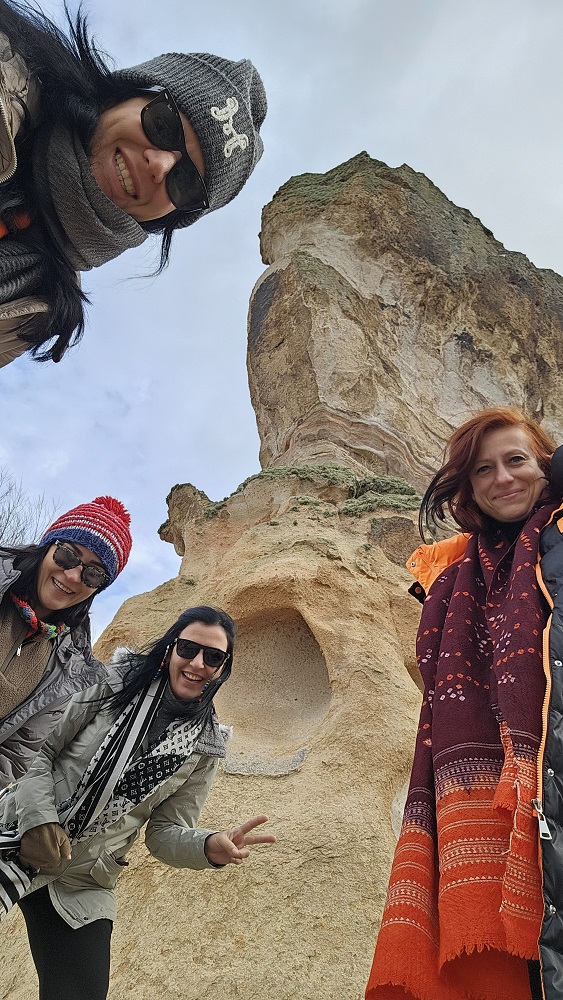
We were very excited to visit the Phrygian monuments, which were the focus of our trip, guided by my archaeology student friend. We set off from Eskişehir early and targeted the monuments area located in the middle of the distance to Afyon. We set the route to Yazılıkaya & Midas monuments, which are technically within the borders of Eskişehir but 1 hour away from Afyon. While passing through the magnificent snowy slopes, we scouted for other monuments in the region.

We managed to visit most of the ruins we targeted around Yazılıkaya, tracing a slight arc as we traveled from north to south. Our journey was brightened with little surprises such as frozen tiny streams and storks’ nests. The sun was setting when we completed our route and set off towards Afyonkarahisar centre. 

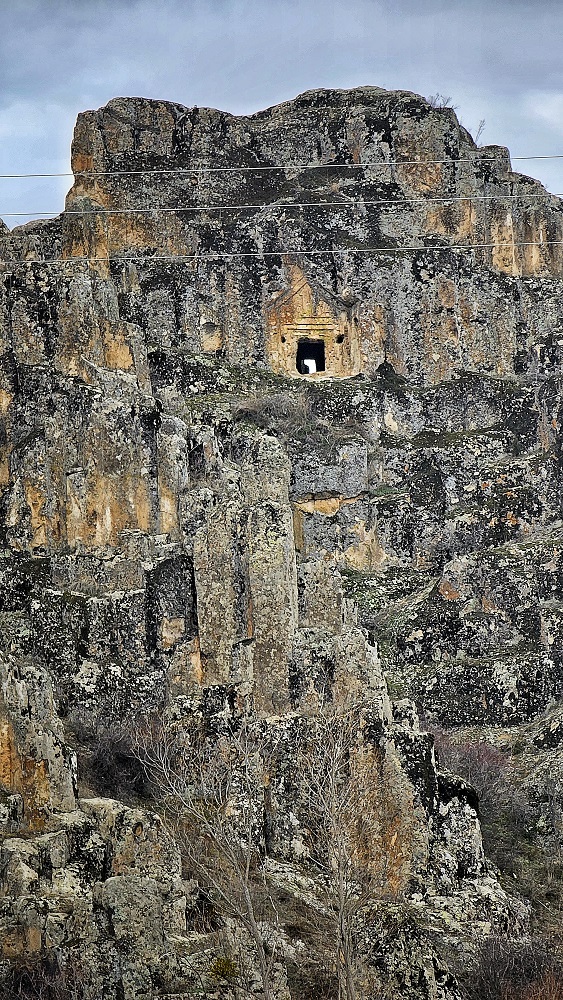
  • Gerdekkaya Monument: Our Phrygian tour started with this special rock tomb located at the northeastern end of the Monuments area. There was a bride and groom photo shoot when we arrived; it’s a truly photogenic area. 
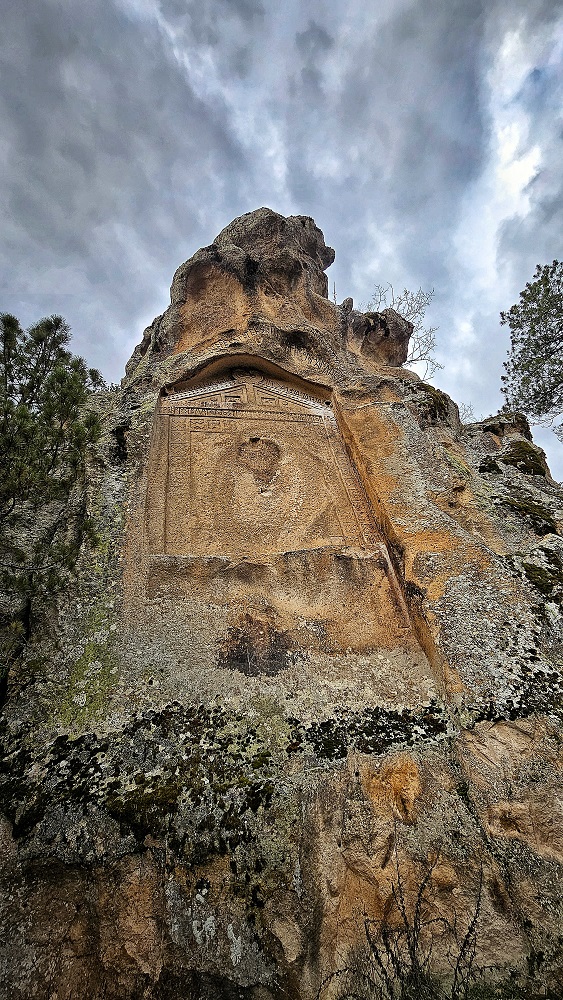
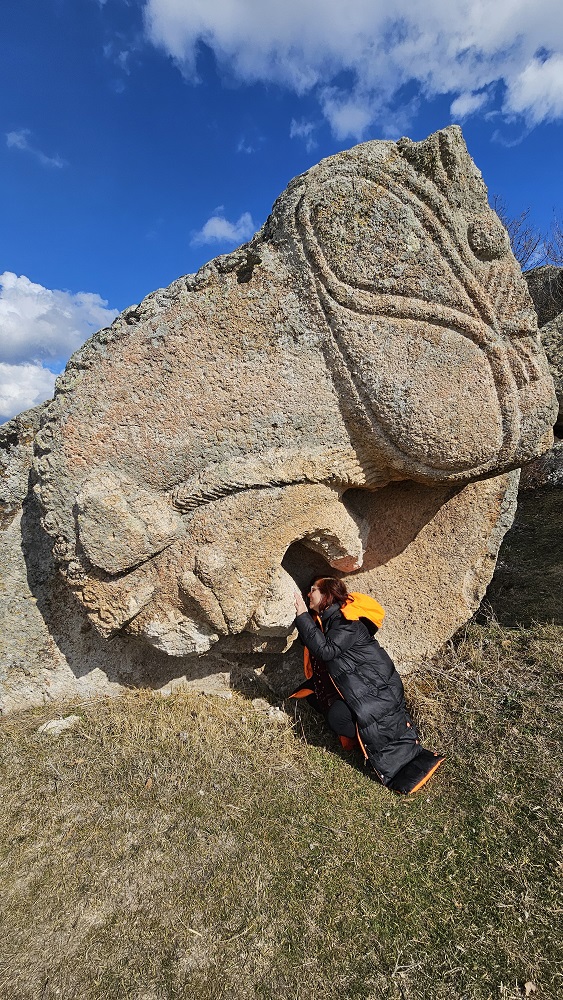
  • Küçük Yazılıkaya Monument: This tiny monument, also known as the Areyastis Monument, is one of the rare written monuments left from the Phrygians. We think that Cybele, the most important goddess of this fertile land, was worshiped here. We parked the car by the road, next to an information sign, and walked a bit slightly uphill. The energy of the tomb was so intense, and the rock surface was so impressive that it made us improvise a prayer. 
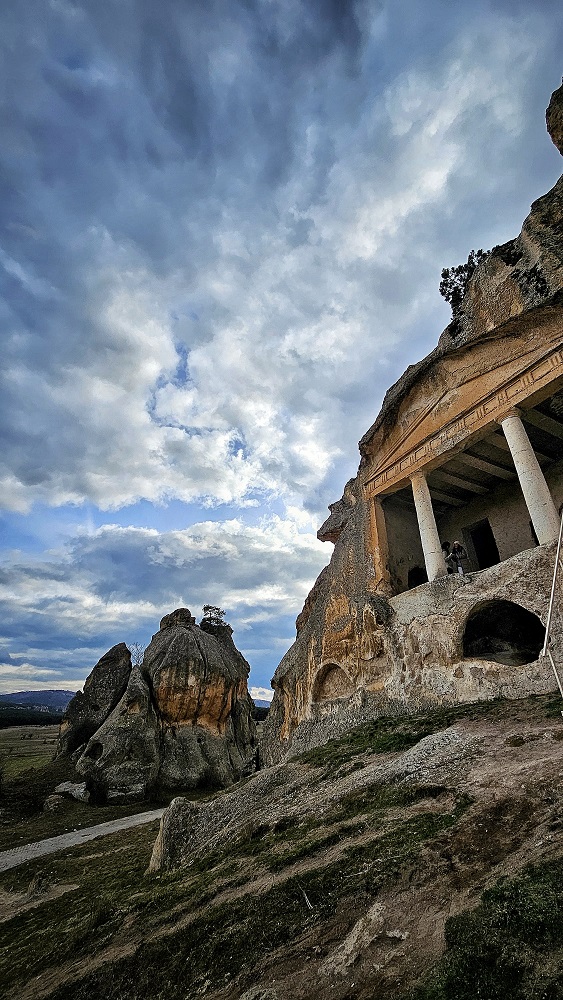
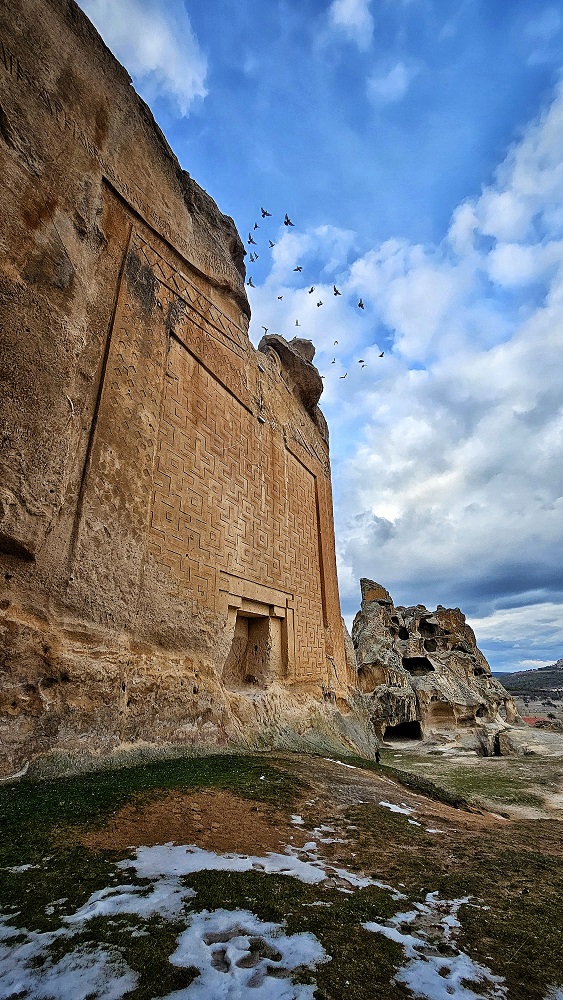
  • Yazılıkaya / Midas Monument: This is one of the most important ruins in the region. The giant mausoleum, one of the rare Phrygian inscribed ruins, and the rock settlements are side by side. Moreover, you reach it by passing through a picturesque village. We also saw some cultural tourism signs in this village with stone buildings; the settlement texture was so intact that it showed the place was evidently been inhabited for thousands of years. We parked at the top of the village and climbed to the monument on a slightly sloped dirt road. And it drew us in with its magnificent view and majestic stance. We sat facing the valley for a while and enjoyed the idyllic view. We played with snowballs and we talked a little about Phrygia and its myths. 
  • Yapildak Asarkale: Unfortunately, we could not approach our next target, Asarkale, by vehicle. The ground was already muddy in places; We parked where the stream froze over and tried the dirt road. But we couldn’t find a proper path, so we walked around and took pictures from a distance.
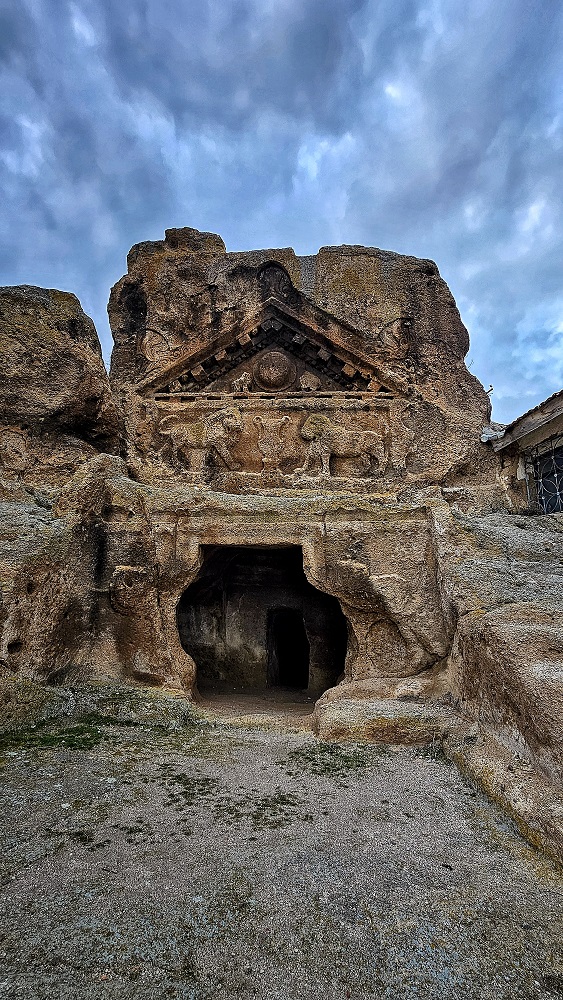
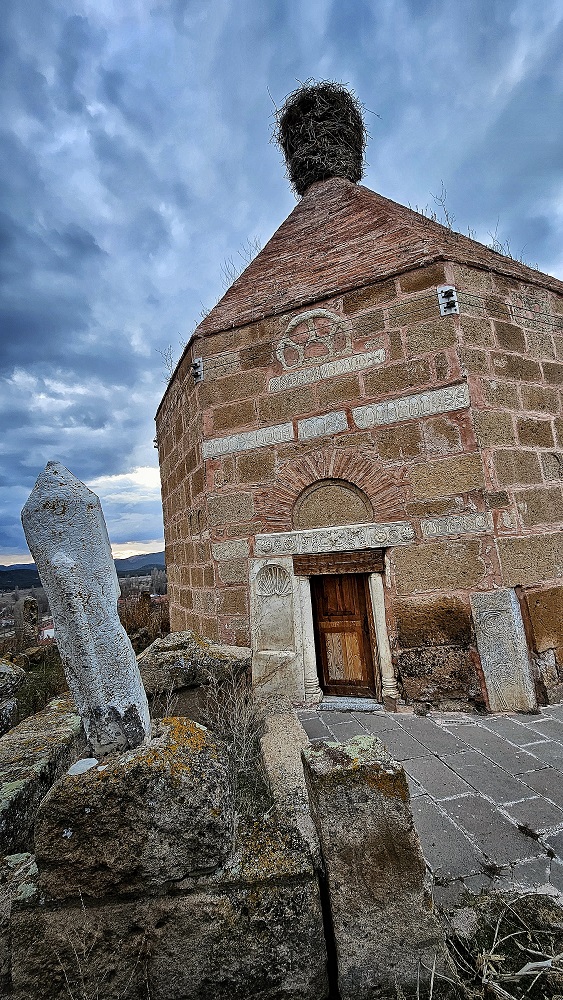
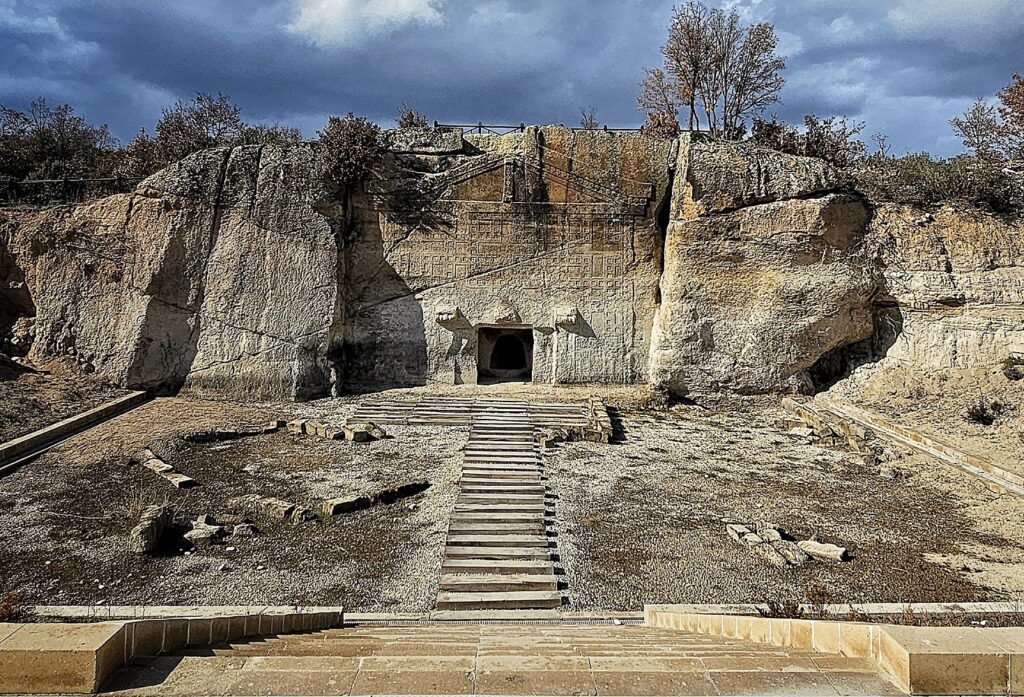
  • Lion Temple & Seljuk Tomb: When we reached the Lion Temple, we were extremely happy to have extended our way there. First of all, the rock tomb turned out to be much more impressive and important than we expected. The temple area, where Cybele was previously worshiped and overlooking the sunrise, was probably used as a tomb during the Roman period. Based on the inscription, it is thought to be the tomb of the heroic General Solon, who captured the Anatolian cities in the Roman period. It was also wonderful to wander around the remains called Yarım Konak, which was probably used since ancient times. It was also gorgeous to view at the valley and Kümbet Village from the top. 

Gastro-Afyon

We arrived in Afyon center at dusk. Our goal was to fill eat before relaxing in our rental house with a thermal pool. Master Salim was our target. The meat dish with prunes and the eggplant pastry were amazing; but you can taste a variation of the food by ordering the chef’s plate. Of course, their creamy desserts are legendary… After we got over the shock that there was no tea service, we had our desserts to goso we could eat them at home. 

We did the food & beverage shopping in these places:

IN AFYON:

  • Master Salim: The right address for Ottoman cuisine and delicious desserts. It can be a little crowded on the weekend.
  • Altınay Turkish Delight: The shop right at the beginning of Uzun Çarşı; it’s impossible to miss. The magnificent creamy delight was out of stock so we bought the one with walnuts; it was also incredibly delicious. 
  • Butcher Celal Sausages: We bought our sausages from here. I also bought bacon and roasted meat; but those were not as perfect as what I got from Kastamonu. 
  • Historical TaşHan: Taşhan is ideal if you want to take a tea or coffee break and shop from local artisans in a historical building. 

IN GAZLIGÖL 

  • Aksu Oven: The most delicious poppy seed bun I’ve ever eaten in my life. Moreover, we learned here that simit comes in many varieties; the ones with cream, cheese, butter and tahini are legendary. 
  • Ünallar Butcher: This is also a recommended sausage spot. 
  • Manufacturer Şekerci Nuri: Real buffalo yoghurt and cream is here. But you need to order in advance. Mr. Nuri and his family make shipments to Istanbul twice a week. 

Afyon & Phrygian Valley

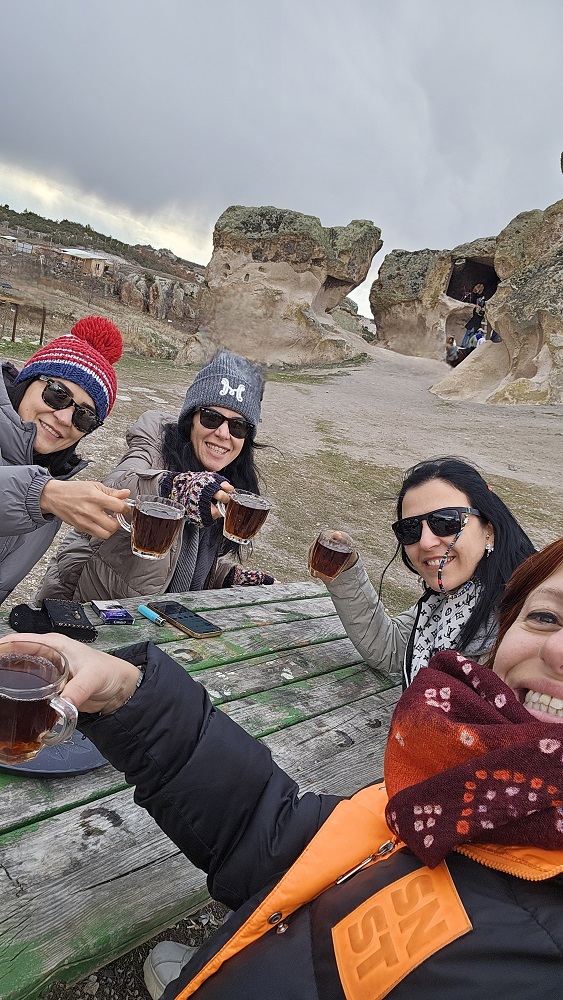
With the pride of having made a quick introduction to Phrygia, we decided to enjoy the next day by exploring the other targets leisurely. And afterwards, we took a tea break at Emre Lake at the spot where the movie “AROG” was shot. Then we visited the old Afyon city center. Our only regret wasforgetting that the Afyonkarahisar Archeology Museum was closed on Monday.We wanted to see it so much we would have made the schedule different to include the museum earlier.

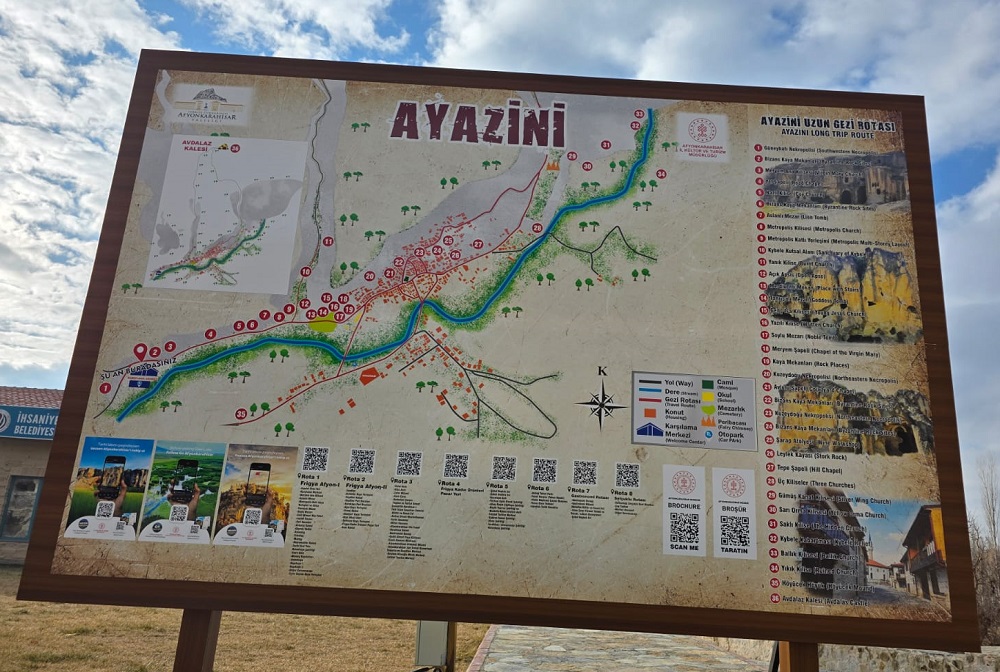
  • Ayazini Rock Church: Located right at the entrance of the Phrygian Valley, centered on Ayazini, this rock-carved church was a good start to the Sunday route and the trip. The light was gorgeous early in the morning. You can also walk to the lion tomb and rock settlements from here. 
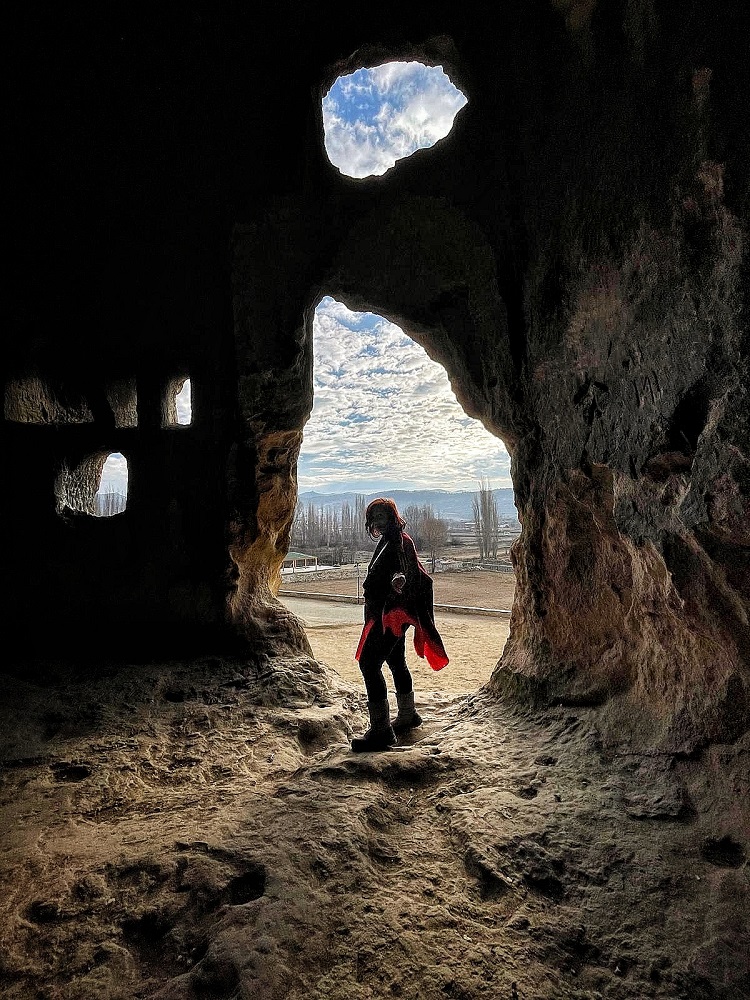
  • Ayazini Metropolis Multi-storey Settlement: Introduced as the world’s first apartment building, this multi-storey settlement carved into rocks is quite interesting. It is already located at the beginning of the valley. 
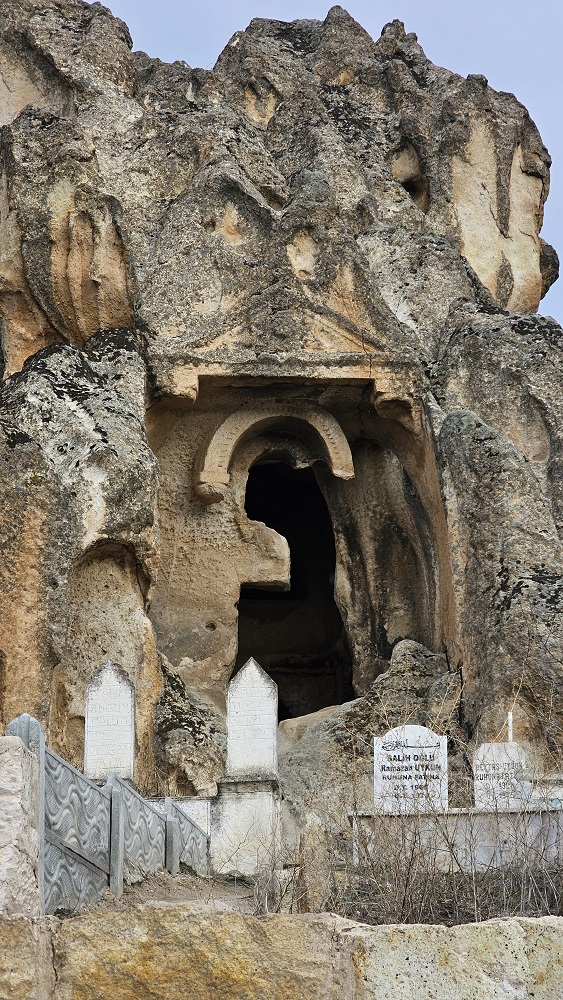
  • Ayazini Necropolis: Ayazini is a settlement that was home to people for thousands of years and still is. The necropolis located at the entrance of this village, intertwined with rock settlements, continues to be used as a cemetery today. The landscape we pass by, with rock tombs in the background and tombstones in the front, tells us about the continuity of civilization and that death is a part of life. 
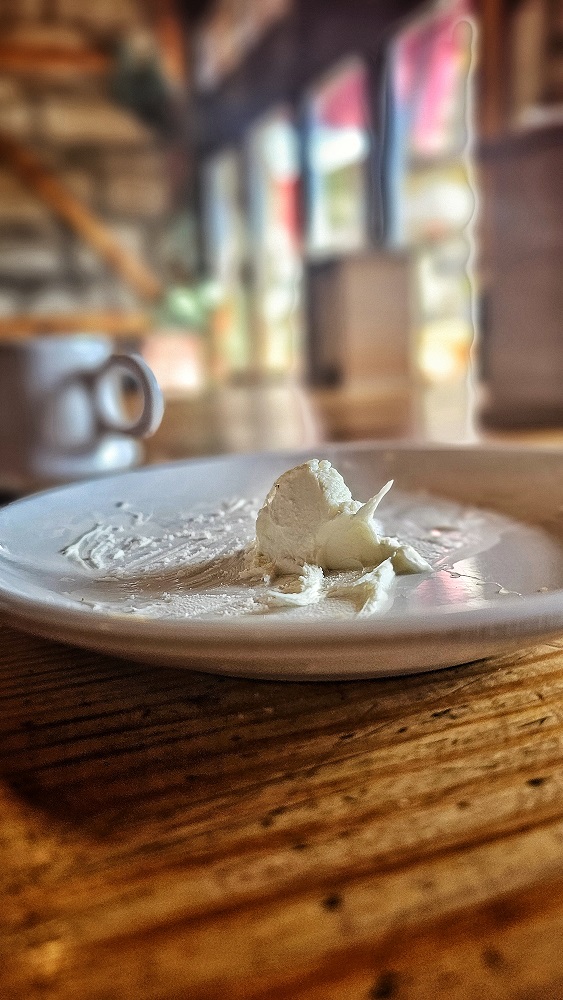
  • Ayazini Village: It was lovely with its preserved texture, modest but cute buildings, streets decorated with evil eye beads or lavender, living spaces combined with settlements carved into rocks, and most of all, its surprising squares and courtyards. After wandering around quite a lot, we sat down for breakfast at a small family owned cafe. Everything with clotted cream, tahini molasses, eggs and sausage was great at Ayazma Cave Cafe Restaurant. They also surprised us with their delicious poppy paste. After the meal, we visited the shops and sat at another cafe that impressed us with its courtyard full of antiques in the shade of mulberries: Dutlu Bahçe is in Frighan Ayazini We drank sahlep with poppy seeds.  
  • Avdalaz Castle: These settlements carved into the rocks here were easy to defend and therefore frequently used for military purposes. Avdalaz Castle is one of these castles, which is very different from the standard castles we know and looks like cliffs with gullies from the outside. If you are not afraid of heights, you can climb up into it.
  • Aslantaş Yılantaş Ruins: It was a very short but enjoyable visit. You can imagine the grandeur of the monument that once stood there from the size of the large stone ruins with lion carvings. Now there are very few pieces left; still, it’s is ideal for the lion’s mouth pose! 
  • Maltaş Ruins: In front of this rock tomb monument, newly landscaped, there is a sacred area where Cybele was worshiped. Thanks to the new arrangement, it was very impressive to sit on the steps and stare at the traces left from thousands of years ago. As we approached the ruins, we saw a magnificent bird with giant wings. We guessed that this domestic bird was a red hawk. 
  • Cold Vadisi Tabiat Parki and King’s Road: As we moved north from the Göynüş valley and approached this natural park, Cappadocia-like rock formations began to appear. When we climbed the winding road to the entrance of the park, there was a huge valley view in front of us. We proceeded a little further to see our target, the King’s Road. We parked our car at an intersection and followed the brown signs until we reached the ruins of the ancient road. It is a small part of an important route that actually covers most of Western Anatolia and bears the traces of thousands of years of caravans, military and civilian traffic. It’s a great spot to imagine the busiest time of this ancient highway, carved here layer by layer by the wheels of horse carriages. 
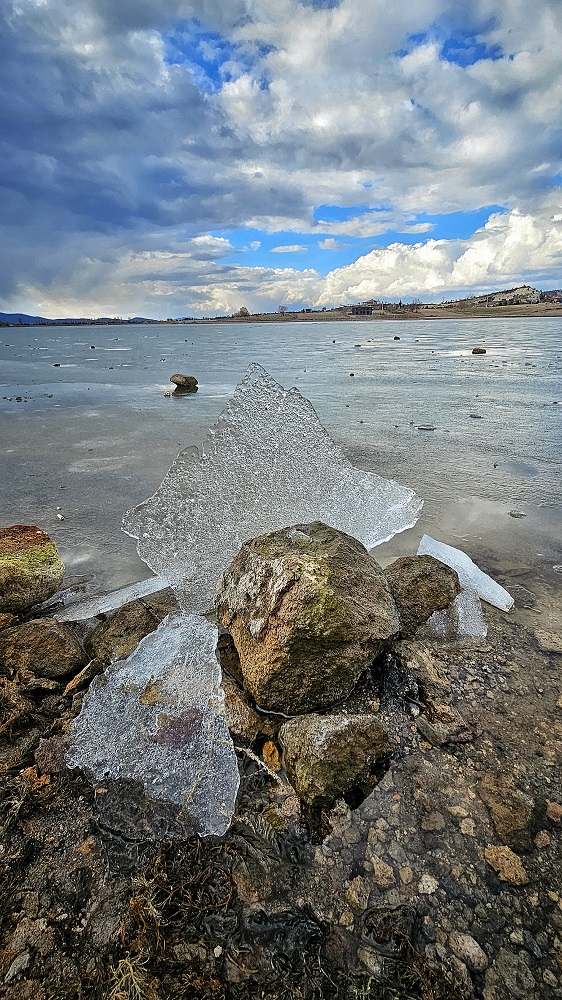
  • Emre Lake and Kırkmerdiven Rocks: The beauty of this tiny lake welcomes the view of natural formations around it. Some parts of the movie “AROG” was also shot here. Therefore, it has become a tourist attraction; but it is a modest place consisting of mules you can ride, set pieces and a man selling tea. Still, it is a nice stop… Moreover, the layer of ice on the surface of the water provided for more entertainment; especially when the wind blew and the ice started to pile up towards the shore.
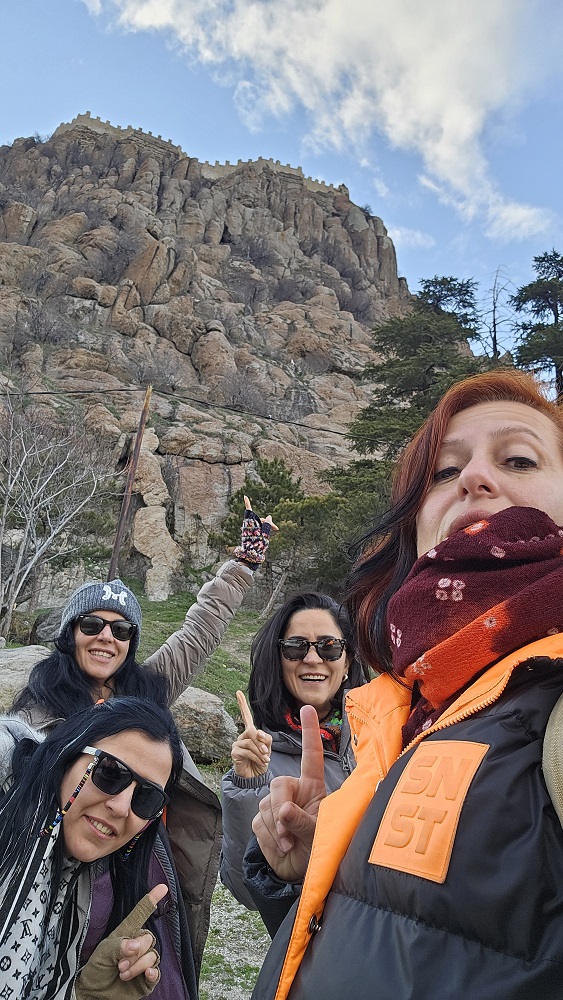
  • Afyonkarahisar Castle: We were wrong to assume we could easily climb up to this hawk’s nest castle perched on top of giant rocks in the heart of the city. More precisely, we miscalculated… We thought we would approach by car and leave at sunset. It turns out that it is a castle that can be climbed on foot with almost 700 steps. Moreover, these steps could freeze in winter. We did not risk it and we wandered around the streets instead.
  • Afyon Streets and Houses: We had read that old Afyon houses were being restored on route to the Afyon Grand Mosque. But personally, I was a little disturbed by the lack of care I saw like in many mass restoration projects in our country. On one hand, I understand the economic and logistical difficulty of transforming the fabric of such a large area. On the other hand, I feel these buildings, which lack original details and experiences, are insincere, depthless and unreal. Moreover, I think this method is not sustainable; because they lose their originality and cease to be an attraction. Still, it’s much better than letting a city be completely destroyed and occupied by concrete blocks. Maybe it’s my extreme architectural sensitivity; it’s a subjective issue. 
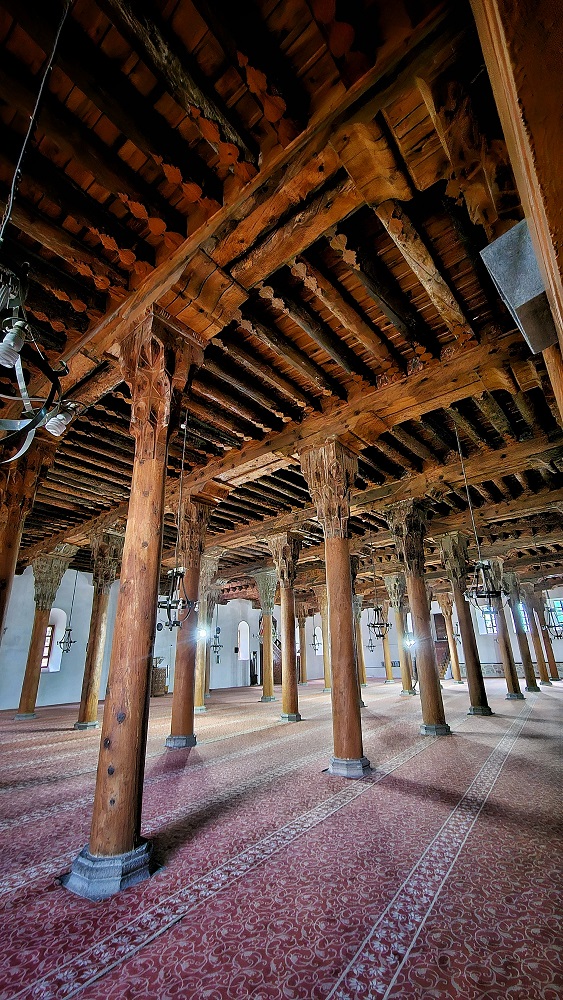
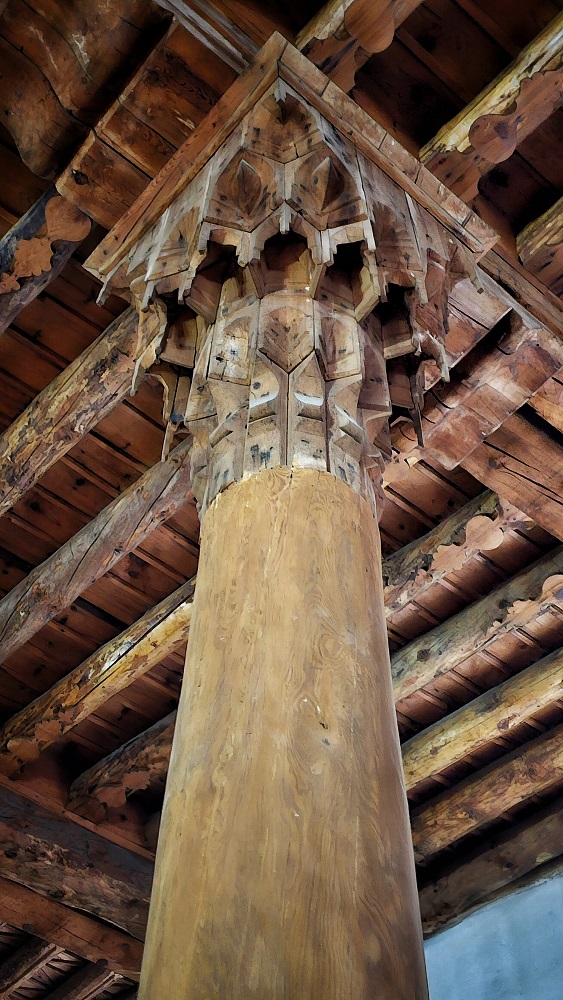
  • Afyonkarahisar Grand Mosque: I always try to see the grand mosques of the cities I visit; especially if it is a Seljuk work like this. Afyon Grand Mosque did not disappoint; it actually fascinated me. I think it is one of the most beautiful buildings of the period, both technically and aesthetically, with its magnificent roof supported by giant wooden poles, muqarnas decorations on the tops of the columns, and its modest but impressive proportions. A must see!

Return Route Kütahya

Since we couldn’t visit the Afyon Museum, we set back home early… We had already targeted Kütahya to see somewhere new. Since we had plenty of time, we decided to visit a few places in here. Unfortunately, there are not so many options! There are only a handful of places to visit in the center you can cover an hour or two:

Ultimately, Afyon is a great destination for a 3 or 2-day trip… It appeals to every sense. History, nature and food stimulates every sense. Especially if you have access to thermal healing waters where you stay. But be careful, there are so many intellectual calories here!!!

LEGUP EGYPT

Leg Up…

This “Legup” both surprised us and caused a lot of laughter in our vacation; the source of the leg issue is… 

The airport security system in Egypt is quite elaborate. For example, shoes must be removed at every checkpoint, regardless of their type. Be prepared for this such as choosing your socks accordingly. In addition, whether the detector beeps or not, a manual search is mandatory. They also separate men and women at that point so that the opposite sex does not touch you. So far this is logical; but the search is a little different from what we know. After the normal patting, the female security guard asks you to lift your leg up. 

Our encounter with “Legup” was a bit difficult… We did not understand what she was saying, because of her accent but also because we had never seen such a gesture before. Our friend, who went through security ahead of us to go to the toilet, heard the lady say “leg” somewhere but could not understand the rest. Then she saw that there was a stool with a footprint image pasted on top. When the lady pointed, she finally realized that she had to lift her legs one by one to be searched. Even though she warned us right after, we were equally surprised and we experienced “Legup” at least twice in each transfer. 

Hence, it became the motto of the trip! “Legup” was not limited to airport security. We started to see hints everywhere we went… We even led our guide astray with hieroglyphs in tombs where the legs were lifted up. 

Money Talks…

Currency Exchange:

When we were there, the TL / EGP (Egyptian currency) rate was approximately 1/0.7. We calculated the USD / EGP ratio as approximately 1/0.02. We followed recommendations and did not exchange money at the airport. But we couldn’t change our money in the city because the system had collapsed. After all, it was easiest to withdraw from an ATM. We chose to do this by using more secure devices in front of the branch. However, I recommend that you keep coins (small paper bills) in USD or Euro with you. Since they also accept $ or £ everywhere. The smaller banknotes the better for bargaining. You will certainly be overcharged at times but I will get to that.

Tipping:

No one warned us about this in advance including our guide. So I wanted to underline this issue… Tips are required in Egypt! They expect it everywhere, both in the service sector and even at the private tours. You may even be subjected to surprising demands, such as someone offering a napkin in the toilet or turning on a tap in the sink. Tipping drivers, waiters, bellboys and guides is understandable. But there may even be people on the street who try to offer help and expect a tip.  

Bargaining and Scraping: 

I’m so fed up with this; even angry… Egypt was very tiring in this aspect. Take the Turkish tradition of bargaining; multiply by a thousand! And at everything; even when buying water! It’s exhausting to travel with the feeling you’re constantly being ripped off. 

Whatever you intend to buy, there are many different prices. Although we were warned, we did not expect this much of it. For example, we bought our first bottle of water in Cairo, intentionally from the supermarket (Carrefour). Then when we were to buy it from the kiosk in front of the house, we asked the price first. We checked with the market price and thought 75 EGP (that is, approximately 50 TL)was reasonable and bought it. We had heard that water was not cheap in Cairo. Meanwhile we avoided his attempt to defraud us while giving back our change. We were still ignorant about the overcharging until our guide in Aswan scolded the market that was trying to sell us water for 25 EGP. And we bought a big bottle of water for 15 EGP! Through the end we were tired of constantly devoting energy to bargaining and at some point we gave up and we were discouraged from buying anything. 

Another example of overcharging we came across was in the textile shop where our guide took us. The same dress and shalwar that we bought there was at a third of the price in the shop on the ship. I decided to buy the cheap one too so that the average price was lower! The same happened at the papyrus shop. There was a ½ or ⅓ difference between the price where the guide took us and the museum’s official store. It is actually common for guides to take commission from the places they take people. We are familiar with the subject from Turkey, but honestly this was too much! 

Traffic & Pedestrianism: 

Although we have problems with Turkish traffic, the situation in Egypt is different; it is total chaos! The lanes on the roads – if there are any – are purely for decorative purposes. Nobody goes in their lane, they don’t even care. Likewise with the traffic lights; no one cares about the color. There is a constant cacophony of horns, especially in the city centre. Therefore, the thought of renting a car and driving it is pure fantasy. I think it is not worth testing your driving skills and nerves at intersections governed by the law of the jungle. 

Being a pedestrian is another nightmare! Because the same irregularity also applies to pedestrians. Our first crossing test was in the famous Tahrir Square, where 6 roads meet. When our guide took us to the corner where the pedestrian crossing and lights were located, we were a little surprised at first when we saw that the oncoming vehicles did not stop at all. But we experienced the real shock when Mira threw herself onto the road and crossed the road from the middle of the intersection on a route that crosses three roads at once, dragging us along with her. To my surprise she said “don’t worry, the cars will stop when they see you, no one has died yet”. We had a similar experience when our ride dropped us off on the wrong side of the road. The incoming vehicles were extremely fast. Finally, our driver Mahmud took pity on us, got out and took us across the street himself.

In other words, being a driver and being a pedestrian is difficult in Egypt, especially in Cairo.  

Turkish TV Series: 

I had heard that Turkish TV series were popular in Latin and Mediterranean countries. But we didn’t expect this much in Egypt! Almost all our local guides; especially the women, were fascinated by Turkish TV series. Because of this we bonded at jet speed. Some were fans of Özcan Deniz, some of Kıvanç Tatlıtuğ, and some from the new generation actors. But TV series became an excuse for all kinds of heated and joyful conversations. Even if you don’t watch any, it’s always good for breaking the ice

Slowly Hasan Şaş: 

We were exposed to this phrase on the third day since we did not interact with many people before… Whenever we told anyone that we were Turkish or that we come from Turkey, everyone said “slowly Hasan Şaş”. Sometimes they didn’t finish the phrase. Gradually, we got used to it so much that we started to say the rest when one started the sentence. We thought this was because of the famous phrase said to Hasan Şaş, who scored the first goal against Brazil in the 2002 World Cup. It turns out that there is a porn actor who is famous in the Arab community and whose name is similar to Hasan Şaş (something like Hassan Sheish)!

The Route…

We set out on the road on Friday night… We had bought very cheap Hurghada tickets months ago. When our travel schedule became clear, we decided that it would be more logical to cover the kilometers between the places we wanted to go by air, and we took our intermediate flights with Egyptian Airways.

Because our first stop was Cairo, we took the first flight from Hurghada to Cairo as soon as we landed. We thought we’d spend the few hours between flights lingering in the terminal. But we didn’t know about these two things: 

1) International and domestic terminals at Hurghada airport are different terminals and the distance between them is very long. We decided to walk because the map said 27 minutes and we had plenty of time. It turned out that this was not a good idea. Not only is the road very dark, deserted and long, but the night wind in Hurghada is very harsh. 

2) Hurghada domestic terminal is not comfortable… First, it is not even open for 24 hours. They open two hours before the flight time and the lounge where you wait until the napping security at the back arrives is tiny. There is neither proper seating nor air conditioning. So the hours in between flights were a little painful.

We were at Cairo airport around 7 in the morning. Fortunately, our guide had organized the transfer and we had arranged early check-in at the Airbnb house. We had the opportunity to rest before committing to the program. Therefore, we started our first day a little late with the new museum. This was the minimal walking destination and an excellent introduction to Egyptian history. 

Cairo stops:

  1. Day – Saturday:
  • Grand Egyptian Museum – GEM (Grand Egyptian Museum): This ranked number one among the museums I have ever visited in my life! Both the complex itself and the collection inside are very impressive, with its modern architecture and references to the ancient Egyptian civilization with small details and materials. The selection of works, their displays, including the layout of the halls and exhibition areas are very well planned and it manages to take its audience on a journey through time. Moreover, when you encounter the view of the Giza pyramids from the top of the grand stairs, you feel a different kind of magic. We all had goosebumps; I even had tears in my eyes!
  • Food at the Museum – Zooba: A nice place to taste traditional Egyptian flavors in a modern and comfortable environment. However, Egyptians love spices; FYI. 
  1. Day – Sunday:
  • Saint Barbara Church: We had the opportunity to be a visitor to the Coptic Sunday service here. It was an amazing experience! Here we learned that the word Coptic comes from the name given by the Hellenes to the country that became a colony after Alexander the Great’s conquest of Egypt. So actually in Hellenic it means Egyptian. The alphabet and the language itself come from ancient Egyptian hieroglyphs. We could only witness this language, which no longer exists in daily life, on such an occasion. It was very impressive to watch the ceremony in the back; we even had the opportunity to take a few pictures! We were glad we changed our program and allocated Sunday to the old Cairo region just for this experience. 
  • Ben Ezra Synagogue: A very old synagogue with an impressive story and engravings. Worth seeing but not fascinating. Photography is also prohibited inside. 
  • Saints Sergius and Bacchus Kilisesi: A very important church for the Christian world; It is said that Jesus hid in the cave here during his visit to Egypt with Mary. The cave under the church can be visited. Also worth seeing are the Coptic engravings and the library inside.  
  • The Hanging Church: This place is named so because it was built on the old city walls and has no foundation. Indeed, when you go up to the church (one floor up), you see the gaps between the walls underground and it makes you feel as if the structure is suspended in the air. There are many beautiful woodworks and decorations here too. It should definitely be visited.
  • Lunch break: We went to the heart of the city to eat Koshari / Kosher, Egypt’s most popular street delicacy: Koshary Abou Tarek. I definitely recommend it; It’s a different taste but you should try it at least once. I wouldn’t expect that the combination of lentils, rice, pasta and hot and sour sauces would produce such a delightful taste. 
  • The Egyptian Museum (National Egyptian Museum): Before the new museums were built, this place was packed like a warehouse. In my opinion, it is still a bit too crowded and very important works are not exhibited like they deserve to be. Yet its collection is incredibly rich and important; a must go. Especially the treasures of Tutankhamun are masterpieces. By the way Tutankhamen, who came to the throne as a child and died young, was probably the poorest of the pharaohs! Considering that the Egyptian pharaohs began to prepare for death as soon as they ascended to the throne, had their graves dug and accumulated treasures to take with them throughout their reign, imagine how much more there must have been in other places! But unfortunately, all the tombs were robbed and the treasures were stolen until Egypt realized their value and started to protect them. However, we can witness his wealth because Tutankhamen’s tomb remained hidden and was found very late. 
  • Coffee & Dessert – The Pear Cafe: I drank salep at the modern cafe opposite the museum, which also has delicious snacks, and I really liked the nuances of the Egyptian style. 
  1. Day – Monday:
  • Sakkara Necropolü: This is a region with the oldest pyramids in Egypt. The most famous of the pyramid attempts before the world wonders were built in Giza, The Step Pyramid Here. It is an open-air museum that includes a huge tomb complex with a temple. Our guide told us that the ideal tour inside a pyramid was here: Some Piramidi We had also learned that visiting the burial chamber inside the Giza pyramids was a long, claustrophobic, crowded path and it was very expensive even though there was nothing to see inside. We went inside the Unas Pyramid burial chamber through a relatively short and undifficult tunnel; and it really felt like we went to another world! The hieroglyphs on the walls, the stars on the ceilings, the architectural structure of the burial chamber and the feeling of the walls we could touch were completely different. In the complex, you can visit here (be careful, you can enter the tomb until 12.30 noon) and the magnificent wall paintings and stories of Iduth, Unas-Ank, and Inefert I highly recommend visiting the tomb complex. 
  • Papyrus Workshop & Shop: On our return from Sakkara, our guide took us to a very large papyrus workshop. Here we both saw how it was made and the varieties and patterns. But later we saw that similar ones were sold in museum shops at much more affordable prices. If you are an expert on paper and the designs this may be the right address, but if you are going to buy it as a souvenir I would advise you not to waste your money here. And if you intend to buy, be sure to bargain.
  • Pyramids of Giza: Giza Necropolis is a world wonder with the giant Pyramid of Cheops and his son’s Kafre Pyramid and his grandchild’s Mikerinos Piramidi with tiny pyramids like family tombs in their shadow. Great Sphinx of Giza is gorgeous! It is truly impossible not to admire these timeless structures, which are beautiful from every angle. If we were going to attempt camel riding, we said let’s do it in the view of the pyramids. It is indeed a very fun, even a little frightening experience… It is easy to get on that huge animal, but it is a bit difficult to stay on it while taking off, swinging and landing. We completed our tour with legendary colors as the sun set on the sand dunes behind Sphinx. 
  • Essence Workshop & Store: A shop that we later learned that the center of this business is Asuan, and which we visited under the supervision of a guide (and of course with a commission). I still bought 2 essences of my choice with bargaining of course. 
  • Textile Store: Our guide took us to a place where we later saw the same goods at one-third to one-fourth the price elsewhere. But the store was satisfactory in terms of the rich collection, comfortable dressing booths and an overall comfortable shopping experience. If you don’t want to feel like you’ve been ripped off later, I suggest you skip it. But if you want to pay the money to avoid all-handed interventions and haggling to death wherever you go, there are things with good quality / price performance. 
  • Dining in the Center: This time, we had dinner in a relatively quiet place in the most lively part of the city (like our Taksim) to meet our Egyptian friend.  
  1. Day – Tuesday:
  • The National Museum of Egyptian Civilization – NMEC (National Museum of Civilization of Egypt): Its building, collection and way of displaying are very impressive. Everyone’s favorite is the exhibition of 20 mummies downstairs but I liked the main exhibition hall more because of the real life traces of history. A selection from antique cosmetic products to medical instruments, from the magnificent embalming tent to legendary chariot decorations. The parade of 20 mummies arriving to this museum was a ceremony as magnificent as the exhibitions themselves. 
  • Cairo Citadel We did not have time to visit this region in detail, where the Islamic and Ottoman period works dominate; we could only view from afar. Since the priority of our travel plan was the ancient Egyptian civilization, we focused on other points. 
  • City of the dead: On our way from Cairo Castle to Khan el-Khalili bazaar, we learned that the huge area on the road was called the City of the Dead. This place, where even the police are afraid to enter and where disorder and crime are rampant, is actually a giant cemetery where thousands of people live. These people living in unhealthy conditions in invaded buildings and graves seem to reveal one of the unpleasant aspects of the country. Our guide, who was worried about us even standing on the side of the road, let alone getting inside, advised us to only take pictures from the vehicle. 
  • Khan el-Khalili Souq: We entered the bazaar area from a relatively distant gate and immersed ourselves in the streets, enjoying the magnificent madrasahs and social complexes around us. I’m glad we did so; it was truly delightful to walk past the magnificent structures of the past, intertwined with daily life and to wander around this urban space that has not lost much of its elegant majesty. As we entered the bazaar, we breathed in the colors and smells of the festivities. But an army of salesmen and the nightmare of bargaining were also after us. 
  • Airport transfer: We had put the bags in the car in the morning;so we went directly from the market to the airport. 

Aswan stops:

Our arrival in Asuan was very late as our flight was delayed. We went from the airport to our booked Airbnb house again with a pre-arranged transfer. It was a shame we only stayed a few hours; because it was a very clean and comfortable house with a huge terrace. But since there were so many places we wanted to see and we had a long way to go, we agreed to start the day at 4 in the morning. 

  1. Day – Wednesday:
  • Sunrise break in the desert: As we set off from Asuan in the dark, sunrise happened somewhere in the middle of the desert. Our experienced drivers took a break at the right time and gave us the opportunity to breathe in this magical moment. 
  • Abu Simbel – Temples of Ramses & Nefertari
  • Getting settled on the boat: We settled into our rooms for a comfortable journey on the Nile from Asuan to Luxor. Since the journey would start at night, this gave us the opportunity to see a little bit of Asuan. 
  • Phila Temple: In fact, this is a temple built under Roman rule but following ancient Egyptian tradition. It is much more preserved because it was built relatively recently and is located on an island on the Nile. Our guide in Asuan was our favorite throughout the trip… Nereem made us laugh and helped us start figuring hieroglyphic characters out. 
  • Big Dam Lake: Since this is one of the largest dams built on the world’s longest river (it is currently the second largest dam), it is a spot visited by all tours. Since it is a part of modern history, not ancient, it is ideal for a short panoramic break. 
  • Nubian Village Visit: An village on the banks of the Nile that will give you a real African experience and make you feel like you are in another country. Here, for a purely touristic visit, local people offer guest houses, crocodile and camel shows, tea and hibiscus treats, and sell authentic items, crafts and souvenirs in colorful painted buildings. Since we were tired of shopping, we just drank tea and left a tip. It makes sense to finish the day so you can see both the riot of colors and patterns and the illuminated stalls. 
  • Food and travel on the boat: One of the things we applauded our guide for was the choice of boat. We had a great time for 3 days on a truly comfortable and stylish ship. After the hustle and bustle we experienced until we got here, traveling along the Nile accompanied by scenery was delightful. The food was amazing, the staff was friendly yet elegant and distant enough for the personal space we required. Moreover, the two shops on the ship offer both prices (they said it was affordable because they did not give commission to the guides). 
  1. Day – Thursday:
  • Kom-Ombo Temple: This temple, also built during the Ptolemaic period, had the mission of bringing together the gods of both regions at the junction of northern and southern Egypt. Therefore, in the twin temple model; there are two entrances side by side, a dichotomy extending from two corridors to two sacred rooms. One side is dedicated to Horus and the other side is dedicated to the crocodile-shaped local god. The gods are engraved on the walls of the temple, also changing partners with each other like a swinger temple! We learned that the secret room with special acoustics was used by the pharaohs who addressed the public in the role of gods, and saw a relief showing the dates of Egyptian festivals and the numbers in hieroglyphic. There are also interesting mummified crocodiles in the small museum next door. It was a very enjoyable visit.
  • Edfu – Temple of Horus: This is a classic stop on Nile tours. Additionally, Edfu is one of the largest settlements in the region. Our local guide took us to the temple by horse carriage from the port where the boat docked. Unfortunately, the view on the road was not very pleasant; a lot of veiled women, chaotic streets. If I had a choice, I would choose tuk tuk motors. But the temple is truly impressive; it was discovered late because it remained under the sand for years. Therefore, it is one of the most preserved temples. Moreover, it is very big and the front hall and the corridors between the rear walls are exquisite. 
  • Traveling to Luxor on the ship: We were very happy to be on our comfortable ship again. We filled our stomachs and our souls with tea, cocktails and food. 
  1. Day – Friday:
  • Luxor Valley of the Kings: Here are the tombs the pharaohs began to dig under the mountains in the desert on the west side of Luxor as soon as they came to the throne, long after the time of pyramids, but still long ago. At that time, the east bank of the Nile was about life and the west was about the afterlife. I had been reading about it in books for years and was eager to visit. We set off to the valley early in the morning to avoid the crowds and to get some relief from the desert heat, even in December. We bought our tickets at the entrance of the valley.  Because there are many graves in the valley. You buy more than one ticket and to choose which tombs to visit, you must either be guided or you should research in advance. The main entrance ticket allows you to visit only three of them, and some tombs are subject to special tickets. We did our research and decided we wanted to enter the SETI I (this is the most expensive and deserves it, this is the most beautiful one), which requires an extra ticket, and enter the RAMSES V & VI tombs. We also followed the advice of our guide and chose the 3 tombs included in the general ticket as RAMSES I, MERENPTAH (son of the famous Ramses II) and RAMSES IX. We were also very pleased with our choices. In the end, we saw the most beautiful ones, both close to each other and in terms of variety and richness. I would have liked to visit the tomb of the most famous pharaoh Ramses II but it was closed for restoration. As a result, we were fascinated by each and every one of them, especially SETI I! This is a underground world, colorful and decorated with gold, decorations, hieroglyphs and pictures depending on the period they ruled. If I were to rank it, this place is second on my Egypt list after Giza. Be sure to see it and spare at least 1-2 hours; I advise you to choose the tombs you will enter beforehand and be prepared for the heat even in December. 
  • Hatshepsut Temple: I cannot say that it is the most impressive temple I have seen in terms of structure or decoration, but its history, way of construction and its importance in terms of architecture / art history make this place indispensable on the Egyptian list. First of all, Hatshepsut, the only female pharaoh of ancient Egypt, had this temple built. If you have the opportunity to read it a little, you can clearly see the importance and impact of this female pharaoh in Egyptian history. But the pharaoh who came after her, Thutmosis III, became so angry with Hatshepsut, who was his stepmother, aunt and mother-in-law (yes, it is a bit complicated, but in short, she married her own daughter to the son born to her husband and her sister, married when she herself could not produce a male heir), that he tried to erase her from history. He may be right to some extent; I think the woman tried to kill the boy by sending him to war at a young age. But he did not die and returned victorious, eliminating Hatshepsut when he ascended to the throne. Afterwards, he tried to destroy the her pictures, reliefs, cartouches (seals with the names of the pharaohs) and even some of her great works. But it seems like luck wasn’t on his side; the more he spewed his hatred, the more famous the female pharaoh became. Another importance of this temple carved from the mountain into the mountain is its colonnade system. The Hellenes who visited Egypt were so inspired by the style, they developed the shape we call Doric columns, creating a huge mark in the history of architecture. 
  • Statues of Memnon: In fact, the giant statues at the entrance of the temple that were previously located here were given this name by the Roman commanders who came later. When they arrived, the wind was making strange sounds through the cracks inside the monolithic stone statues, which were damaged by earthquakes and floods. Its name remained like this from the stories they dedicated to King Memnon. But thankfully, they also restored it beautifully. Since the temple is not here anymore, the site can be visited quickly. It is already on the way from the Valley of the Kings to the Temple of Karnak. 
  • Karnak Temple: This place actually impressed me more than the Pyramids of Giza and the Valley of the Kings. I even thought for a long time about putting it at the top of my list but in the end I decided to be objective and placed it third. Because the effect it created on me was not about architecture, scale, and mystery like Giza, and it does have an elegant richness like the Valley. It is the story here that fascinated me, gave me goosebumps as I wandered among the columns, even brought tears to my eyes and took my breath away. That’s why this huge temple complex, built over thousands of years, worshiped for thousands of years, where thousands of people prayed from their hearts, made  my heart tremble. You can learn about its history, architecture and all its features from many places. But you can only feel the energy of those halls when you embrace the place with all your senses at the same time. Do not pass by without saluting Hatshepsut’s obelisk… Since Thutmosis III tried to destroy it and buried it, it emerged from time as intact as the first day; overlooking the temple. 
  • Luxor Temple: This giant temple, connected by an ancient road called Sphinx Avenue lined with thousands of sphinxes on both sides, is also very impressive. What impressed me the most was seeing the traces of the times on the structure, layer by layer. With the female elegance columns made by Hatshepsut, the colossal statues of Ramses II, the reliefs around the sacred room, the play of light and shadow made by the sun; it deserves a tour of at least an hour. Inside the temple, which was buried under mud for a long time due to the flooding, there is also a mosque in the middle of the courtyard.
  • Overnight on board
  1. Day – Saturday:
  • Luxor Balloon Tour: They picked us up from the boat at 4.30 in the morning and took us first by motor over the Nile and then by minibuses to the west bank, to the plain behind the Memnon Statues. At almost dawn, the balloons were inflated with great excitement. A total of 30 people gathered in our large 8-compartment basket, each with a maximum of 4 people, and we took off. Even though we did not go very far, it was wonderful to watch the Nile River, the border of the brown desert where the Valley of the Kings and Hatshepsut Temple is located with lush green fields and gardens, houses, traces of temples, some in ruins and some still standing. The sunrise was wonderful from our colorful and bright balloons. We climbed up to 2000 meters, glided from low altitudes and completed our journey on the side plain. As we returned to the boat via the same route.
  • Hurghada transfer: Like all our transfers, this was organized in advance by our guide. We loaded up and spread out in the spacious van, grateful that we didn’t have to deal with it ourselves. We had the opportunity to sleep during the approximately 4.5-hour journey. 
  • Checking into the hotel: We were very pleased with the hotel we chose through Booking. Everything in the building, which looks like it was newly built, was spotlessly clean and comfortable, and the employees were both friendly and the politest, most knowledgeable people we have ever seen in this country. This hotel did not have its own beach, but one with an entrance fee of 150 EGP (approximately 100 TL / person) was right across the street. I strongly recommend: TK Royal Spa & Hotel
  • Beach Enjoyment: We took towels from the hotel, crossed the street in our slippers and walked a little. We arrived at a sweet little beach, similar to Antalya, with reed umbrellas and wooden sun loungers. It was wonderful to swim in the sea and taste the Red Sea in December. A glass of Egyptian beer and fries were also delicious. 
  • Food and rest at the hotel: After our crazy-paced trip, we decided to eat at the hotel on our last night. We enjoyed the Italian restaurant on the terrace overlooking Hurghada. A bottle of local white wine.
  • Airport transfer & return home: Our hotel was close to the airport; the transfer was smooth. The airport transition was fast-paced. Our passports were checked at least 5-6 times, our legs were lifted 3-4 times. We were surprised that there was plenty of alcohol in Duty Free shops and even cheaper than in Turkey. Unfortunately, it was no surprise that even here the clerk at the cash register tried to add 3-5 $ to the price tags. Our connecting flight to Antalya took off without any delays. Due to transferring flights , it is not possible to visit the Duty Free side on the Turkish side. After making us wait for an hour at the domestic flights baggage claim, only to find out that our luggage was on the international flights, we had to hustle quite a bit to get them. The lack of foresight of Pegasus and customs staff ultimately delayed our departure from the airport even though the flight was on time. Still, it was nice to return home.

Budget & Prices…

I can categorize our expenses for the trip as follows:

Transportation/flights:

  • Promotional Pegasus flight tickets purchased 9 months in advance (direct flight IST – HURG, return transfer via Antalya) are approximately 200 USD
  • Egypt Airways flights from Hurghada to Cairo and Cairo to Aswan are 170 USD

Total 370 USD per person

Accomodation:

  • Cairo Airbnb – centrally located, clean enough (the building was dirty but we were willing) big apartment with a view 200 USD
  • One night clean apartment in Asuan 50 USD
  • One night in Hurghada, clean, brand new hotel (2 apart rooms for 2 people) 90 USD

Total for 4 People is $340 – That’s $85 per person

Guidance Services:

Private guide for Cairo for 4 people and all logistics costs (including airport transfers): 

Daily cost is 250 USD for 4 people, which is approximately 62.5 USD per person.

Museum and Ruins Entrance Fees: 

  • GEM 25 usd/person, 
  • 11 usd national museum, 
  • 17.5 usd pyramids sakkara, 
  • 12.5 usd giza pyramids 
  • 10 usd civilization museum = 

Cairo subtotal $76

  • Abu Simbel 15 USD entry 
  • Aswan Fila entry 550 ep = 11 usd
  • Asuan Dam entrance 62.5 ep = 1.25 usd
  • Aswan Nubia tea 200 ep = 4 usd
  • Kom-Ombo input 500 ep = 10 usd
  • Edfu entrance entrance 550 ep = 11 usd
  • valley of the kings: general admission (3 tombs) 750 ep, Seti I 2000 ep, Ramses V&VI 220 ep = 2970 ep total = 59.4 usd
  • Hatshepsut Temple 450 ep = 9 usd
  • Karnak Temple 12.5 usd
  • Luxor Temple 500 ep = 10 usd

Total 218.5 USD per person 

+ vehicle transfers (in some historical sites, the distance between the entrance and the attraction is covered by shuttle services, which are also charged) + tips 

All of these extras and the water and coffee we bought cost approximately 50 USD per person.

Cruise & Local Guidance on the Nile: 

  • 4 people, 3 days and nights in double rooms on a comfortable ship with full board (we had a delicious 3-course buffet meal) on the Nile River 
  • Abu Simbel transfer (approximately 3 hours x roundtrip) 
  • Local guide services in Abu Simbel, Asuan, Kom-Ombo, Edfu and Luxor
  • Transfer to Hurghada in Luxor (approximately 4.5 hours) 
  • Airport-hotel transfers in Asuan and Hurghada (2 times in total) 
  • Sunrise balloon tour in Luxor

4 Persons Total 4900 USD – 1225 USD per person

Prepare you must…

Even though we didn’t go to Egypt with a standard tour, we were lucky… We did our research; our group was made of an archaeology student, a history student, an architect interested in art and mythology and a fourth who was eager to listen to us. We were already a little equipped from different backgrounds; we kind of knew where we would go and what we wouldn’t miss. Still, we took the advice and hired a guide who would organize our entire trip and accompany us on our route. 

I recommend the same… For Planning, logistics, transfers, guidance and information and for minimum exposure to the unpleasant side of Egypt, is worth it. Moreover, private group guides are not very expensive. I would only suggest to be careful when shopping. Of course, you can also choose to go on a predesigned tour. But for us, there were too many places we wanted to see, details we wanted to take time to examine. In short, our priorities were different and the corresponding organizations were very expensive! 

Of course we were also really lucky to have a friend living in Egypt. During my time in the 2019 TEDxReset talk executive team, I had met Lydia Bassaly After we met she had emigrated from the USA back to Cairo. And although she was nine months pregnant, she helped us and introduced us to our beautiful guide Mira. She even entrusted her newborn baby to her husband and accompanied us for a night. She wiped our weariness clean by sharing her golden heart and her warm smile.

Ultimately we, four women, were able to undertake an incredible independent trip with a little effort, a little luck and the will to look at the bright side of everything, with a budget too. Our biggest luck was our harmony as a group and our cheerfulness. It is not easy laughing out loud at the UFO dancing dudes, hitting the road at 4 in the mornings, taking an average of 20 thousand steps a day and constantly worrying about getting ripped off! 

Egyptian Fatigue…

During our trip, we talked repeatedly about the reasons for this moral, cultural and economic corruption with my comrades and a few Egyptian friends. Among these, historical topics such as being under a very harsh and long religious oppression and Arab influence, the lack of the drive for independence even in the old civilization, and being oppressed by different powers as colonies since ancient times were at the forefront. The loss of their original language was at the top of the list. 

While the current state of the country was sad, I found myself thinking whether this darkness might be their own doing. I had heard similar stories from others who visited Egypt, but I did not expect this much cultural corruption. Especially after reading about its glorious history and mythology with admiration for years. It’s as if they’ve trapped themselves in a vicious circle. It seems impossible not to have accumulated a lot of malediction from so many people, from the stories such as cheating, scamming, deceiving, etc. 

The karma / energy / curse created by approaching people with bad intentions who came to this country, which is the only surviving one of the 7 ancient wonders of the world and therefore is a unique and constant tourism source… I think this is the predicament of this chaotic, poor and corrupt system. Moral / ethical corruption causes everything to collapse with it. What remains is an exploited and impoverished rubble from a majestic and ancient civilization.

In this sense, we commemorated Atatürk frequently and gratefully while we were in Egypt. We were also worried about the future of our own country. But that’s enough said for now. 

Ultimately, Egypt feels like a country stuck between heart and mind. You follow the magical traces of a rich, wise, majestic, ancient civilization in this desert land. When you dig through the sand, dust and a dark layer of mud, the past shines brightly from below, sometimes close to the surface, sometimes buried leagues deep. But today there is a sad fog over these lands. Just like a star that has shined for thousands of years turns into a black hole. Now it’s a shadow, absorbing all with the light. The streets, the city, even the people evoke a feeling of dark chaos. Some stories that we witnessed imprinted our hearts and gave us hope. But their voices echo like a weak whisper in a huge roar. The land seems to have both a hair-raising magic and a frightening poison at the same time. Maybe it has always been like this, but only the story of white wizards survived the centuries. 

BEARING PORTUGAL

Izmir – Lisbon – Porto Triangle

A friend of mine who lives in Izmir found a cheap ticket from Pegasus Airlines’ Izmir-Lisbon flights. She called me at the beginning of summer to ask if I would come to Lisbon in November with her. Of course I wanted to… Besides, one of my close friends lives in Porto; I’ve been wanting to visit for a while now. We aimed for both cities – Lisbon & Porto for 5 days. 

As November approached, plans became clearer; I turned my trip to Portugal from Izmir into an Aegean vacation in fall and arrived in Izmir after some traveling. Meanwhile, I clarified the logistics and date details of the Porto visit. We decided to transfer from the airport to the terminal as soon as we landed, go to Porto by bus, stay for 2 nights and spend the remaining time in Lisbon. 

Apparently, we had made a good decision… First of all, Izmir airport international terminal is very comfortable! There is no trace of the crowd and chaos of Istanbul. From transportation to parking, from security at the airport to terminal access, everything went smoothly. So much so that I decided to make plans abroad from İzmir more often! 

It was also very productive to go to Lisbon with an early morning flight. We easily went to the bus terminal by metro from the airport (only 2 stops). We could also go by train, but the buses had more frequent schedules and were much cheaper. At the terminal, we bought tickets for the bus an hour later, took a breather, and had the opportunity to drink our coffee and eat a bite. After a three-hour journey, our bus arrived at Porto bus terminal on time. Thus, we arrived in the city before dark. 

Porto…

We stayed here for 1.5 days and 2 nights. It wasn’t really enough and we decided to come back later. It was also smart to do Porto first because it is a much quieter city. It was an easy adjustment to Portugal from here.

Porto stops:

  • Louis I Bridge – A pearl bridge of the industrial period, the work of the architect of the Eiffel Tower.  I would definitely recommend walking on it if your fear of heights allows; An amazing view and a great feeling.
  • Porto Sao Bento – Train station in the center of the city. Please don’t ignore it; the blue wall designs with wonderful stories are legendary. 
  • Chapel of Souls – One of the most elegant blue and white fairy-tale churches. 
  • Bolhão Market – Both its architecture and the market inside definitely deserve a visit. 
  • Church of Saint İldefonso – Another Blue church
  • Clérigos Tower – A tower, one of the symbols of the city
  • Majestic Café – This is the exact definition of sophisticated cafe. It is a unique place, from its finely crafted decoration to its elegant service.  They say it is Europe’s first cafe; even if it’s not it’s with the visit.
  • Livraria Lello – The legendary bookstore that inspired the Harry Potter novels and where the author frequently visited while she lived in Porto. Be careful, there is an entrance fee and there is always a queue. 
  • Ferreira Borges Market – Another industrial period building with a market. When we visited, there was second hand sales of clothes and accessories for Christmas. 
  • Ribeira Pier – It is a must to wander around the riverside and have some fun. 
  • R. das Flores – Much like Istiklal Street in Taksim, a street that hosts the mansions of Porto’s former rich people. There are many beautiful design shops.
  • Foz de Douro – The summer resort of the rich people of Old Porto. It is now a stylish, pleasant and quiet oceanside neighborhood. You must visit just to see the facades of the magnificent houses and to smell, hear and even touch the ocean. 

No time left, next time:

Lisbon…

Lisbon stops:

There are many magnificent churches in the city. We created our travel route with the most essential ones. We also visited some of the places we encountered on our route. I wrote down the ones that left an impression on me; but most of them are quite impressive. 

  • Lisbon Cathedral – A truly imposing and impressive building. 
  • Church of Saint Dominic – It is a very special place that has survived earthquakes and fires and bears the traces of these disasters on its walls. It should be visited just to see the traces of history. 
  • Carmo Nunnery – Be sure to go to look at the sky from the ceiling that is no longer in place, watch the magnificent architecture of its time, and visit the small but impressive exhibition on the side of the museum.
  • Monument to the Discoveries – Monument to Portuguese seafaring explorers. This is a modern piece of art, but the Belem region is the ideal point to start the route. Not to mention a wonderful view. 
  • White Tower – A lace-like defense building, half an hour away from the city center. One of Lisbon’s pilgrimage spots.
  • Jerónimos Monastery and Archaeological museum – Another pilgrimage place coming back from Belem. But the Archeology museum is closed for 1 year until 2025. I will come back for this 
  • Calouste Gulbenkian Museum & Gulbenkian Modern Art Center (CAM) – Private collection and modern art museum belonging to the foundation of the Istanbul-born, Ottoman citizen Armenian couple Gulbenkian family. Traces of the richness from the oil from the beginning of the century belonging to the man who later became a British citizen, known as Mr. 5%, can be seen in this legendary private collection. The building with its incredibly peaceful Zen gardens and the wonderful exhibition spaces are beautiful, as are the pieces themselves. You should definitely go, even a half day is ideal for those who love modern art. 

Shopping:

  • Flea Market (Campo de Santa Clara) – flea market (tuesday & saturday)
  • Santa Clara Market – a stable marketplace, when we visited it was a record and music market
  • LxMarket – Market with designer, craft and second-hand shops. A wonderful environment in old industrial building zone spread over a wide area with plenty of cafe & restaurant options. Creativity is oozing everywhere and there was live music all weekend too. 
  • R. Augustus – Like our Istiklal Street, it is the liveliest street of the city, closed to traffic, with all kinds of shops, food and beverages. 
  • Figueira Square & Rossio Square – Two squares in the city center, huge and beautiful. Starting from the end of November, Christmas markets satisfied our eyes and our appetite.  
  • Oikos Space – Meeting and Cooperation Platform – It is a shop selling designer and handicraft products in a very unique and delightful environment, in the laundry building of a former women’s prison (maybe it was also the kitchen, I’m not sure). Worth visiting just for fun too.
  • São Pedro de Alcântara Viewpoint – A pleasant, scenic square overlooking the city from the opposite side of the castle. There is also a small Christmas market set up in the middle. 

Other:

  • Tram 28 – A nostalgic tram route for a hop-on, hop-off tour of the city
  • BICA ELEVATOR – One of the trams that goes up the hills. Actually, there is one on every hill, but this one is quite popular.  The distance is not long but steep; Tram schedules are at long intervals of 12 minutes. It’s fun to ride it at least once. 
  • Lisboa Oriente Station – The main stop of both train, bus and metro. We got on and off the bus from here, going to and from Porto. We also paid tribute to one of our architectural idols, Santiago Calatrava.  

Food, beverage & entertainment:

  • Belém Pastries – The first place that comes to mind if you like Nata, a delicious taste that melts in your mouth. The exclamation point of the Belem tour! 
  • A Ginjinha – One of the famous cherry/cherry liqueur places. I especially liked this place because of its central location and because locals frequent it to grab a quick glass. 
  • Pocket of Jaime d’Alfama – We went here for Fado night upon recommendation. It is a small place with 5-6 tables, but its music and food are original and delicious. What we liked most was that the soloists changed every few songs; thus giving the opportunity to listen to a variety of sounds. Moreover, the opportunity to meet and socialize with the beautiful fado soloist Sonya was the highlight of the night. 

We didn’t go but it’s on the list for next time:

Second Time’s a Must! 

Why I loved Portugal so much; 

First of all, the weather is very nice… I later learned that Portugal always has a temperate climate. When we arrived, we were expecting autumn colors but everywhere was green and even full of flowers. We realized that the weather is always spring-like in this country on the ocean coast, it’s even named “Temperate Port”. I guess winter is like autumn and summer is like spring. At the end of November and the beginning of December, we walked around in t-shirts, sometimes with jackets. This temperate climate also affects the vegetation; we got an idea of ​​the lush green nature and vineyards on our trip to Porto 

The ocean is something else… We felt it more in Porto because we had the opportunity to walk on the shore and touch the water. Whether you see it in a soft or majestic mood; the ocean takes your breath away. It’s nothing like the open sea; the energy is completely different. The sovereign says “I own this planet”. It’s also saying “life started with me and it’s possible only with me”. There is no room for unnecessary modesty here.  

But real life is in the cities… I loved the cities that this seafaring nation built in the giant river ports opening to the ocean, and the sweet flow of life here. Just like the combination of the powerful dynamism of the ocean and the fluid serenity of the river. There are sweet surprises and bouncy entertainment in city life; and also idle breaks and leisurely moments. I think Porto is a bit quieter, both because there are fewer residents and because it is further north. Lisbon, on the other hand, is more crowded and dynamic. 

In both cities there is an aesthetic that captures the attention of  the architect in me. It is not a wealth that is not forced, a show-off, a nouveau riche; but an aristocratic elegance that has been finely crafted over the years. Portugal’s hilly cities offer unique views from countless perspectives, like a giant canvas enlivened with colors and patterns by the ceramics adorning the facades of the buildings they call azulejo. It is not lacking in ornamentation either; the magnificent baroque is also here. Classical works of fine arts live with works of world-famous or local modern architects such as Calatrava and Koolhaas. But none of them compete with each other or bully each other. 

You can trace the traces of a culture that has transformed craft into art, starting from ceramics to other design products. The store in Porto where local designers’ products are sold, the cooperative shop in Lisbon, the small boutiques, the tiny corner cafes and even a poetry and narrative hall. I really liked the understated yet dignified stance of design here and how it is one of the main pillars of existence of life. 

I want to visit Portugal again and stay longer to dive deeper into this rich aesthetic world, to absorb its culture from music to art, and to be a part of life in Portugal rather than a tourist. Moreover, there are many places that I have not seen yet!